Heated hearing on bills to rescind in‑state tuition for students without lawful status draws long public record
January 26, 2026 | 2026 Legislature NE, Nebraska
This article was created by AI summarizing key points discussed. AI makes mistakes, so for full details and context, please refer to the video of the full meeting. Please report any errors so we can fix them. Report an error »
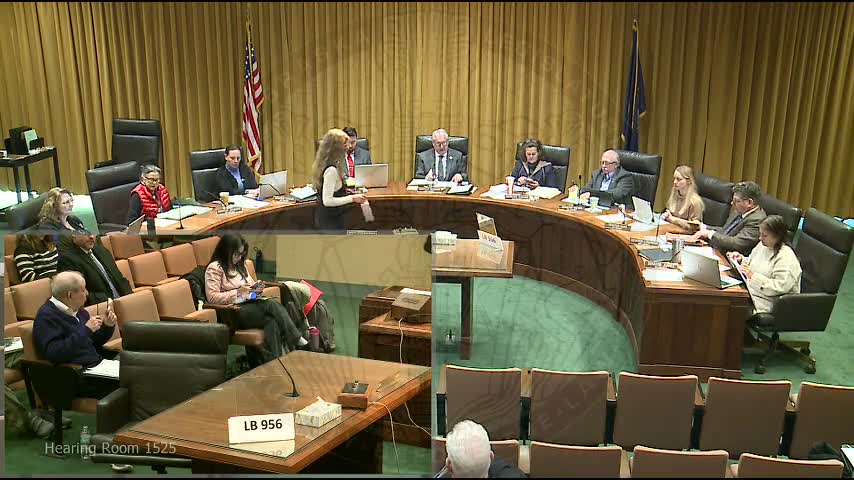
Sen. Bob Anderson (LD49) and Sen. Dave Mermin (Chair) opened a combined hearing on LB870 and LB1061, which would restrict in‑state tuition eligibility to those "lawfully present" in the U.S. Anderson said the change would "reimplement common sense and fiscal responsibility," arguing that in‑state rates are a taxpayer subsidy and citing federal statute 8 U.S.C. §1623 to contend states cannot give postsecondary benefits to aliens not lawfully present unless other U.S. citizens are equally eligible.
Supporters warned of legal and fiscal risk. Doug Kagan testified that continuing the 2006 policy exposes the state and its institutions to lawsuits, federal funding risks and compliance actions. Matt Bloomstead (University of Nebraska) said the university shares goals of efficiency and partnership but urged more planning before statutory changes and recommended collaborative solutions.
Opponents produced a lengthy, multi‑part record. Researchers, immigrant advocates, university faculty and business leaders argued repeal would reduce access for students who graduated from Nebraska high schools, exacerbate workforce shortages and signal hostility to communities already contributing economically. Ruby Mendez Lopez (Nebraska Appleseed) and Dr. Larry Bradley (UN Omaha adjunct, veteran) said in‑state tuition supports students who were educated in Nebraska and later contribute to the workforce; advocates noted in many cases tuition discounts are the only financial support undocumented or DACA recipients can access because they are barred from federal aid.
Several legal witnesses and advocates contested the sponsors' reading of the federal statute, arguing that in‑state tuition is not a direct grant of funds (it is reduced cost paid by students) and therefore may fall outside the statute’s restriction on "benefits." Witnesses also emphasized the complexity and long backlogs in federal immigration adjudications; Natasha Naseem (immigration attorney) described how years‑long waits mean young people raised and educated in Nebraska may lack a clear path to citizenship but still live and work here and pay taxes.
Committee members asked detailed questions about definitions (e.g., "lawfully present"), fiscal effects, how universities verify status, and precedent in other states. Sponsors cited examples of other states amending similar policies and flagged a Texas litigation history; opponents pointed out different legal circuits and urged caution. The committee recorded counts of public comments: according to the record, LB870 had 30 proponents and 120 opponents on file; LB1061 had 2 proponents and 95 opponents.
No vote or formal action occurred at the hearing. Senators said they would continue to consider legal advice, fiscal analyses and stakeholder input before moving forward.
Supporters warned of legal and fiscal risk. Doug Kagan testified that continuing the 2006 policy exposes the state and its institutions to lawsuits, federal funding risks and compliance actions. Matt Bloomstead (University of Nebraska) said the university shares goals of efficiency and partnership but urged more planning before statutory changes and recommended collaborative solutions.
Opponents produced a lengthy, multi‑part record. Researchers, immigrant advocates, university faculty and business leaders argued repeal would reduce access for students who graduated from Nebraska high schools, exacerbate workforce shortages and signal hostility to communities already contributing economically. Ruby Mendez Lopez (Nebraska Appleseed) and Dr. Larry Bradley (UN Omaha adjunct, veteran) said in‑state tuition supports students who were educated in Nebraska and later contribute to the workforce; advocates noted in many cases tuition discounts are the only financial support undocumented or DACA recipients can access because they are barred from federal aid.
Several legal witnesses and advocates contested the sponsors' reading of the federal statute, arguing that in‑state tuition is not a direct grant of funds (it is reduced cost paid by students) and therefore may fall outside the statute’s restriction on "benefits." Witnesses also emphasized the complexity and long backlogs in federal immigration adjudications; Natasha Naseem (immigration attorney) described how years‑long waits mean young people raised and educated in Nebraska may lack a clear path to citizenship but still live and work here and pay taxes.
Committee members asked detailed questions about definitions (e.g., "lawfully present"), fiscal effects, how universities verify status, and precedent in other states. Sponsors cited examples of other states amending similar policies and flagged a Texas litigation history; opponents pointed out different legal circuits and urged caution. The committee recorded counts of public comments: according to the record, LB870 had 30 proponents and 120 opponents on file; LB1061 had 2 proponents and 95 opponents.
No vote or formal action occurred at the hearing. Senators said they would continue to consider legal advice, fiscal analyses and stakeholder input before moving forward.
Don't Miss a Word: See the Full Meeting!
Go beyond summaries. Unlock every video, transcript, and key insight with a Founder Membership.
✓
Get instant access to full meeting videos
✓
Search and clip any phrase from complete transcripts
✓
Receive AI-powered summaries & custom alerts
✓
Enjoy lifetime, unrestricted access to government data
30-day money-back guarantee
