Planners outline wide-ranging Title 20 environmental edits — tree protections, floodplain, street-tree and stormwater language
January 19, 2026 | Bloomington City, Monroe County, Indiana
This article was created by AI summarizing key points discussed. AI makes mistakes, so for full details and context, please refer to the video of the full meeting. Please report any errors so we can fix them. Report an error »
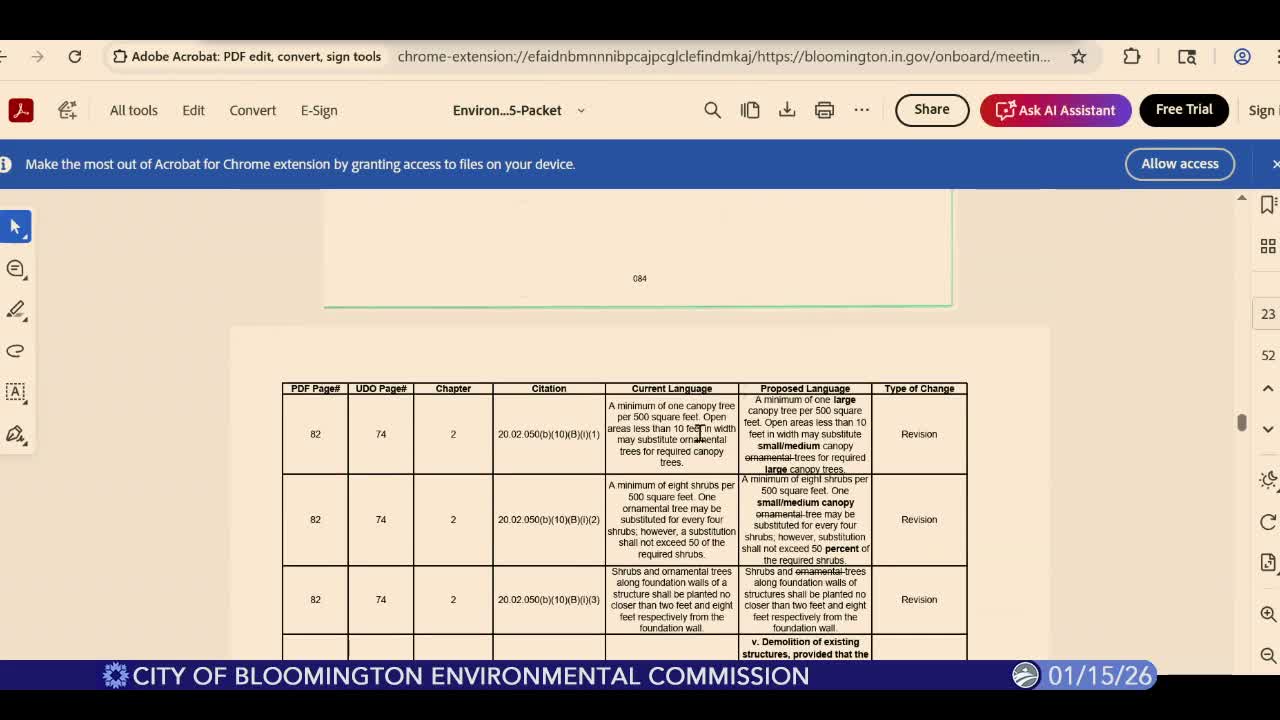
Jamie Kreindler, senior zoning planner, walked commissioners through a set of proposed environmental code changes the city plans to include in Title 20 for 2026. The package covers multiple sections of code the commission flagged as environmentally relevant: tree-preservation language, streamside buffer demolition/remediation, slope standards updated to match state law, floodplain permit clarifications, street-tree specifications and definitions for landscaping materials.
Key changes described by Kreindler included: reducing the acreage threshold for required vegetation/tree-preservation standards from 2 acres to 1 acre; adding preference language for protecting heritage trees; permitting demolition of some structures in Streamside Zone 1 when accompanied by an approved remediation plan (to be approved by the senior environmental planner); updating slope limits from 12% to 25% to align with state law; clarifying that activities exempt from a floodplain development permit do not need conditional-use approval; and defining "decorative stone" (natural washed stone with aggregate at least 2 inches) as an alternative to mulch.
Other targeted edits: EV charging requirements for auto-sales lots would be calculated based only on customer and employee parking, not display inventory; street‑lighting language for the MD downtown district would match prior TRO overlay standards; only the urban forester and senior environmental planner could approve columnar trees; and stormwater-planting substitutions would be capped (a 30% maximum substitution, subject to planning and transportation director approval).
Kreindler said those changes — plus other cleanup and clarifying edits such as consistent formatting and corrected plant nomenclature — will go before the Plan Commission on March 9. Staff advised commissioners who want to submit a letter to the Plan Commission aim to deliver it roughly 10 days before the March 9 packet distribution to ensure inclusion.
Why it matters: the package affects how the city protects urban trees, manages development near streams and floodplains, and balances landscaping requirements with developer flexibility. Several edits are intended to codify existing practices and to provide administrative clarity (for example, who may approve certain tree types), while others (acreage thresholds, slope definitions) change substantive requirements.
Quote: Jamie Kreindler: “We’re reducing the 2‑acre threshold to 1 acre for minimum required vegetation and adding language to give preference to protecting heritage trees.”
What’s next: Plan Commission review is scheduled for March 9; the Environmental Commission discussed preparing comments and may send a memo to planning staff and the Plan Commission per the packet submission timing guidance.
Provenance: Presentation and discussion of Title 20 environmental edits (SEG 701–SEG 1093); Plan Commission date and packet guidance (SEG 1088–SEG 1103).
Key changes described by Kreindler included: reducing the acreage threshold for required vegetation/tree-preservation standards from 2 acres to 1 acre; adding preference language for protecting heritage trees; permitting demolition of some structures in Streamside Zone 1 when accompanied by an approved remediation plan (to be approved by the senior environmental planner); updating slope limits from 12% to 25% to align with state law; clarifying that activities exempt from a floodplain development permit do not need conditional-use approval; and defining "decorative stone" (natural washed stone with aggregate at least 2 inches) as an alternative to mulch.
Other targeted edits: EV charging requirements for auto-sales lots would be calculated based only on customer and employee parking, not display inventory; street‑lighting language for the MD downtown district would match prior TRO overlay standards; only the urban forester and senior environmental planner could approve columnar trees; and stormwater-planting substitutions would be capped (a 30% maximum substitution, subject to planning and transportation director approval).
Kreindler said those changes — plus other cleanup and clarifying edits such as consistent formatting and corrected plant nomenclature — will go before the Plan Commission on March 9. Staff advised commissioners who want to submit a letter to the Plan Commission aim to deliver it roughly 10 days before the March 9 packet distribution to ensure inclusion.
Why it matters: the package affects how the city protects urban trees, manages development near streams and floodplains, and balances landscaping requirements with developer flexibility. Several edits are intended to codify existing practices and to provide administrative clarity (for example, who may approve certain tree types), while others (acreage thresholds, slope definitions) change substantive requirements.
Quote: Jamie Kreindler: “We’re reducing the 2‑acre threshold to 1 acre for minimum required vegetation and adding language to give preference to protecting heritage trees.”
What’s next: Plan Commission review is scheduled for March 9; the Environmental Commission discussed preparing comments and may send a memo to planning staff and the Plan Commission per the packet submission timing guidance.
Provenance: Presentation and discussion of Title 20 environmental edits (SEG 701–SEG 1093); Plan Commission date and packet guidance (SEG 1088–SEG 1103).
View the Full Meeting & All Its Details
This article offers just a summary. Unlock complete video, transcripts, and insights as a Founder Member.
✓
Watch full, unedited meeting videos
✓
Search every word spoken in unlimited transcripts
✓
AI summaries & real-time alerts (all government levels)
✓
Permanent access to expanding government content
30-day money-back guarantee
