Panel examines port inspections, broken seals and evidence controls at Guam Customs
February 02, 2026 | General Government Operations and Appropriations , Legislative, Guam, International
This article was created by AI summarizing key points discussed. AI makes mistakes, so for full details and context, please refer to the video of the full meeting. Please report any errors so we can fix them. Report an error »
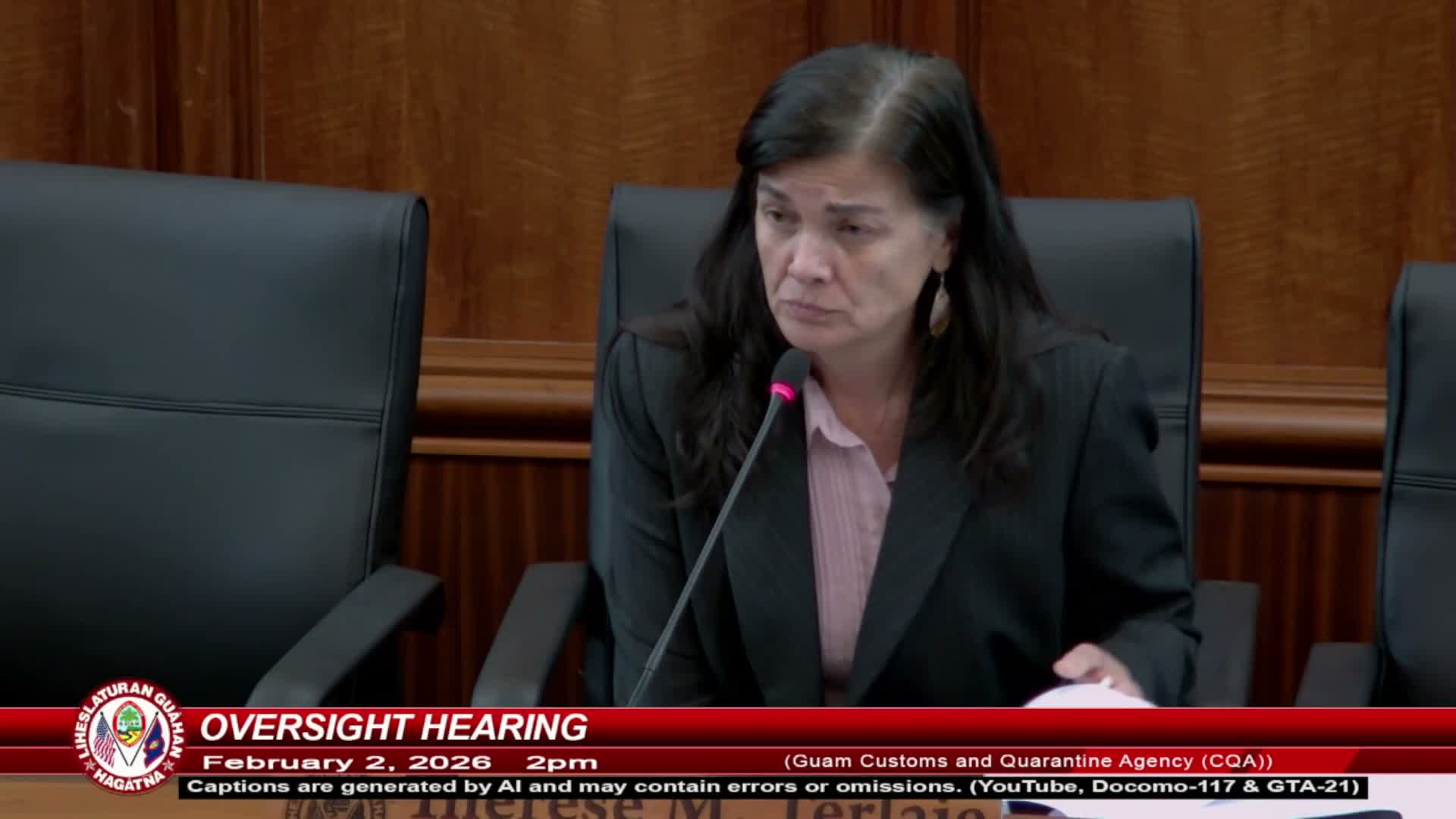
Senators used the oversight hearing to press Guam Customs and Quarantine Agency about port inspection practices after an Attorney General report raised concerns about containers and uninspected vehicles. CQA said maritime staff and port personnel initially detect broken or tampered seals; port police are notified and they in turn inform customs. Maritime and special enforcement teams respond, document incidents on an implemented form (2025), and forward cases to the fines, fees and forfeiture office for investigation.
CQA reported a marked reduction in broken customs seals over recent years: nine in a prior year, one in the current fiscal year. Fines have been levied in past incidents and the agency said it has improved coordination between inspection/control and special enforcement divisions. Colonels in the special enforcement and maritime units described a new document to capture container data and trends and said they are building a database to aid intelligence‑led targeting.
Committee members asked whether customs inspects vehicles immediately after unloading and whether evidence can be lost before customs can assess containers. CQA acknowledged practical limits—inspectors are not present 24 hours a day and transiting containers can complicate timelines—but said the agency has procedures to be present during devanning and to run X‑rays and K9s when operationally feasible. On evidence accountability, the agency described PECO inventory software, two‑officer sign‑offs and joint sign‑offs with public health for destruction of seized items. The committee requested records and a full log of broken‑seal incidents to verify improvements and the agency agreed to provide documentation.
CQA reported a marked reduction in broken customs seals over recent years: nine in a prior year, one in the current fiscal year. Fines have been levied in past incidents and the agency said it has improved coordination between inspection/control and special enforcement divisions. Colonels in the special enforcement and maritime units described a new document to capture container data and trends and said they are building a database to aid intelligence‑led targeting.
Committee members asked whether customs inspects vehicles immediately after unloading and whether evidence can be lost before customs can assess containers. CQA acknowledged practical limits—inspectors are not present 24 hours a day and transiting containers can complicate timelines—but said the agency has procedures to be present during devanning and to run X‑rays and K9s when operationally feasible. On evidence accountability, the agency described PECO inventory software, two‑officer sign‑offs and joint sign‑offs with public health for destruction of seized items. The committee requested records and a full log of broken‑seal incidents to verify improvements and the agency agreed to provide documentation.
View the Full Meeting & All Its Details
This article offers just a summary. Unlock complete video, transcripts, and insights as a Founder Member.
✓
Watch full, unedited meeting videos
✓
Search every word spoken in unlimited transcripts
✓
AI summaries & real-time alerts (all government levels)
✓
Permanent access to expanding government content
30-day money-back guarantee
