Customs details seal-reporting improvements, says broken custom-seal incidents are down
February 02, 2026 | General Government Operations and Appropriations , Legislative, Guam, International
This article was created by AI summarizing key points discussed. AI makes mistakes, so for full details and context, please refer to the video of the full meeting. Please report any errors so we can fix them. Report an error »
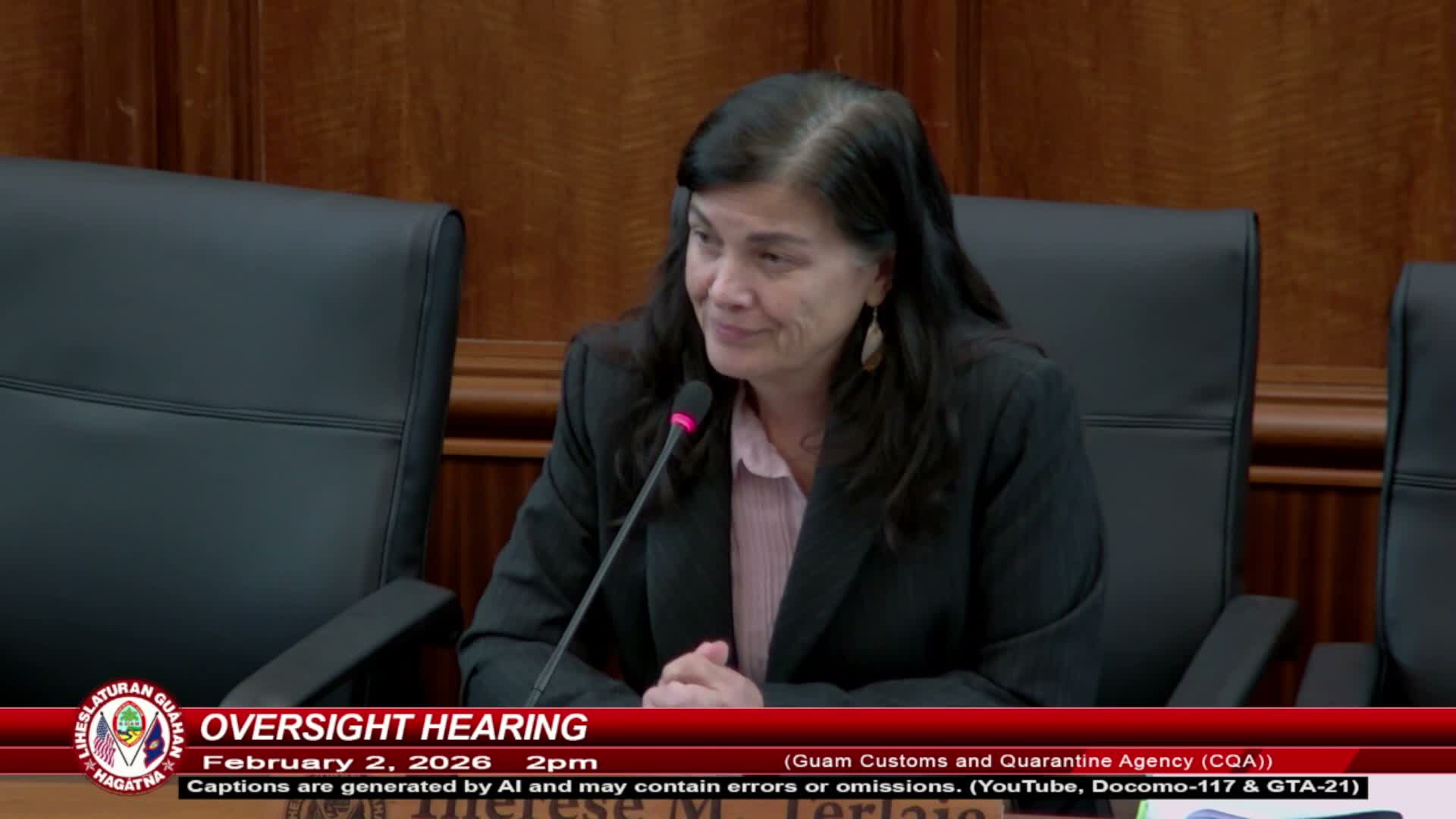
Senators probed how Guam Customs and Quarantine handles broken container seals, evidence inventory and inspection accountability after a January 2025 attorney-general report raised concerns about uninspected cargo.
Colonel Barbara Tayama, assistant chief for inspection and control, described the chain-of-reporting: port checkers or stevedores notify port police when they find a broken seal; port police then notify CQA, which assigns maritime staff to assess the container and triggers fines, fees and forfeiture follow-up if investigation warrants further action. Tayama said CQA adopted a standardized form in 2025 to collect pertinent incident details to support investigations.
Colonel Joey Cruz, who oversees fines, fees and forfeiture, told the committee the agency recorded one broken custom seal this fiscal year compared with nine the prior year; fines had been levied previously, and agency officials said improved procedures and outreach to importers and port staff contributed to better compliance. Cruz said many past incidents involved administrative errors and new education efforts reduce repeat violations.
Committee members asked whether seal corrections versus broken customs seals are being differentiated in reporting; CQA explained the distinction and said the fines office will elevate cases where the custom seal itself (not just a shipper seal digit error) was broken prior to customs inspection.
The committee also asked about evidence inventory and destruction protocols. CQA described its PECO electronic inventory system and said inventories occur when supervisors rotate; evidence destruction requires two PECO officers and, for public-health commodities, public-health sign-off.
Next steps: senators asked for the standardized form and the broken-seal inventory counts to be provided to the committee and for CQA and port authority to continue refining on-site coordination so seals are verified before containers are moved off-port property.
Colonel Barbara Tayama, assistant chief for inspection and control, described the chain-of-reporting: port checkers or stevedores notify port police when they find a broken seal; port police then notify CQA, which assigns maritime staff to assess the container and triggers fines, fees and forfeiture follow-up if investigation warrants further action. Tayama said CQA adopted a standardized form in 2025 to collect pertinent incident details to support investigations.
Colonel Joey Cruz, who oversees fines, fees and forfeiture, told the committee the agency recorded one broken custom seal this fiscal year compared with nine the prior year; fines had been levied previously, and agency officials said improved procedures and outreach to importers and port staff contributed to better compliance. Cruz said many past incidents involved administrative errors and new education efforts reduce repeat violations.
Committee members asked whether seal corrections versus broken customs seals are being differentiated in reporting; CQA explained the distinction and said the fines office will elevate cases where the custom seal itself (not just a shipper seal digit error) was broken prior to customs inspection.
The committee also asked about evidence inventory and destruction protocols. CQA described its PECO electronic inventory system and said inventories occur when supervisors rotate; evidence destruction requires two PECO officers and, for public-health commodities, public-health sign-off.
Next steps: senators asked for the standardized form and the broken-seal inventory counts to be provided to the committee and for CQA and port authority to continue refining on-site coordination so seals are verified before containers are moved off-port property.
Don't Miss a Word: See the Full Meeting!
Go beyond summaries. Unlock every video, transcript, and key insight with a Founder Membership.
✓
Get instant access to full meeting videos
✓
Search and clip any phrase from complete transcripts
✓
Receive AI-powered summaries & custom alerts
✓
Enjoy lifetime, unrestricted access to government data
30-day money-back guarantee
