Committee hears bill to give firefighters, police 26 paid military days; union testimony emphasizes retention
January 22, 2026 | Government Operations, House of Representative, Committees , Legislative, Michigan
This article was created by AI summarizing key points discussed. AI makes mistakes, so for full details and context, please refer to the video of the full meeting. Please report any errors so we can fix them. Report an error »
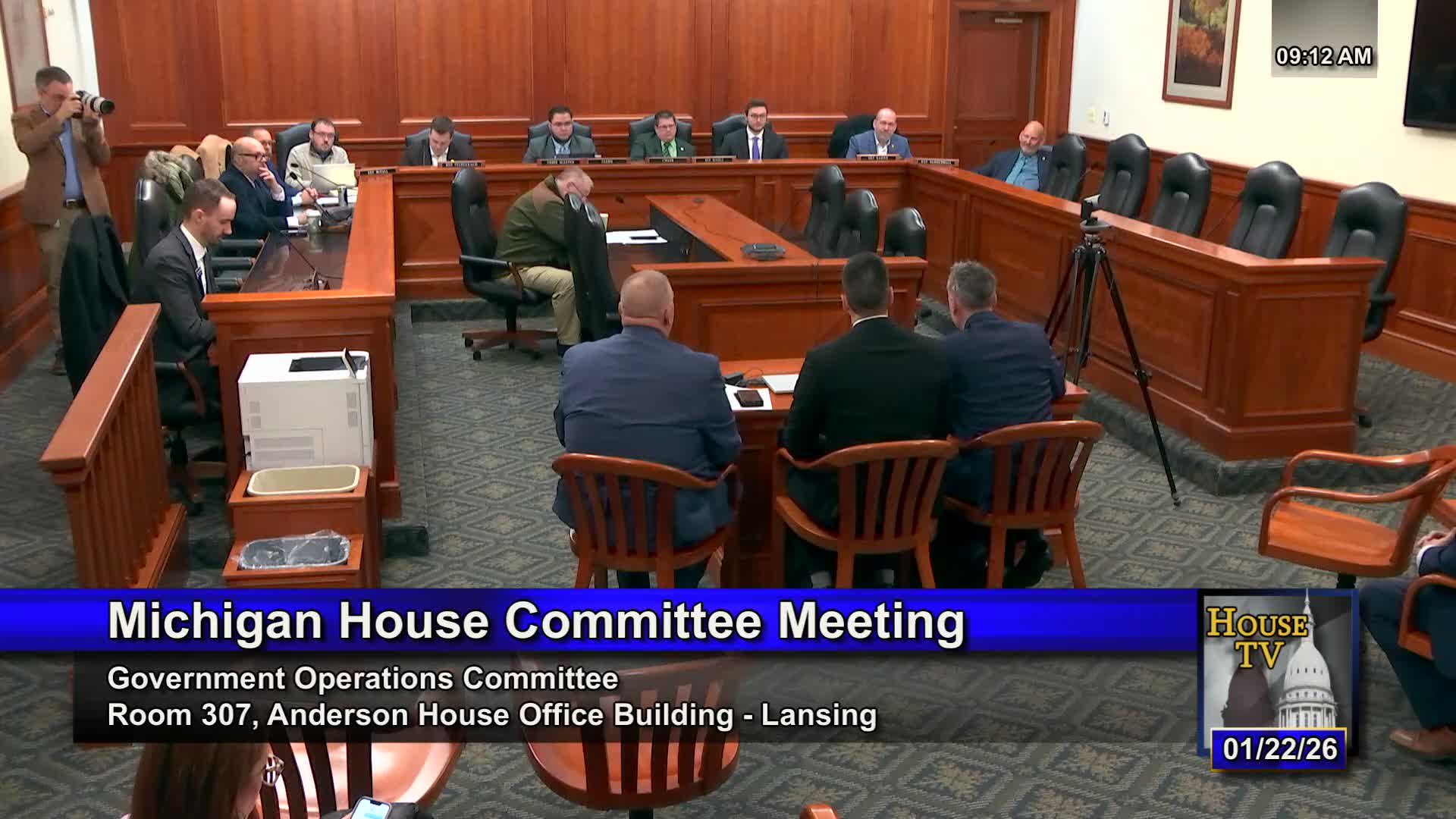
The House Committee on Government Operations heard testimony on bills from Representative Robinson and Representative Colazar that would require at least 26 paid military days per year for firefighters and police who serve in the National Guard or reserves.
Representative Robinson said the bills address a situation in which service members must use personal leave to meet required military duties. “When they...have to take personal time to go fulfill these responsibilities,” Robinson said, “we have to make sure that time that is meant to be with their families gets to be with their families.”
Matt Saar, president of the Michigan Professional Firefighters Union, testified that some career firefighters lose municipal pay when on military duty and said the proposed 26 paid days would allow members to fulfill reservist obligations without dipping into vacation. Saar described the measure as modeled closely on legislation passed in Tennessee and said similar efforts are pending in other states. He told the committee the union estimates roughly 200 career firefighters statewide would be affected.
A union member and chief warrant officer in the Michigan National Guard, Robert, described personal hardship tied to reserve duty. “My check was $700 short,” he said when explaining how missing pay affected his family and decisions about reenlistment. Robert said the bill would make reenlistment and continuing service more feasible for families.
Committee members asked for comparative information about other states; Saar said Tennessee was a model and mentioned Texas as another state moving similar legislation and offered to provide additional details after the hearing. The transcript records no committee vote on these bills; the hearing concluded after the chair read witness cards and adjourned the meeting.
The transcript does not contain fiscal notes, funding sources, or implementation details for how municipalities would budget for paid military days; those elements remain unspecified in the hearing record.
Representative Robinson said the bills address a situation in which service members must use personal leave to meet required military duties. “When they...have to take personal time to go fulfill these responsibilities,” Robinson said, “we have to make sure that time that is meant to be with their families gets to be with their families.”
Matt Saar, president of the Michigan Professional Firefighters Union, testified that some career firefighters lose municipal pay when on military duty and said the proposed 26 paid days would allow members to fulfill reservist obligations without dipping into vacation. Saar described the measure as modeled closely on legislation passed in Tennessee and said similar efforts are pending in other states. He told the committee the union estimates roughly 200 career firefighters statewide would be affected.
A union member and chief warrant officer in the Michigan National Guard, Robert, described personal hardship tied to reserve duty. “My check was $700 short,” he said when explaining how missing pay affected his family and decisions about reenlistment. Robert said the bill would make reenlistment and continuing service more feasible for families.
Committee members asked for comparative information about other states; Saar said Tennessee was a model and mentioned Texas as another state moving similar legislation and offered to provide additional details after the hearing. The transcript records no committee vote on these bills; the hearing concluded after the chair read witness cards and adjourned the meeting.
The transcript does not contain fiscal notes, funding sources, or implementation details for how municipalities would budget for paid military days; those elements remain unspecified in the hearing record.
Don't Miss a Word: See the Full Meeting!
Go beyond summaries. Unlock every video, transcript, and key insight with a Founder Membership.
✓
Get instant access to full meeting videos
✓
Search and clip any phrase from complete transcripts
✓
Receive AI-powered summaries & custom alerts
✓
Enjoy lifetime, unrestricted access to government data
30-day money-back guarantee
