Committee hears EGLE, industry support raising administrative cap and clarifying claims for underground storage tank cleanup fund
January 23, 2026 | 2025-2026 House Legislature MI, Michigan
This article was created by AI summarizing key points discussed. AI makes mistakes, so for full details and context, please refer to the video of the full meeting. Please report any errors so we can fix them. Report an error »
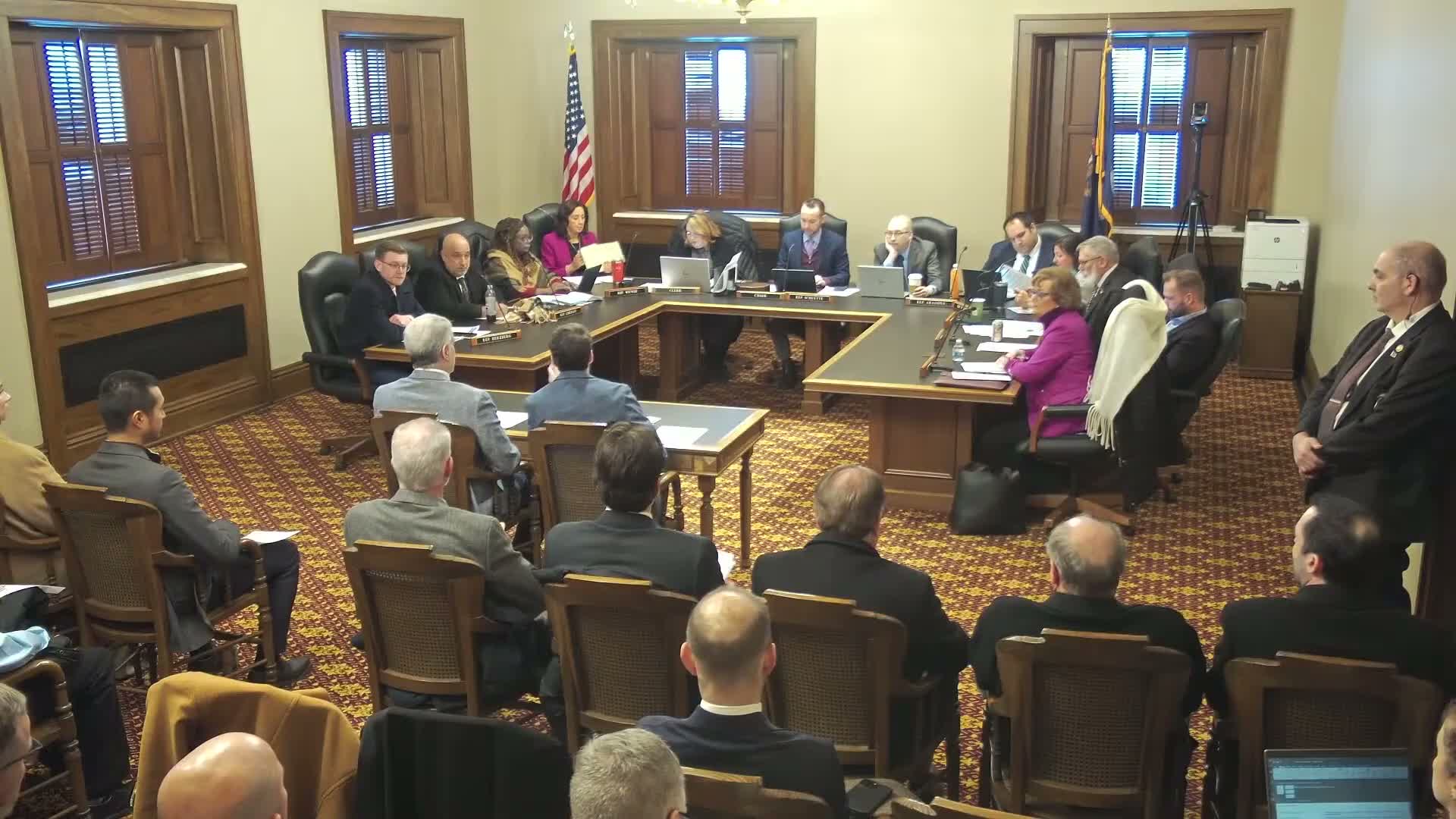
Representatives and state agency officials told the Michigan House Rules Committee that two bills (house bills 49 40 and 51 15) would streamline how the state’s underground storage tank cleanup fund operates and allow staff to process claims more quickly.
Dylan Gebhardt, legislative liaison for the Michigan Department of Environment, Great Lakes, and Energy (EGLE), said the bills “clarify the processes for submitting claims and invoices,” separate claim and invoice requirements, update submission timelines and establish eligibility for federally recognized tribes to access financial responsibility under the fund. He told the committee the measures also raise the administrative cap from 7% to 12% and provide a sunset on the legacy release program.
“Since the fund's creation and subsequent amendments in 2014 and 2017, stakeholders … have identified areas that need clarification,” Gebhardt said. He argued that raising the cap would allow staff to perform more thorough reviews of invoice submittals to ensure work is “necessary, appropriate, and cost effective.”
Bob Reisner, director of the Michigan Underground Storage Tank program, told members that some amendments are needed to satisfy EPA requirements so the state fund remains an approvable financial-responsibility mechanism for tank owners. “EPA oversees whether a state fund is considered federally approvable,” Reisner said, adding that the bill language responds to EPA-identified changes necessary for certification.
Committee members pressed for fiscal context. Vice Chair Aragona asked whether changing the cap from 7% to 12% would materially increase administrative dollars. Committee testimony estimated that 7% currently brings in about $1.4 million; Reisner said the larger cap would allow roughly an additional $1 million for administration but emphasized the intent is flexibility rather than immediate spending. Reisner also said EGLE has about 770 open claims and that the program’s caseload has grown since its 2014 redesign.
Industry representatives voiced support. Mark Griffin, president of the Michigan Petroleum Association and the Michigan Association of Convenience Stores, said the bills are “the next step in the history of the most successful cleanup program the state of Michigan has ever had.” Griffin told the committee the program is funded by a per-gallon underground storage tank regulatory fee that generates about $58 million annually, with testimony noting roughly $30 million goes to EGLE to address orphan sites and about $20 million flows into the underground storage tank fund.
The committee took no final vote on these bills during the testimony segment; EGLE and industry witnesses said the changes are intended to reduce delays in cleanup work, clarify obligations, and preserve the state fund’s federal approvability.
The committee proceeded to other agenda items after the testimony; the next procedural steps for house bills 49 40 and 51 15 were not specified in the recorded segments.
Dylan Gebhardt, legislative liaison for the Michigan Department of Environment, Great Lakes, and Energy (EGLE), said the bills “clarify the processes for submitting claims and invoices,” separate claim and invoice requirements, update submission timelines and establish eligibility for federally recognized tribes to access financial responsibility under the fund. He told the committee the measures also raise the administrative cap from 7% to 12% and provide a sunset on the legacy release program.
“Since the fund's creation and subsequent amendments in 2014 and 2017, stakeholders … have identified areas that need clarification,” Gebhardt said. He argued that raising the cap would allow staff to perform more thorough reviews of invoice submittals to ensure work is “necessary, appropriate, and cost effective.”
Bob Reisner, director of the Michigan Underground Storage Tank program, told members that some amendments are needed to satisfy EPA requirements so the state fund remains an approvable financial-responsibility mechanism for tank owners. “EPA oversees whether a state fund is considered federally approvable,” Reisner said, adding that the bill language responds to EPA-identified changes necessary for certification.
Committee members pressed for fiscal context. Vice Chair Aragona asked whether changing the cap from 7% to 12% would materially increase administrative dollars. Committee testimony estimated that 7% currently brings in about $1.4 million; Reisner said the larger cap would allow roughly an additional $1 million for administration but emphasized the intent is flexibility rather than immediate spending. Reisner also said EGLE has about 770 open claims and that the program’s caseload has grown since its 2014 redesign.
Industry representatives voiced support. Mark Griffin, president of the Michigan Petroleum Association and the Michigan Association of Convenience Stores, said the bills are “the next step in the history of the most successful cleanup program the state of Michigan has ever had.” Griffin told the committee the program is funded by a per-gallon underground storage tank regulatory fee that generates about $58 million annually, with testimony noting roughly $30 million goes to EGLE to address orphan sites and about $20 million flows into the underground storage tank fund.
The committee took no final vote on these bills during the testimony segment; EGLE and industry witnesses said the changes are intended to reduce delays in cleanup work, clarify obligations, and preserve the state fund’s federal approvability.
The committee proceeded to other agenda items after the testimony; the next procedural steps for house bills 49 40 and 51 15 were not specified in the recorded segments.
View the Full Meeting & All Its Details
This article offers just a summary. Unlock complete video, transcripts, and insights as a Founder Member.
✓
Watch full, unedited meeting videos
✓
Search every word spoken in unlimited transcripts
✓
AI summaries & real-time alerts (all government levels)
✓
Permanent access to expanding government content
30-day money-back guarantee
