Auditors find Minnesota Ombudsperson for Families fell short on duties, lawmakers urged to act
February 01, 2026 | Legislative Audit Commission, Commissions, Joint, Committees, Legislative, Minnesota
This article was created by AI summarizing key points discussed. AI makes mistakes, so for full details and context, please refer to the video of the full meeting. Please report any errors so we can fix them. Report an error »
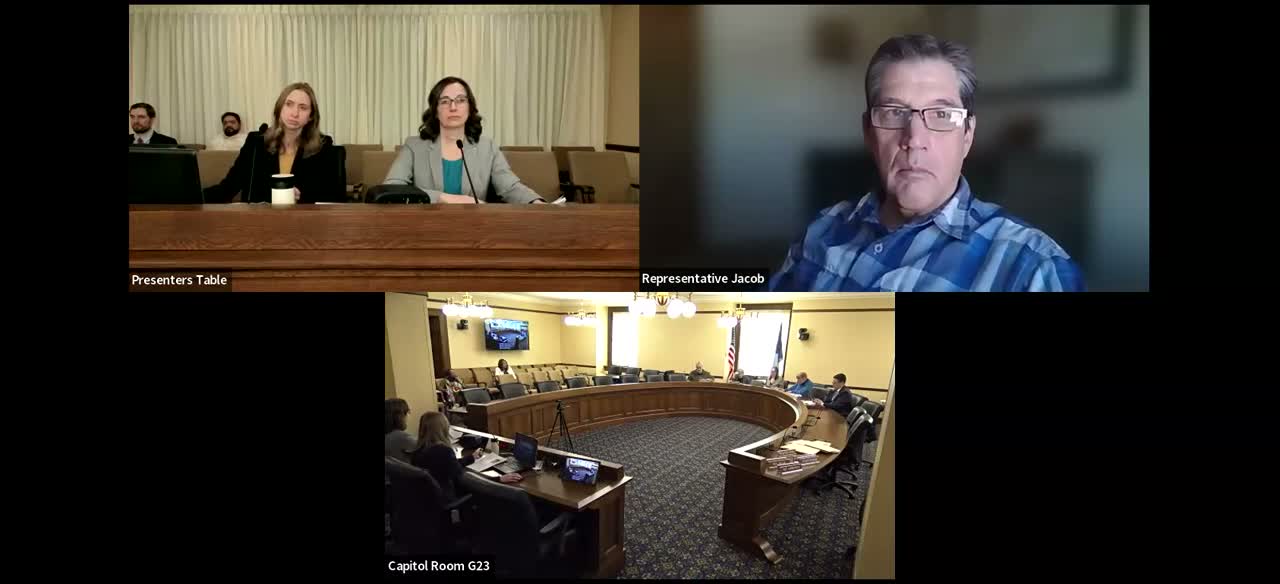
The Legislative Audit Commission on Jan. 29 heard an Office of Legislative Auditor (OLA) program evaluation that concluded Minnesota's Office of Ombudsperson for Families (OBFF) has not consistently fulfilled statutory duties and lacks adequate documentation and oversight.
Deputy Legislative Auditor Jody Munson Rodriguez and evaluation manager Caitlin Badger told the commission that OBFF is required by statute to monitor agency compliance with child-protection laws affecting children of color, work with state courts and advise on culturally appropriate services, but that the office’s responsibilities are broad relative to its resources. "We found that the office has not always fulfilled that role effectively in recent years," Badger said during the presentation.
The auditors highlighted several core findings: OBFF has a small staff (three ombudspersons plus four other employees) and a FY2025 appropriation of $845,000; the office reported roughly 500 complaints and inquiries in 2023 but said it conducted only 33 investigations that year, a figure auditors could not verify because of inconsistent documentation; community boards that are statutorily responsible for overseeing the ombudspersons often failed to meet meeting-frequency and attendance requirements; and the office’s shared-leadership structure left unclear lines of accountability.
Badger told commissioners that statutes define "agency" broadly — including counties, courts and many contracted providers — which makes a complete, consistent statewide monitoring duty difficult to meet with the current staffing level. She said the joint community board was required by statute to meet at least four times per year but met that standard in only one of the three years the auditors reviewed.
Lawmakers pressed auditors on numerical details and statutory intent. Representative Quam asked what percentage of children in out-of-home care fall into the three groups OBFF serves; Badger pointed lawmakers to exhibit data from the Department of Children, Youth, and Families and said auditors could provide further breakdowns offline. Several legislators, including Senator Drazkowski and Senator Kran, questioned whether the office had overstepped into advocacy or legislative work; Badger told the panel that OBFF participates in work groups and policy discussions that are not explicitly required in statute and recommended that the legislature clarify the office’s duties and align resources to those duties.
On complaint handling, auditors said OBFF’s record-keeping and data collection were inadequate. "Because of this lack of data and documentation, we were unable to get clear answers to simple questions," Badger said, noting auditors could not determine how many complaints were received, how many were investigated, or how many were substantiated. The auditors recommended strengthening complaint-handling policies, consistent documentation and greater transparency about investigative outcomes.
OBFF’s representatives said they accepted the OLA recommendations and asked members to consider context. Anne Hill, ombudsperson for African American families, told the commission that the office agrees with the findings and has implemented or plans to implement changes. Hill and colleagues described staffing disruptions and administrative challenges during the audit period — including staff turnover, extended family-leave absences and a case-management system purchased in 2019 that they said never worked — that affected operations. "We agree with all of the recommendations," Hill said, adding that the office has been invited to participate in policy conversations and that some state laws named in testimony grew out of community complaints handled by OBFF.
Auditors recommended the legislature consider statutory changes to: narrow or clarify OBFF's monitoring duties; require clearer accountability and oversight; align appropriations with legally required duties; and consider establishing a single lead position within OBFF to provide clearer managerial authority. Commissioners broadly agreed the legislature bears responsibility to decide whether to change statutes or increase resources, and several members said they would work on reforms.
The hearing closed with lawmakers thanking the auditors and OBFF staff. No formal motions or votes were recorded at the session; members asked for follow-up data on complaint counts and outcomes. The commission adjourned without taking action on the recommendations during the hearing.
Deputy Legislative Auditor Jody Munson Rodriguez and evaluation manager Caitlin Badger told the commission that OBFF is required by statute to monitor agency compliance with child-protection laws affecting children of color, work with state courts and advise on culturally appropriate services, but that the office’s responsibilities are broad relative to its resources. "We found that the office has not always fulfilled that role effectively in recent years," Badger said during the presentation.
The auditors highlighted several core findings: OBFF has a small staff (three ombudspersons plus four other employees) and a FY2025 appropriation of $845,000; the office reported roughly 500 complaints and inquiries in 2023 but said it conducted only 33 investigations that year, a figure auditors could not verify because of inconsistent documentation; community boards that are statutorily responsible for overseeing the ombudspersons often failed to meet meeting-frequency and attendance requirements; and the office’s shared-leadership structure left unclear lines of accountability.
Badger told commissioners that statutes define "agency" broadly — including counties, courts and many contracted providers — which makes a complete, consistent statewide monitoring duty difficult to meet with the current staffing level. She said the joint community board was required by statute to meet at least four times per year but met that standard in only one of the three years the auditors reviewed.
Lawmakers pressed auditors on numerical details and statutory intent. Representative Quam asked what percentage of children in out-of-home care fall into the three groups OBFF serves; Badger pointed lawmakers to exhibit data from the Department of Children, Youth, and Families and said auditors could provide further breakdowns offline. Several legislators, including Senator Drazkowski and Senator Kran, questioned whether the office had overstepped into advocacy or legislative work; Badger told the panel that OBFF participates in work groups and policy discussions that are not explicitly required in statute and recommended that the legislature clarify the office’s duties and align resources to those duties.
On complaint handling, auditors said OBFF’s record-keeping and data collection were inadequate. "Because of this lack of data and documentation, we were unable to get clear answers to simple questions," Badger said, noting auditors could not determine how many complaints were received, how many were investigated, or how many were substantiated. The auditors recommended strengthening complaint-handling policies, consistent documentation and greater transparency about investigative outcomes.
OBFF’s representatives said they accepted the OLA recommendations and asked members to consider context. Anne Hill, ombudsperson for African American families, told the commission that the office agrees with the findings and has implemented or plans to implement changes. Hill and colleagues described staffing disruptions and administrative challenges during the audit period — including staff turnover, extended family-leave absences and a case-management system purchased in 2019 that they said never worked — that affected operations. "We agree with all of the recommendations," Hill said, adding that the office has been invited to participate in policy conversations and that some state laws named in testimony grew out of community complaints handled by OBFF.
Auditors recommended the legislature consider statutory changes to: narrow or clarify OBFF's monitoring duties; require clearer accountability and oversight; align appropriations with legally required duties; and consider establishing a single lead position within OBFF to provide clearer managerial authority. Commissioners broadly agreed the legislature bears responsibility to decide whether to change statutes or increase resources, and several members said they would work on reforms.
The hearing closed with lawmakers thanking the auditors and OBFF staff. No formal motions or votes were recorded at the session; members asked for follow-up data on complaint counts and outcomes. The commission adjourned without taking action on the recommendations during the hearing.
Don't Miss a Word: See the Full Meeting!
Go beyond summaries. Unlock every video, transcript, and key insight with a Founder Membership.
✓
Get instant access to full meeting videos
✓
Search and clip any phrase from complete transcripts
✓
Receive AI-powered summaries & custom alerts
✓
Enjoy lifetime, unrestricted access to government data
30-day money-back guarantee
