Performers, illustrators and unions press lawmakers for data‑transparency and compensation during AB 412 public comment
December 08, 2025 | California State Senate, Senate, Legislative, California
This article was created by AI summarizing key points discussed. AI makes mistakes, so for full details and context, please refer to the video of the full meeting. Please report any errors so we can fix them. Report an error »
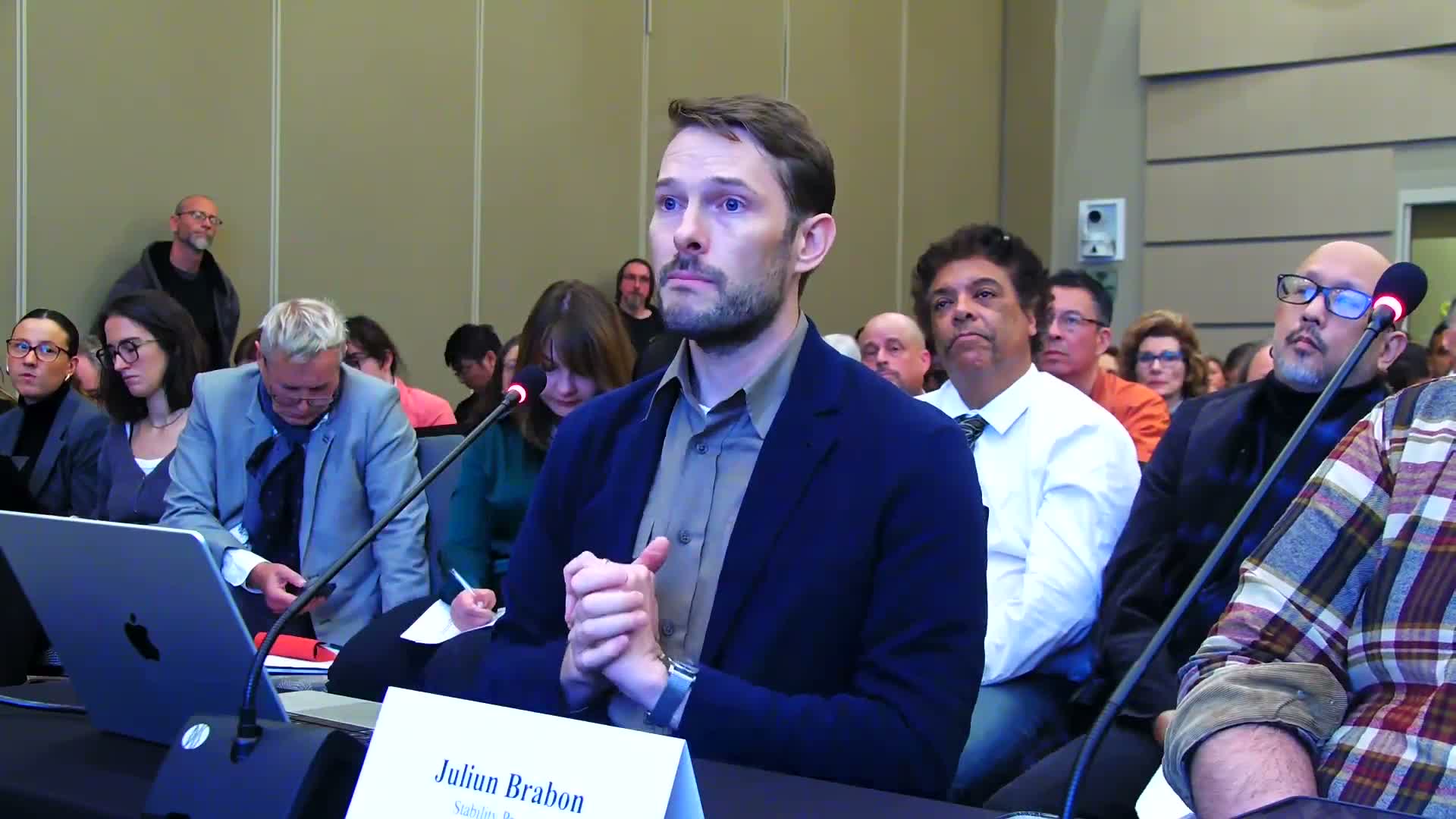
Sacramento — In the public‑comment portion of a joint informational hearing on AI and copyright, a large and diverse group of California creators — union representatives, illustrators, voice actors, animators and game artists — urged lawmakers to enact mandatory transparency so rights holders can verify whether their work was used to train generative AI models.
Speakers said they already see market effects. Danny Lin (The Animation Guild) cited a Civil Economics estimate that about 21% of film, TV and animation roles could be consolidated or eliminated by 2026 and that California could lose roughly 39,500 jobs. Multiple voice actors said audition and dubbing work is being replaced by synthetic voices, and visual artists described portfolios scraped from the web to train models that later compete with them in bidding and hiring.
Union leaders framed transparency as a first step toward consent, compensation and credit. "Transparency really is the first and foremost thing because, you know, you don't know how you're being affected," Jason George said during testimony earlier in the hearing. Public commenters echoed that demand and several explicitly endorsed AB 412, the committee’s proposed disclosure bill. Creators asked for a searchable mechanism to query whether specific works or likenesses were included in training sets and urged rapid takedown and dispute processes for unauthorized uses.
Technical vendors at the hearing said searchable fingerprints and creator claim registries can already produce matches for many datasets and that building APIs to let creators assert claims is technically straightforward. Creators said such systems should prioritize individual rights and labor protections rather than only large commercial licensing deals that may not reach rank‑and‑file artists.
The committees heard dozens of oral statements in favor of transparency and allowed written submissions for those who could not speak. The chairs closed by inviting written comments and saying staff will continue evaluating technical, legal and economic options.
Speakers said they already see market effects. Danny Lin (The Animation Guild) cited a Civil Economics estimate that about 21% of film, TV and animation roles could be consolidated or eliminated by 2026 and that California could lose roughly 39,500 jobs. Multiple voice actors said audition and dubbing work is being replaced by synthetic voices, and visual artists described portfolios scraped from the web to train models that later compete with them in bidding and hiring.
Union leaders framed transparency as a first step toward consent, compensation and credit. "Transparency really is the first and foremost thing because, you know, you don't know how you're being affected," Jason George said during testimony earlier in the hearing. Public commenters echoed that demand and several explicitly endorsed AB 412, the committee’s proposed disclosure bill. Creators asked for a searchable mechanism to query whether specific works or likenesses were included in training sets and urged rapid takedown and dispute processes for unauthorized uses.
Technical vendors at the hearing said searchable fingerprints and creator claim registries can already produce matches for many datasets and that building APIs to let creators assert claims is technically straightforward. Creators said such systems should prioritize individual rights and labor protections rather than only large commercial licensing deals that may not reach rank‑and‑file artists.
The committees heard dozens of oral statements in favor of transparency and allowed written submissions for those who could not speak. The chairs closed by inviting written comments and saying staff will continue evaluating technical, legal and economic options.
View the Full Meeting & All Its Details
This article offers just a summary. Unlock complete video, transcripts, and insights as a Founder Member.
✓
Watch full, unedited meeting videos
✓
Search every word spoken in unlimited transcripts
✓
AI summaries & real-time alerts (all government levels)
✓
Permanent access to expanding government content
30-day money-back guarantee
