Sedgwick County EMS supervisor details supervisor vehicles and lifesaving equipment
February 01, 2026 | Sedgwick County, Kansas
This article was created by AI summarizing key points discussed. AI makes mistakes, so for full details and context, please refer to the video of the full meeting. Please report any errors so we can fix them. Report an error »
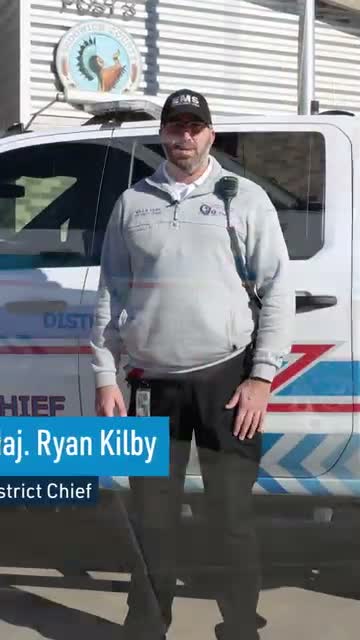
A supervisor with Sedgwick County EMS described the department's supervisor vehicles and the specialized equipment they carry to support ambulance operations and emergency responses. The supervisor said the trucks are used to deploy assets quickly for mass-casualty incidents, large weather events and higher-acuity calls.
The supervisor identified the vehicle as a "3 quarter ton Chevy Silverado" kept ready to transport the extra gear and personnel needed at scenes. They said supervisors' trucks carry equipment not typically found on standard ambulances to provide operational support and to protect crews during demanding calls.
Among the items the supervisor demonstrated was a Lucas mechanical CPR device. "This is our Lucas device that we use on cardiac arrests," the supervisor said, adding, "we apply this because it is much safer for our crews and much more effective than performing manual CPR." The department uses the device when a patient in cardiac arrest is transported to the hospital, according to the supervisor.
The supervisor also showed a portable ventilator and BiPAP unit, calling it "an all in 1 machine that allows us to take this into any call, transport it with the patient, and use its functions as needed." They said having that capability in a supervisor vehicle allows staff to begin or continue respiratory support during transport.
In addition to medical gear, the vehicles carry restock supplies and mass-casualty incident kits. The supervisor listed examples of nonmedical support equipment used to assist ambulances in the field, such as tools for vehicles that are "stuck in the mud, stuck in the snow" or in need of a jumpstart.
The supervisor said their duties include overseeing daily operations of the EMS service, managing schedules and the deployment of ambulances to maintain coverage. The presentation emphasized the role of supervisor vehicles in extending the service's capability during large incidents and in protecting crew safety during high-acuity responses.
No formal actions or decisions were announced during the briefing; the remarks were informational and described the department's current equipment and operational practices.
The supervisor identified the vehicle as a "3 quarter ton Chevy Silverado" kept ready to transport the extra gear and personnel needed at scenes. They said supervisors' trucks carry equipment not typically found on standard ambulances to provide operational support and to protect crews during demanding calls.
Among the items the supervisor demonstrated was a Lucas mechanical CPR device. "This is our Lucas device that we use on cardiac arrests," the supervisor said, adding, "we apply this because it is much safer for our crews and much more effective than performing manual CPR." The department uses the device when a patient in cardiac arrest is transported to the hospital, according to the supervisor.
The supervisor also showed a portable ventilator and BiPAP unit, calling it "an all in 1 machine that allows us to take this into any call, transport it with the patient, and use its functions as needed." They said having that capability in a supervisor vehicle allows staff to begin or continue respiratory support during transport.
In addition to medical gear, the vehicles carry restock supplies and mass-casualty incident kits. The supervisor listed examples of nonmedical support equipment used to assist ambulances in the field, such as tools for vehicles that are "stuck in the mud, stuck in the snow" or in need of a jumpstart.
The supervisor said their duties include overseeing daily operations of the EMS service, managing schedules and the deployment of ambulances to maintain coverage. The presentation emphasized the role of supervisor vehicles in extending the service's capability during large incidents and in protecting crew safety during high-acuity responses.
No formal actions or decisions were announced during the briefing; the remarks were informational and described the department's current equipment and operational practices.
Don't Miss a Word: See the Full Meeting!
Go beyond summaries. Unlock every video, transcript, and key insight with a Founder Membership.
✓
Get instant access to full meeting videos
✓
Search and clip any phrase from complete transcripts
✓
Receive AI-powered summaries & custom alerts
✓
Enjoy lifetime, unrestricted access to government data
30-day money-back guarantee
