House Transportation Committee reviews draft 'T bill,' flags bonding, bridge-posting and inspection questions
January 31, 2026 | Transportation, HOUSE OF REPRESENTATIVES, Committees, Legislative , Vermont
This article was created by AI summarizing key points discussed. AI makes mistakes, so for full details and context, please refer to the video of the full meeting. Please report any errors so we can fix them. Report an error »
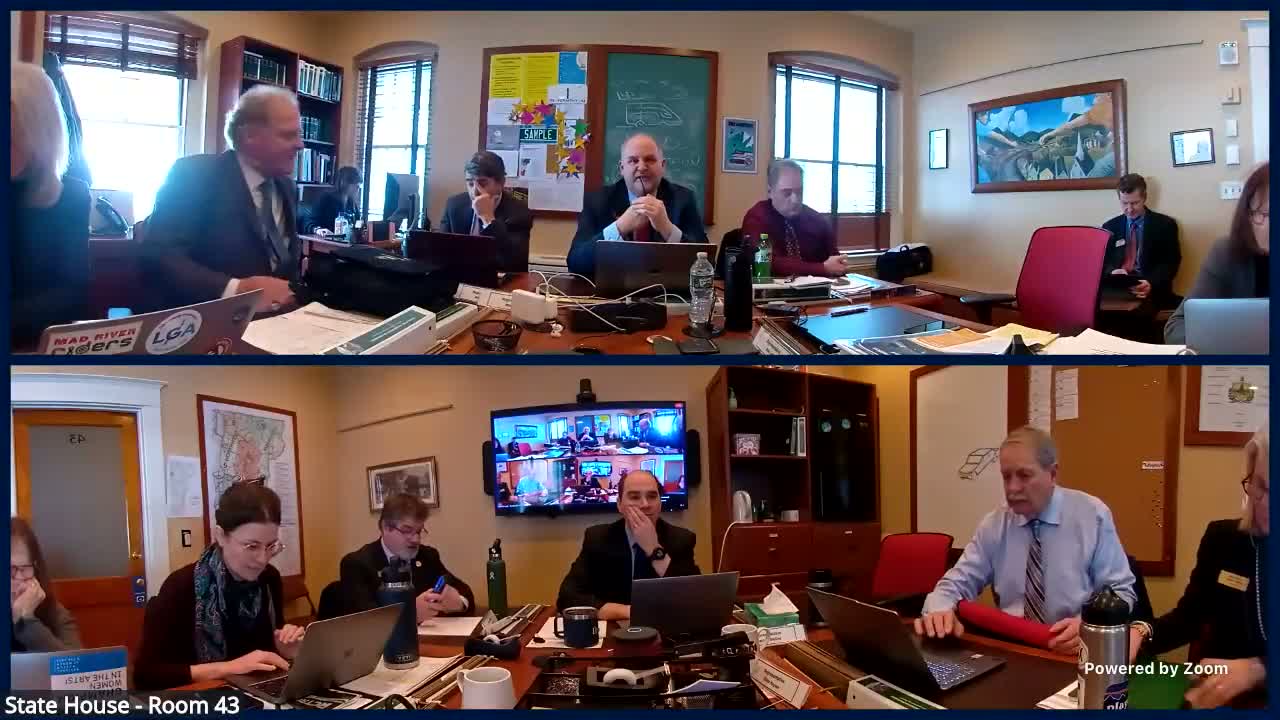
Legislative counsel delivered a section-by-section walkthrough of the draft transportation bill to the House Transportation Committee on Jan. 30, calling out technical clarifications and several policy questions the committee wants the Agency of Transportation (AOT) and the Treasurer’s Office to address next week.
“For the record, I’m Damien Leonard from the Office of Legislative Council,” Leonard said as he opened the committee’s review and displayed the draft language. He described the front-of-book language as the standard annual adoption of the agency’s proposed fiscal year transportation program and said he had copied many definitions from last year’s bill as a starting point.
The draft includes a mix of housekeeping and substantive changes. It would: adopt the agency’s FY27 transportation program “as amended by this act to the extent that federal, state, and local funds are available;” carry forward standard definitions (agency, candidate project, plug-in electric vehicle, FIB funds); raise the contract-bonding threshold the secretary may waive to $250,000; permit the secretary to waive bonding for immediate temporary stabilization work during an emergency event; codify state compliance with the federal National Bridge Inspection Standards and require AOT to notify municipalities of bridge inspection findings; require municipalities to post or close municipally maintained bridges when notified (and make agency-maintained bridges subject to agency posting/closure); and add a civil penalty of up to $1,000 for violating a bridge posting or closure.
Why it matters: committee members pressed multiple follow-ups because the changes touch municipalities’ obligations, enforcement procedures, and emergency responses. Several members said they want AOT, the Treasurer’s Office and other relevant agencies in next week to explain (1) whether all projects shown in the agency’s white book have been included in the draft bill, (2) when the bonding/surety thresholds were last updated and why the agency requests $250,000 now, and (3) how emergency waivers for bonding would interact with FEMA or other federal reimbursement rules.
Members also sought practical detail about bridge postings and enforcement. Leonard said the bridge language largely records longstanding practice under the federal bridge-inspection framework but clarifies responsibilities: AOT inspects bridges on state and town highways and notifies municipalities of deficiencies; municipalities must post or close municipally maintained bridges and pay for associated signage and barricades; AOT may post or close agency-maintained bridges and bears those costs. The draft would make violating a bridge posting or closure a traffic violation eligible for a civil penalty of up to $1,000, “in addition to any other penalties,” Leonard said.
Representative Paul described the bridge language as consistent with recent practice in his town: "So this is exactly what we're doing," he said, recounting a local example where the state required a bridge closure and the municipality purchased and posted signage until repairs were completed.
On procurement and bonding, Leonard explained the $250,000 threshold and the emergency-waiver provision are intended to permit rapid temporary stabilization work—getting contractors on site quickly to protect public safety—while permanent repairs would remain subject to bonding requirements. Committee members asked for statutory history on the threshold and for the agency’s views on who should be authorized to declare an emergency for this purpose.
Other changes summarized by counsel included technical updates to surety-bond language (clarifying that unemployment insurance contributions are paid to the Department of Labor), updates to the Public Transit Advisory Council membership (replace a dissolved group’s seat with an AARP Vermont representative and adjust private-bus/taxi representation language), and a proposal to extend AOT’s public–private partnership authority for an additional three years (originally extended to 2026). Leonard also noted a clarification to allow applicants for 11‑11 driveway/permit decisions to appeal in writing and set a default effective date of July 1, 2026.
What’s next: the committee did not take votes. Members directed staff to invite the Agency of Transportation and the Treasurer’s Office to the next hearing to answer questions about program insertions in the white book, the statutory history and policy rationale for the bonding threshold, the scope and declarant authority for emergency waivers, the universe of penalties and enforcement mechanisms for posted bridges, and any judiciary input needed for fine enforcement. The committee adjourned with those follow-ups scheduled for next week.
Details and clarifications: the draft explicitly references federal National Bridge Inspection Standards and the Manual on Uniform Traffic Control Devices (MUTCD) as the technical basis for warning signs and postings; the stated civil penalty for violating a bridge posting or closure is "up to $1,000." The proposed effective date shown in the draft is 07/01/2026. The Treasurer’s Office and AOT were noted as parties the committee expects to invite back for the agency’s rationale and to confirm whether all projects in the governor’s white book appear in the draft bill.
No formal motions or votes were recorded during the meeting; the committee’s action items are limited to follow-up testimony and staff research requested of counsel and the agency.
“For the record, I’m Damien Leonard from the Office of Legislative Council,” Leonard said as he opened the committee’s review and displayed the draft language. He described the front-of-book language as the standard annual adoption of the agency’s proposed fiscal year transportation program and said he had copied many definitions from last year’s bill as a starting point.
The draft includes a mix of housekeeping and substantive changes. It would: adopt the agency’s FY27 transportation program “as amended by this act to the extent that federal, state, and local funds are available;” carry forward standard definitions (agency, candidate project, plug-in electric vehicle, FIB funds); raise the contract-bonding threshold the secretary may waive to $250,000; permit the secretary to waive bonding for immediate temporary stabilization work during an emergency event; codify state compliance with the federal National Bridge Inspection Standards and require AOT to notify municipalities of bridge inspection findings; require municipalities to post or close municipally maintained bridges when notified (and make agency-maintained bridges subject to agency posting/closure); and add a civil penalty of up to $1,000 for violating a bridge posting or closure.
Why it matters: committee members pressed multiple follow-ups because the changes touch municipalities’ obligations, enforcement procedures, and emergency responses. Several members said they want AOT, the Treasurer’s Office and other relevant agencies in next week to explain (1) whether all projects shown in the agency’s white book have been included in the draft bill, (2) when the bonding/surety thresholds were last updated and why the agency requests $250,000 now, and (3) how emergency waivers for bonding would interact with FEMA or other federal reimbursement rules.
Members also sought practical detail about bridge postings and enforcement. Leonard said the bridge language largely records longstanding practice under the federal bridge-inspection framework but clarifies responsibilities: AOT inspects bridges on state and town highways and notifies municipalities of deficiencies; municipalities must post or close municipally maintained bridges and pay for associated signage and barricades; AOT may post or close agency-maintained bridges and bears those costs. The draft would make violating a bridge posting or closure a traffic violation eligible for a civil penalty of up to $1,000, “in addition to any other penalties,” Leonard said.
Representative Paul described the bridge language as consistent with recent practice in his town: "So this is exactly what we're doing," he said, recounting a local example where the state required a bridge closure and the municipality purchased and posted signage until repairs were completed.
On procurement and bonding, Leonard explained the $250,000 threshold and the emergency-waiver provision are intended to permit rapid temporary stabilization work—getting contractors on site quickly to protect public safety—while permanent repairs would remain subject to bonding requirements. Committee members asked for statutory history on the threshold and for the agency’s views on who should be authorized to declare an emergency for this purpose.
Other changes summarized by counsel included technical updates to surety-bond language (clarifying that unemployment insurance contributions are paid to the Department of Labor), updates to the Public Transit Advisory Council membership (replace a dissolved group’s seat with an AARP Vermont representative and adjust private-bus/taxi representation language), and a proposal to extend AOT’s public–private partnership authority for an additional three years (originally extended to 2026). Leonard also noted a clarification to allow applicants for 11‑11 driveway/permit decisions to appeal in writing and set a default effective date of July 1, 2026.
What’s next: the committee did not take votes. Members directed staff to invite the Agency of Transportation and the Treasurer’s Office to the next hearing to answer questions about program insertions in the white book, the statutory history and policy rationale for the bonding threshold, the scope and declarant authority for emergency waivers, the universe of penalties and enforcement mechanisms for posted bridges, and any judiciary input needed for fine enforcement. The committee adjourned with those follow-ups scheduled for next week.
Details and clarifications: the draft explicitly references federal National Bridge Inspection Standards and the Manual on Uniform Traffic Control Devices (MUTCD) as the technical basis for warning signs and postings; the stated civil penalty for violating a bridge posting or closure is "up to $1,000." The proposed effective date shown in the draft is 07/01/2026. The Treasurer’s Office and AOT were noted as parties the committee expects to invite back for the agency’s rationale and to confirm whether all projects in the governor’s white book appear in the draft bill.
No formal motions or votes were recorded during the meeting; the committee’s action items are limited to follow-up testimony and staff research requested of counsel and the agency.
Don't Miss a Word: See the Full Meeting!
Go beyond summaries. Unlock every video, transcript, and key insight with a Founder Membership.
✓
Get instant access to full meeting videos
✓
Search and clip any phrase from complete transcripts
✓
Receive AI-powered summaries & custom alerts
✓
Enjoy lifetime, unrestricted access to government data
30-day money-back guarantee
