Trainer urges trauma‑informed interviewing for PIT surveys: consent, safety and self‑care emphasized
January 26, 2026 | St. Louis County, Minnesota
This article was created by AI summarizing key points discussed. AI makes mistakes, so for full details and context, please refer to the video of the full meeting. Please report any errors so we can fix them. Report an error »
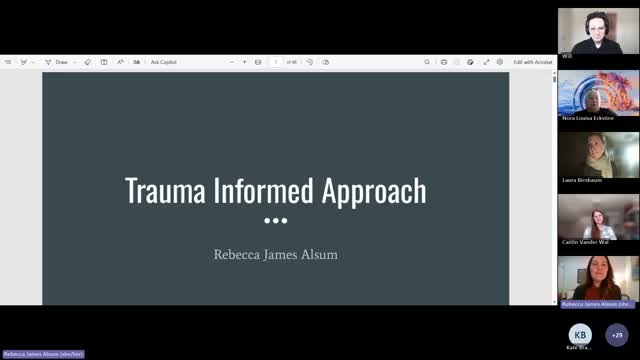
At a St. Louis County training for Point‑in‑Time volunteers, trauma‑informed trainer Rebecca James Alsom instructed surveyors on methods to reduce harm and vicarious trauma while conducting PIT interviews. Alsom emphasized consent, environmental adjustments, and simple grounding techniques for surveyors themselves.
Why it matters: PIT survey questions can be personal and triggering. How volunteers ask those questions influences respondents’ safety, willingness to participate and the accuracy of data used for local planning and federal reporting.
"May I greet myself with gentleness? May I soften when life invites me to harden?" Alsom offered the short practice as an example of the grounding language she recommends volunteers use for self‑regulation. Alsom introduced herself as owner of Spell Your Whole Being in downtown Duluth and described both professional experience and lived experience with trauma, saying the training draws on that combined perspective.
Alsom explained trauma and vicarious trauma, describing how a respondent’s "neuroception" — the nervous system’s automatic safety check — shapes whether they can answer questions. She urged surveyors to read the trauma‑informed script included in the survey and to prioritize consent and privacy: tell respondents the survey is voluntary, offer to read questions silently and allow respondents to point to answers if the location is crowded or the questions are sensitive. "This survey is optional," Will had earlier told the group; Alsom reinforced that surveyors should remind respondents they can skip questions or stop the interview.
Practical guidance included watching for signs of dysregulation (crossed arms, shaking, avoidance of eye contact), softening bodily posture to reduce power dynamics, offering small practical supports (a chair or water) when appropriate, and taking brief pauses between interviews to self‑regulate. Alsom stressed that surveyors’ role is administration of the survey and not therapy; if a respondent discloses acute needs, surveyors should follow local referral protocols rather than attempt clinical intervention.
Alsom also warned about vicarious trauma and recommended short, repeatable self‑care steps between interviews — a belly breath, stepping away briefly, or using restroom breaks to ground — so staff can continue to create safe spaces for respondents.
Next steps: Alsom invited questions and offered to share contact information for follow‑up; Will said her contact details would be passed on and that a surveyor guide with resources will be distributed.
Why it matters: PIT survey questions can be personal and triggering. How volunteers ask those questions influences respondents’ safety, willingness to participate and the accuracy of data used for local planning and federal reporting.
"May I greet myself with gentleness? May I soften when life invites me to harden?" Alsom offered the short practice as an example of the grounding language she recommends volunteers use for self‑regulation. Alsom introduced herself as owner of Spell Your Whole Being in downtown Duluth and described both professional experience and lived experience with trauma, saying the training draws on that combined perspective.
Alsom explained trauma and vicarious trauma, describing how a respondent’s "neuroception" — the nervous system’s automatic safety check — shapes whether they can answer questions. She urged surveyors to read the trauma‑informed script included in the survey and to prioritize consent and privacy: tell respondents the survey is voluntary, offer to read questions silently and allow respondents to point to answers if the location is crowded or the questions are sensitive. "This survey is optional," Will had earlier told the group; Alsom reinforced that surveyors should remind respondents they can skip questions or stop the interview.
Practical guidance included watching for signs of dysregulation (crossed arms, shaking, avoidance of eye contact), softening bodily posture to reduce power dynamics, offering small practical supports (a chair or water) when appropriate, and taking brief pauses between interviews to self‑regulate. Alsom stressed that surveyors’ role is administration of the survey and not therapy; if a respondent discloses acute needs, surveyors should follow local referral protocols rather than attempt clinical intervention.
Alsom also warned about vicarious trauma and recommended short, repeatable self‑care steps between interviews — a belly breath, stepping away briefly, or using restroom breaks to ground — so staff can continue to create safe spaces for respondents.
Next steps: Alsom invited questions and offered to share contact information for follow‑up; Will said her contact details would be passed on and that a surveyor guide with resources will be distributed.
View the Full Meeting & All Its Details
This article offers just a summary. Unlock complete video, transcripts, and insights as a Founder Member.
✓
Watch full, unedited meeting videos
✓
Search every word spoken in unlimited transcripts
✓
AI summaries & real-time alerts (all government levels)
✓
Permanent access to expanding government content
30-day money-back guarantee
