Agency of Education outlines how Vermont counts economically disadvantaged students and why direct certification drives most counts
January 30, 2026 | Ways & Means, HOUSE OF REPRESENTATIVES, Committees, Legislative , Vermont
This article was created by AI summarizing key points discussed. AI makes mistakes, so for full details and context, please refer to the video of the full meeting. Please report any errors so we can fix them. Report an error »
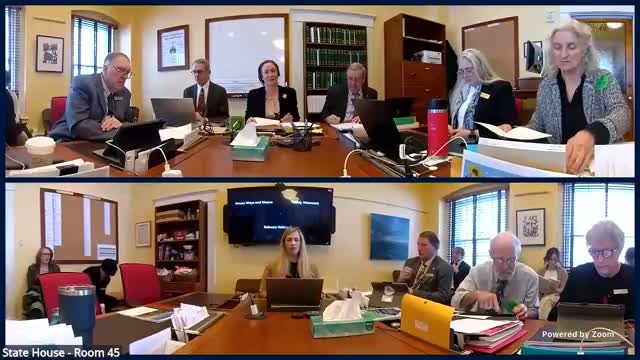
Leslie Krueger, state director of child nutrition programs at the Agency of Education (AOE), told the Ways & Means Committee that the AOE’s methodology for identifying students from economically disadvantaged backgrounds relies primarily on direct certification. Krueger said the state’s process draws on multiple data sources—3SquaresVT (SNAP), Reach Up, Medicaid (filtered to federal eligibility bands for free and reduced-price meals), migrant and homeless lists, and Head Start—and matches those lists monthly to local enrollment records so local determining officials can certify eligibility for school-year counts.
Krueger said AOE’s October 1 data collection (the date used for long-term weighted average daily membership) captures cumulative direct-certifications and that because direct-cert status is cumulative across a school year, any federal policy changes that affect benefit eligibility will take time to show up in the October 1 counts. She told the committee that the AOE currently identifies roughly 36,000 students as low income for long-term weight, and that about 93% of those are identified through direct certification; roughly 5% are identified via the household income form (the Universal Income Declaration), which the legislature directed AOE to create under Act 127.
Krueger explained why the household income form remains important: where direct certification or federal meal-application data are not available—for example in independent schools that do not participate in the National School Lunch Program or in some out-of-state tuition cases—the household income form provides a state-controlled fallback. AOE hosts an electronic form, provides a paper version translated into 13 languages and pushes submitted electronic forms to SU/SD data managers; paper forms are processed locally.
On process and accuracy, Krueger stressed that direct certification takes precedence because it is supplied through state agency lists and is both comprehensive and less dependent on household action. She noted local-level responsibilities that create points of failure—SUSC or district data managers must keep enrollment systems current, send matches to the determining official, and correct data-quality flags; determining officials then make final eligibility decisions and local superintendents must certify the data before AOE publishes the counts.
On potential federal policy impacts, Krueger told the committee that changes such as those proposed in HR1 could eventually reduce direct-certification counts but that the AOE does not expect a meaningful effect on the October 1, 2026 counts; any large impact would likely appear in the October 1, 2027 collection (which would feed fiscal year 2029 budgets), giving state agencies time to assess and respond. She said AOE is coordinating with AHS, DCF and DVHA to monitor changes and that the department conducts outreach and training to reduce local implementation errors.
Committee members asked clarifying questions about independent schools, out-of-state tuitioned students and the timing of matches; Krueger acknowledged edge cases and encouraged follow-up meetings to troubleshoot local data processes. AOE asked the committee to consider those implementation challenges before concluding that universal school meals alone explain differences in counts; AOE characterized direct certification plus the household income form as a thorough approach that is more comprehensive than prior reliance on meal-application data.
Krueger said AOE’s October 1 data collection (the date used for long-term weighted average daily membership) captures cumulative direct-certifications and that because direct-cert status is cumulative across a school year, any federal policy changes that affect benefit eligibility will take time to show up in the October 1 counts. She told the committee that the AOE currently identifies roughly 36,000 students as low income for long-term weight, and that about 93% of those are identified through direct certification; roughly 5% are identified via the household income form (the Universal Income Declaration), which the legislature directed AOE to create under Act 127.
Krueger explained why the household income form remains important: where direct certification or federal meal-application data are not available—for example in independent schools that do not participate in the National School Lunch Program or in some out-of-state tuition cases—the household income form provides a state-controlled fallback. AOE hosts an electronic form, provides a paper version translated into 13 languages and pushes submitted electronic forms to SU/SD data managers; paper forms are processed locally.
On process and accuracy, Krueger stressed that direct certification takes precedence because it is supplied through state agency lists and is both comprehensive and less dependent on household action. She noted local-level responsibilities that create points of failure—SUSC or district data managers must keep enrollment systems current, send matches to the determining official, and correct data-quality flags; determining officials then make final eligibility decisions and local superintendents must certify the data before AOE publishes the counts.
On potential federal policy impacts, Krueger told the committee that changes such as those proposed in HR1 could eventually reduce direct-certification counts but that the AOE does not expect a meaningful effect on the October 1, 2026 counts; any large impact would likely appear in the October 1, 2027 collection (which would feed fiscal year 2029 budgets), giving state agencies time to assess and respond. She said AOE is coordinating with AHS, DCF and DVHA to monitor changes and that the department conducts outreach and training to reduce local implementation errors.
Committee members asked clarifying questions about independent schools, out-of-state tuitioned students and the timing of matches; Krueger acknowledged edge cases and encouraged follow-up meetings to troubleshoot local data processes. AOE asked the committee to consider those implementation challenges before concluding that universal school meals alone explain differences in counts; AOE characterized direct certification plus the household income form as a thorough approach that is more comprehensive than prior reliance on meal-application data.
Don't Miss a Word: See the Full Meeting!
Go beyond summaries. Unlock every video, transcript, and key insight with a Founder Membership.
✓
Get instant access to full meeting videos
✓
Search and clip any phrase from complete transcripts
✓
Receive AI-powered summaries & custom alerts
✓
Enjoy lifetime, unrestricted access to government data
30-day money-back guarantee
