Board rules change debated after residents warn it would curb public input
January 30, 2026 | Matthews, Union County, North Carolina
This article was created by AI summarizing key points discussed. AI makes mistakes, so for full details and context, please refer to the video of the full meeting. Please report any errors so we can fix them. Report an error »
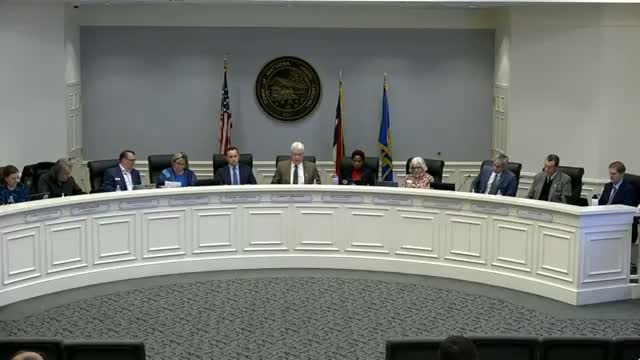
At its Jan. 26 meeting the Matthews Board of Commissioners reviewed proposed revisions to its rules of procedure that would change how the board manages closed sessions, agenda placement, public hearings and the public‑comment period.
Town Attorney Daniel Peterson walked commissioners through suggested edits: strengthened closed‑session confidentiality affirmations; an option to raise the number of commissioners required to place items on the agenda (a proposed draft had suggested increasing it); a simplified public‑hearing timing regime that gives petitioners 10 minutes and limits other speakers to 3 minutes each; a recommended change reducing public comment from 5 minutes to 3 minutes; and a limitation on playing audio/visual media from speakers.
Several residents and speakers described the proposed changes as an attempt to reduce resident access to the dais. Jim Dedmon told the board the rules would ‘‘reduce the time residents are allowed to speak’’ and called the media ban and sign‑up requirements ‘‘control’’ that could suppress critical voices. Alex Freeman said changing presenter and resident time and banning audio/visual methods would ‘‘actively work to limit speech of its own residents.’’
Commissioners debated tradeoffs between alignment with peer communities and protecting robust public participation. Commissioner Garrity moved that the board postpone final action and discuss the item in depth at the planning conference; the motion passed and the board did not adopt the proposed rule changes that night. Mayor John Higdon clarified that existing provisions already permitted the presiding officer to manage decorum and cautioned against assuming the rules would be used to ‘‘silence detractors."
Town Attorney Daniel Peterson walked commissioners through suggested edits: strengthened closed‑session confidentiality affirmations; an option to raise the number of commissioners required to place items on the agenda (a proposed draft had suggested increasing it); a simplified public‑hearing timing regime that gives petitioners 10 minutes and limits other speakers to 3 minutes each; a recommended change reducing public comment from 5 minutes to 3 minutes; and a limitation on playing audio/visual media from speakers.
Several residents and speakers described the proposed changes as an attempt to reduce resident access to the dais. Jim Dedmon told the board the rules would ‘‘reduce the time residents are allowed to speak’’ and called the media ban and sign‑up requirements ‘‘control’’ that could suppress critical voices. Alex Freeman said changing presenter and resident time and banning audio/visual methods would ‘‘actively work to limit speech of its own residents.’’
Commissioners debated tradeoffs between alignment with peer communities and protecting robust public participation. Commissioner Garrity moved that the board postpone final action and discuss the item in depth at the planning conference; the motion passed and the board did not adopt the proposed rule changes that night. Mayor John Higdon clarified that existing provisions already permitted the presiding officer to manage decorum and cautioned against assuming the rules would be used to ‘‘silence detractors."
Don't Miss a Word: See the Full Meeting!
Go beyond summaries. Unlock every video, transcript, and key insight with a Founder Membership.
✓
Get instant access to full meeting videos
✓
Search and clip any phrase from complete transcripts
✓
Receive AI-powered summaries & custom alerts
✓
Enjoy lifetime, unrestricted access to government data
30-day money-back guarantee
