Developer details Stonecrop Meadows project and explains how costs and wetland rules shape affordable housing
January 31, 2026 | Natural Resources & Energy, SENATE, Committees, Legislative , Vermont
This article was created by AI summarizing key points discussed. AI makes mistakes, so for full details and context, please refer to the video of the full meeting. Please report any errors so we can fix them. Report an error »
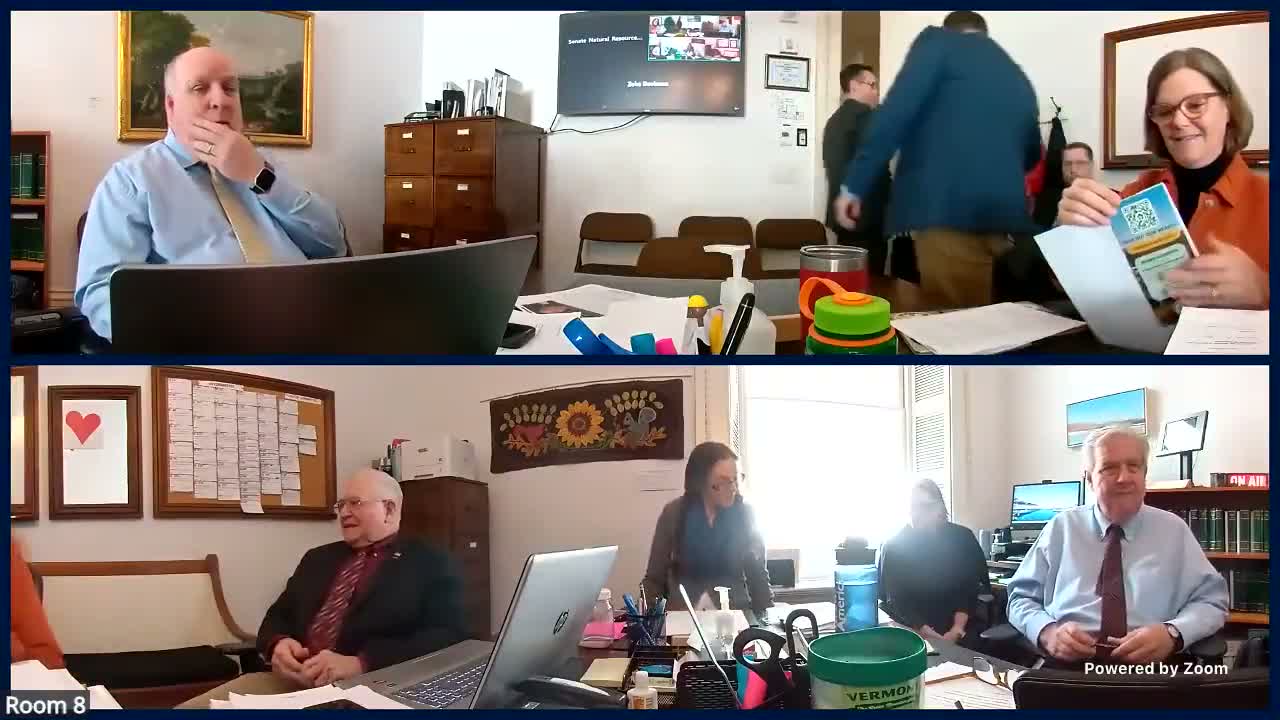
Zeke Davison of Summit Properties briefed the Natural Resources & Energy committee on Stonecrop Meadows, a master‑planned neighborhood in Middlebury where the developer is under construction on the first phase of roughly 80 homes, including a low‑income housing tax‑credit (LIHTC) building.
Davison described the project’s unit mix (a 28-unit affordable rental building, homeownership units through a middle‑income program, and market‑rate units), the financing and public‑private partnerships that enabled the project (LIHTC, VHFA, VHCB and federal ARPA funds referenced), and the role of regulatory relief such as temporary Act 250 exemptions that helped project timing and cost. He said modular construction was used for some townhomes and that the LIHTC building uses geothermal and all‑electric systems.
Davison explained site constraints: the development is ringed by wetlands and a 50‑foot buffer; required stormwater ponds are located within buffer areas, and the developer must design treatment ponds and culverts so post‑development runoff does not increase flow to wetlands. He said if the buffer were tightened or expanded (for example from 50 to 75 feet), developable acreage and unit count would be reduced, affecting absorption and per‑unit cost.
Committee members pressed Davison on why the buildings were no taller and why more market‑rate units were not included. He explained limits imposed by LIHTC award sizes, allocation caps, and the realities of construction costs and market absorption: adding a floor or switching to steel construction (for tall mid‑rise buildings) raises per‑unit costs and typically requires enough units to amortize elevators and steel framing.
On specialized housing, Davison said Summit had conversed with families and service providers about housing for people with intellectual and developmental disabilities but that financing and operations remain the key barriers; such projects require different subsidy and operating models than conventional LIHTC housing.
Davison urged continued multi‑pronged approaches — infill, ADUs, brownfield remediation and greenfield development in appropriate locations — and said policy tradeoffs (energy standards, permitting changes) materially affect the number of homes developers can build for a given price point.
Davison described the project’s unit mix (a 28-unit affordable rental building, homeownership units through a middle‑income program, and market‑rate units), the financing and public‑private partnerships that enabled the project (LIHTC, VHFA, VHCB and federal ARPA funds referenced), and the role of regulatory relief such as temporary Act 250 exemptions that helped project timing and cost. He said modular construction was used for some townhomes and that the LIHTC building uses geothermal and all‑electric systems.
Davison explained site constraints: the development is ringed by wetlands and a 50‑foot buffer; required stormwater ponds are located within buffer areas, and the developer must design treatment ponds and culverts so post‑development runoff does not increase flow to wetlands. He said if the buffer were tightened or expanded (for example from 50 to 75 feet), developable acreage and unit count would be reduced, affecting absorption and per‑unit cost.
Committee members pressed Davison on why the buildings were no taller and why more market‑rate units were not included. He explained limits imposed by LIHTC award sizes, allocation caps, and the realities of construction costs and market absorption: adding a floor or switching to steel construction (for tall mid‑rise buildings) raises per‑unit costs and typically requires enough units to amortize elevators and steel framing.
On specialized housing, Davison said Summit had conversed with families and service providers about housing for people with intellectual and developmental disabilities but that financing and operations remain the key barriers; such projects require different subsidy and operating models than conventional LIHTC housing.
Davison urged continued multi‑pronged approaches — infill, ADUs, brownfield remediation and greenfield development in appropriate locations — and said policy tradeoffs (energy standards, permitting changes) materially affect the number of homes developers can build for a given price point.
Don't Miss a Word: See the Full Meeting!
Go beyond summaries. Unlock every video, transcript, and key insight with a Founder Membership.
✓
Get instant access to full meeting videos
✓
Search and clip any phrase from complete transcripts
✓
Receive AI-powered summaries & custom alerts
✓
Enjoy lifetime, unrestricted access to government data
30-day money-back guarantee
