Senate Transportation considers temporary CDL waiver for emergencies; municipalities press for liability parity
January 31, 2026 | Senate Transportation, SENATE, Committees, Legislative , Vermont
This article was created by AI summarizing key points discussed. AI makes mistakes, so for full details and context, please refer to the video of the full meeting. Please report any errors so we can fix them. Report an error »
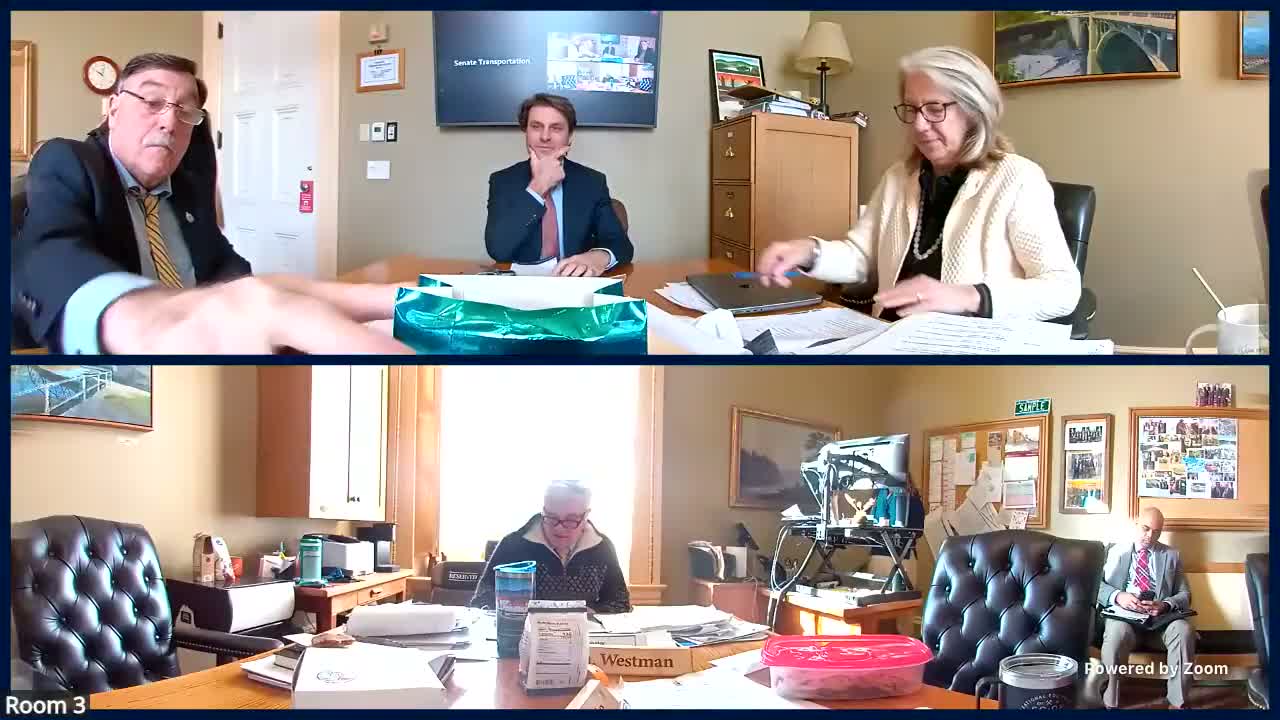
The Senate Transportation committee on an unspecified date heard testimony on Section 18 of a miscellaneous DMV bill, which would allow non-CDL municipal employees to operate commercial vehicles during declared emergencies. Josh Schinberg, director of intergovernmental relations at the Vermont League of Cities and Towns, told the committee he supports emergency flexibility but urged the Legislature to grant municipalities the same monetary liability protections the state receives before extending the waiver.
Shinberg told members that municipal risk managers and attorneys have raised liability concerns, and he cited the state cap the testimony described as "$500,000 per occurrence, $2,000,000 aggregate" as the protection municipalities currently lack. "The liability protection we're looking for is no different than what the state has," Schinberg said, arguing that without similar caps towns could face costly lawsuits that ultimately burden local taxpayers.
DMV representatives told the panel the language originated with the agency to give staff and municipal partners limited authority to move equipment or relieve fatigued CDL drivers during major, prolonged emergencies. A DMV witness noted coordination with the Federal Motor Carrier Safety Administration (FMCSA) and compared the proposal to recent state actions to adjust hours-of-service rules in other emergency responses.
Committee members pressed both sides on scope and safety. Lawmakers emphasized that any exemption should be narrowly tailored to circumstances in which equipment must be moved to prevent loss or where a rested, experienced municipal employee temporarily relieves an exhausted CDL driver. Several members asked DMV and VLCT attorneys to refine the bill's statutory definition of "emergency" and to confirm whether the proposal dovetails with federal FMCSA rules.
The committee asked VLCT to provide written testimony with the figures cited and directed DMV and municipal stakeholders to work with legal counsel to produce revised language. Lawmakers signaled they would be open to a narrowly defined emergency authorization if it includes explicit monetary liability protections for municipalities similar to the state's cap.
The committee did not vote on the proposal at the hearing and requested a report back and revised statutory language from DMV and stakeholders in the coming days.
Next steps: DMV and VLCT were asked to consult with counsel, produce written testimony and proposed language, and return to the committee with an update.
Shinberg told members that municipal risk managers and attorneys have raised liability concerns, and he cited the state cap the testimony described as "$500,000 per occurrence, $2,000,000 aggregate" as the protection municipalities currently lack. "The liability protection we're looking for is no different than what the state has," Schinberg said, arguing that without similar caps towns could face costly lawsuits that ultimately burden local taxpayers.
DMV representatives told the panel the language originated with the agency to give staff and municipal partners limited authority to move equipment or relieve fatigued CDL drivers during major, prolonged emergencies. A DMV witness noted coordination with the Federal Motor Carrier Safety Administration (FMCSA) and compared the proposal to recent state actions to adjust hours-of-service rules in other emergency responses.
Committee members pressed both sides on scope and safety. Lawmakers emphasized that any exemption should be narrowly tailored to circumstances in which equipment must be moved to prevent loss or where a rested, experienced municipal employee temporarily relieves an exhausted CDL driver. Several members asked DMV and VLCT attorneys to refine the bill's statutory definition of "emergency" and to confirm whether the proposal dovetails with federal FMCSA rules.
The committee asked VLCT to provide written testimony with the figures cited and directed DMV and municipal stakeholders to work with legal counsel to produce revised language. Lawmakers signaled they would be open to a narrowly defined emergency authorization if it includes explicit monetary liability protections for municipalities similar to the state's cap.
The committee did not vote on the proposal at the hearing and requested a report back and revised statutory language from DMV and stakeholders in the coming days.
Next steps: DMV and VLCT were asked to consult with counsel, produce written testimony and proposed language, and return to the committee with an update.
Don't Miss a Word: See the Full Meeting!
Go beyond summaries. Unlock every video, transcript, and key insight with a Founder Membership.
✓
Get instant access to full meeting videos
✓
Search and clip any phrase from complete transcripts
✓
Receive AI-powered summaries & custom alerts
✓
Enjoy lifetime, unrestricted access to government data
30-day money-back guarantee
