Senate Transportation hears traffic‑court update showing drop in citations and revenue since COVID
January 31, 2026 | Senate Transportation, SENATE, Committees, Legislative , Vermont
This article was created by AI summarizing key points discussed. AI makes mistakes, so for full details and context, please refer to the video of the full meeting. Please report any errors so we can fix them. Report an error »
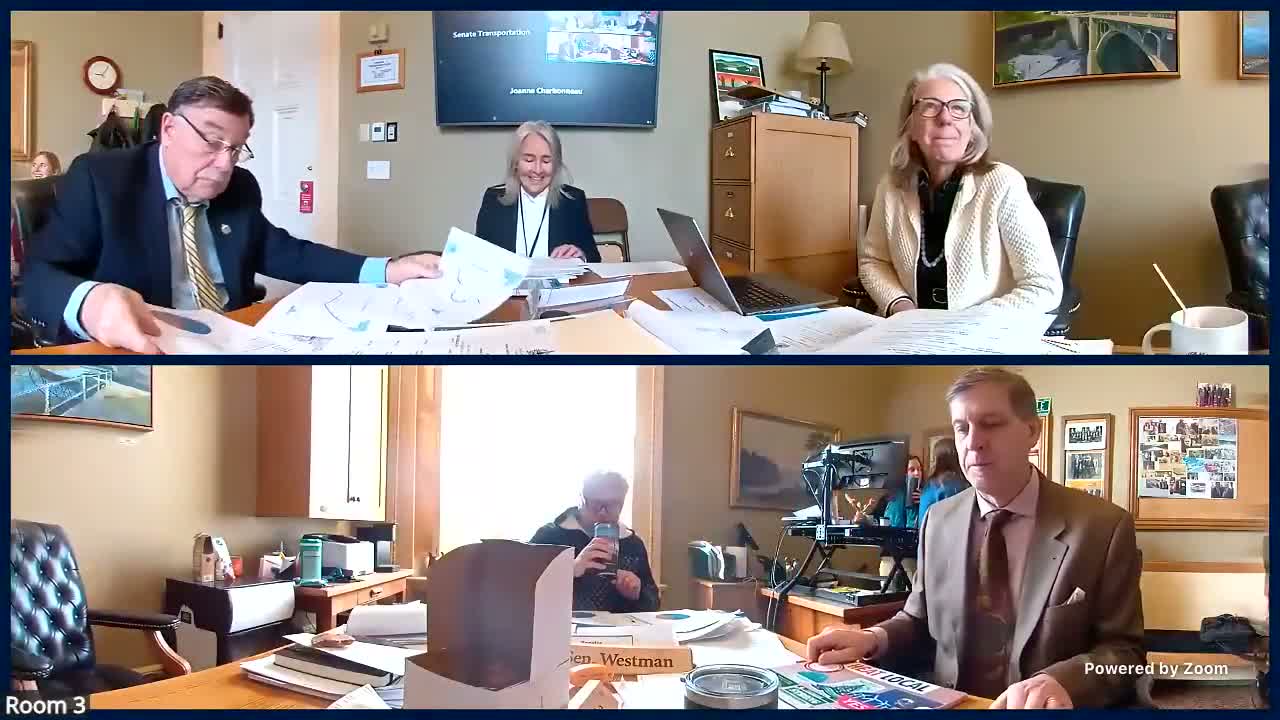
State Court Administrator Terry Corson told the Senate Transportation committee on Jan. 30 that traffic‑citation filings are down across several categories since the COVID period and that the decline has reduced revenue for programs funded by ticket proceeds.
"They went way down during the COVID period," Corson said, describing a sustained lower volume in tickets for offenses such as failure to display license plates and expired vehicle inspections. Corson said a recent 10‑year data review shows fewer tickets in many categories and that a separate, smaller category tracks failure to display both front and rear plates.
Corson told senators the share the courts received last year was about $750,000, compared with more than $1,000,000 roughly a decade earlier, and warned that the revenue decline has meant less funding for program lines that historically drew on ticket proceeds, including victim compensation and technology funds. "That funded our tech fund and why the heck of us should then ask for the tech fund to be supplemented by additional funds because the traffic ticket revenue had gone down so much," Corson said.
Committee members asked for a breakdown of collections by how fines are processed and by which agency wrote the ticket. Corson and Joanne, a coordinator for various courts including the Judicial Bureau, said the distribution of proceeds depends on the code used to charge an offense: when a municipality charges an adopted local ordinance, roughly half of an average ticket (about $87.50 of a cited $162 average) flows to the municipality; other state‑coded violations go to the state transportation fund.
Corson also noted collection policy changes that reduced incentives for payment — for example, removing license‑reinstatement ties to unpaid fines — and the committee discussed how that has affected overall collections. Corson said she will provide the committee with the amounts collected in the last year and over 10 years and will work with finance staff to determine whether collections can be broken down by the issuing agency (state police, sheriffs, municipal officers) or by the collection mechanism (tax refund intercepts, private collection agency "Alliance," etc.).
No formal actions were taken at the hearing; Corson and staff agreed to supply follow‑up data to the committee.
The committee asked that future briefings include Kelly from the finance office so senators can see immediate revenue figures and a clearer breakdown of who issues tickets and how much is collected from each source.
"They went way down during the COVID period," Corson said, describing a sustained lower volume in tickets for offenses such as failure to display license plates and expired vehicle inspections. Corson said a recent 10‑year data review shows fewer tickets in many categories and that a separate, smaller category tracks failure to display both front and rear plates.
Corson told senators the share the courts received last year was about $750,000, compared with more than $1,000,000 roughly a decade earlier, and warned that the revenue decline has meant less funding for program lines that historically drew on ticket proceeds, including victim compensation and technology funds. "That funded our tech fund and why the heck of us should then ask for the tech fund to be supplemented by additional funds because the traffic ticket revenue had gone down so much," Corson said.
Committee members asked for a breakdown of collections by how fines are processed and by which agency wrote the ticket. Corson and Joanne, a coordinator for various courts including the Judicial Bureau, said the distribution of proceeds depends on the code used to charge an offense: when a municipality charges an adopted local ordinance, roughly half of an average ticket (about $87.50 of a cited $162 average) flows to the municipality; other state‑coded violations go to the state transportation fund.
Corson also noted collection policy changes that reduced incentives for payment — for example, removing license‑reinstatement ties to unpaid fines — and the committee discussed how that has affected overall collections. Corson said she will provide the committee with the amounts collected in the last year and over 10 years and will work with finance staff to determine whether collections can be broken down by the issuing agency (state police, sheriffs, municipal officers) or by the collection mechanism (tax refund intercepts, private collection agency "Alliance," etc.).
No formal actions were taken at the hearing; Corson and staff agreed to supply follow‑up data to the committee.
The committee asked that future briefings include Kelly from the finance office so senators can see immediate revenue figures and a clearer breakdown of who issues tickets and how much is collected from each source.
Don't Miss a Word: See the Full Meeting!
Go beyond summaries. Unlock every video, transcript, and key insight with a Founder Membership.
✓
Get instant access to full meeting videos
✓
Search and clip any phrase from complete transcripts
✓
Receive AI-powered summaries & custom alerts
✓
Enjoy lifetime, unrestricted access to government data
30-day money-back guarantee
