Virginia Senate Health Professions Subcommittee advances dental workforce, newborn screening and clinical‑access bills
January 31, 2026 | 2026 Legislature VA, Virginia
This article was created by AI summarizing key points discussed. AI makes mistakes, so for full details and context, please refer to the video of the full meeting. Please report any errors so we can fix them. Report an error »
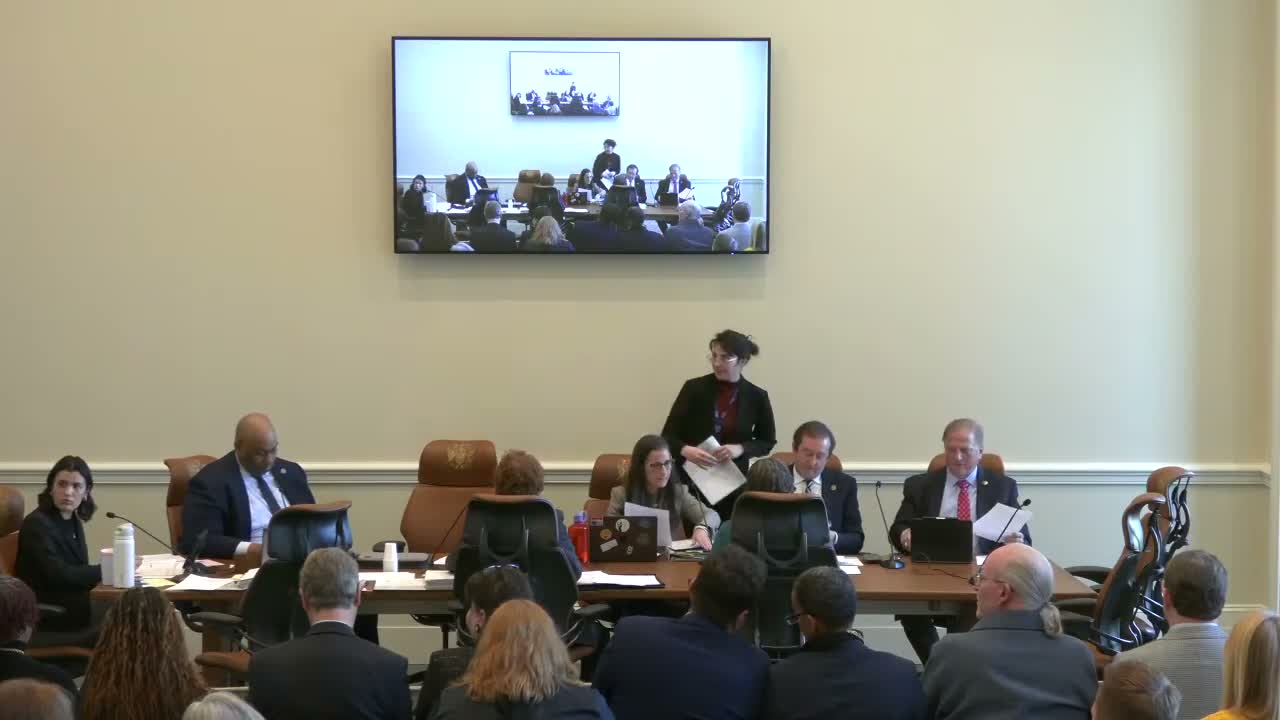
The Senate Health Professions Subcommittee met in Richmond on Jan. 31 and voted to report a package of health‑care bills to the full Senate, moving several workforce and clinical‑access measures forward after extensive testimony from clinicians, patient advocates and trade groups.
The committee reported bills affecting dental workforce pathways, access to experimental psilocybin treatment if approved by the Food and Drug Administration, the addition of Gaucher disease to Virginia’s newborn screening panel, pharmacy therapeutic interchange rules, requirements for nursing‑home insurance on transfers, and other measures. Several bills drew sharply divided testimony but were ultimately reported to the full committee by roll call.
Sponsor’s framing and dental workforce measures
Senate Bill 282, introduced by the bill patron, would allow the Board of Dentistry to license dentists trained outside the United States to practice as dental hygienists in Virginia if they satisfy the same clinical examinations, character and licensure requirements that apply to other dental hygienists. The sponsor repeatedly emphasized that SB 282 does not create automatic licensure, does not expand scope of practice, and leaves credential review and testing to the Board of Dentistry.
Scott Johnson, general counsel for the Virginia Dental Association, told the subcommittee the association has worked on the issue for two years and described foreign‑trained dentists as a “ready workforce” who often hold more clinical training than currently required for hygienists. He cited adoption of similar pathways in states such as Florida, Connecticut and Massachusetts and noted recent Council on Dental Accreditation guidance allowing foreign‑trained dentists to teach in hygiene programs.
Opponents said the bill weakens hygiene standards and reduces public input into regulations. Catherine Berard, a registered dental hygienist with more than 50 years of experience, said in testimony that granting hygienist licenses to dentists trained abroad “degrades the 100‑year‑old dental hygiene profession” and argued those practitioners should instead be licensed as dentists where appropriate. Barrett Hardiman, representing the Virginia Dental Hygienists Association, noted a work group had not reached consensus and warned that the bill would exempt implementing regulations from the Administrative Process Act, reducing public comment on regulatory safeguards.
After debate, the committee adopted a motion to report SB 282 to the full committee by recorded vote (the clerk recorded four ayes, noes zero in the transcript).
Psilocybin treatment contingent on FDA approval
Senate Bill 379, a substitute the sponsor presented as a carryover from the previous year, would direct the Virginia Board of Pharmacy to allow health‑care professionals to prescribe, possess and dispense psilocybin formulations that the FDA permits in clinical settings. The sponsor framed the bill narrowly for clinical use, not street access, and said it is intended for treatment‑resistant conditions, including PTSD and depression.
Multiple supporters addressed veteran needs and clinical trials. Nicole Lauder, speaking for Compass Pathways, said her company is running clinical trials and urged the board to use existing regulatory authority to make treatments available once approved. David Jones and Joanne Smith, representing the Veterans of Foreign Wars Department of Virginia, urged support citing veteran suicide and the need for additional, FDA‑approved treatment options.
The committee voted to report SB 379 to the full committee by recorded roll call (ayes four, noes zero in the transcript).
Newborn screening for Gaucher disease
Senate Bill 374 would amend Code §32.1‑65 to add Gaucher disease to Virginia’s newborn screening panel so parents would receive results and could pursue early diagnosis and treatment. Patient advocates described long diagnostic delays in states without newborn screening and emphasized that multiple FDA‑approved treatments exist.
James Romano and other members of the Gaucher Community Alliance told the subcommittee that early detection can prevent irreversible complications, and that Virginia already has the laboratory capacity for lysosomal storage disorder testing. Dr. Vanessa Walker Harris of the Virginia Department of Health clarified that Virginia does not perform newborn tests and then withhold results; tests performed by the state are reported to families.
The committee voted to report SB 374 to the full committee (ayes five, noes zero as recorded in the transcript).
Pharmacy, opioid treatment and nursing‑home measures
Senate Bill 421 would authorize the Board of Pharmacy to promulgate regulations allowing pharmacists to perform therapeutic interchange — substituting a therapeutically equivalent drug when appropriate — under Board rules and with specified exceptions for drugs that other states have excluded. Caroline (the Board’s executive) said the regulations would identify allowable interchanges and that the approach reduces patient delays caused by repeated prescriber contact. The Virginia Pharmacy Association testified in support. The bill was reported out by roll call.
Senate Bill 421 (office‑based pharmacist supervision in opioid treatment programs) and SB 41 (clarifying counseling/referral requirements for office‑based buprenorphine) likewise advanced after proponents described pilot programs and the shortage of on‑site pharmacists in opioid treatment clinics; the Board of Pharmacy has piloted virtual supervision in several sites, and supporters said regulations require periodic in‑person checks.
The subcommittee also adopted a substitute to address nursing‑home insurance shortfalls when facilities transfer ownership: purchasers would be required to buy an extended reporting endorsement covering the prior two years. Industry groups including the Virginia Healthcare Association and LeadingAge Virginia supported that measure.
Dental assistant substitute and debate over scope and safety
Senate Bill 178 (substitute), presented by Senator Locke, would authorize additional training and certification for existing dental assistants to perform limited preventive procedures (supragingival scaling and coronal polishing) under direct supervision, expanding options to ease access amid a shortage of dental hygienists. Supporters — including practitioners and large dental practices — said the change will cut long wait times for routine preventive care and may build a pipeline into hygiene careers.
Opponents, including licensed hygienists and dental educators, strongly urged rejection or amendment, arguing scaling is a clinical procedure that requires CODA‑accredited training and advanced judgment, that abbreviated training risks patient harm and could create billing/legal liabilities, and that alternatives exist (expanding hygiene programs, re‑engaging licensed hygienists not in the workforce). The committee voted to report the substitute to the full committee (ayes five, noes zero in the transcript).
Youth medical restrictions and divided testimony
A proposed Youth Protection Act introduced by Senator Peake drew sharply divided public testimony. Supporters cited other states’ laws and recent court rulings permitting state regulation; opponents including the ACLU of Virginia, the Virginia Education Association and Equality Virginia criticized forced parental notification, argued the bill would remove medical decisions from families and clinicians, and warned of chilling effects on students and providers. The transcript records a motion to pass the measure by indefinitely with roll call procedures beginning; the committee’s final disposition on that motion is recorded in the clerk’s roll in the transcript materials.
What happens next
Where the subcommittee reported bills, they will be scheduled for consideration by the full Senate committee(s) and may be subject to amendment. Several items that drew substantive testimony — notably the dental workforce measures (SB 282 and SB 178) and the Youth Protection Act — exposed sharply divided stakeholder views that are likely to shape floor debate and amendments.
Quotes
"This bill puts existing talent to work. It improves access to care and does so responsibly," Scott Johnson, general counsel for the Virginia Dental Association, said in support of SB 282.
"Scaling is not a task. It is a critical part of a clinical judgment process," testified Tracy Martin, a licensed hygienist and former Virginia Dental Hygienist Association president, in opposition to SB 178.
"We are asking the board to take its existing regulatory authority to hopefully just get this very needed treatment into the hands of people who are suffering," Nicole Lauder of Compass Pathways said about SB 379.
Ending
The subcommittee concluded by reporting multiple bills to the full Senate for further consideration and then adjourned. Recorded roll calls for bills reported to the full committee appear in the transcript.
The committee reported bills affecting dental workforce pathways, access to experimental psilocybin treatment if approved by the Food and Drug Administration, the addition of Gaucher disease to Virginia’s newborn screening panel, pharmacy therapeutic interchange rules, requirements for nursing‑home insurance on transfers, and other measures. Several bills drew sharply divided testimony but were ultimately reported to the full committee by roll call.
Sponsor’s framing and dental workforce measures
Senate Bill 282, introduced by the bill patron, would allow the Board of Dentistry to license dentists trained outside the United States to practice as dental hygienists in Virginia if they satisfy the same clinical examinations, character and licensure requirements that apply to other dental hygienists. The sponsor repeatedly emphasized that SB 282 does not create automatic licensure, does not expand scope of practice, and leaves credential review and testing to the Board of Dentistry.
Scott Johnson, general counsel for the Virginia Dental Association, told the subcommittee the association has worked on the issue for two years and described foreign‑trained dentists as a “ready workforce” who often hold more clinical training than currently required for hygienists. He cited adoption of similar pathways in states such as Florida, Connecticut and Massachusetts and noted recent Council on Dental Accreditation guidance allowing foreign‑trained dentists to teach in hygiene programs.
Opponents said the bill weakens hygiene standards and reduces public input into regulations. Catherine Berard, a registered dental hygienist with more than 50 years of experience, said in testimony that granting hygienist licenses to dentists trained abroad “degrades the 100‑year‑old dental hygiene profession” and argued those practitioners should instead be licensed as dentists where appropriate. Barrett Hardiman, representing the Virginia Dental Hygienists Association, noted a work group had not reached consensus and warned that the bill would exempt implementing regulations from the Administrative Process Act, reducing public comment on regulatory safeguards.
After debate, the committee adopted a motion to report SB 282 to the full committee by recorded vote (the clerk recorded four ayes, noes zero in the transcript).
Psilocybin treatment contingent on FDA approval
Senate Bill 379, a substitute the sponsor presented as a carryover from the previous year, would direct the Virginia Board of Pharmacy to allow health‑care professionals to prescribe, possess and dispense psilocybin formulations that the FDA permits in clinical settings. The sponsor framed the bill narrowly for clinical use, not street access, and said it is intended for treatment‑resistant conditions, including PTSD and depression.
Multiple supporters addressed veteran needs and clinical trials. Nicole Lauder, speaking for Compass Pathways, said her company is running clinical trials and urged the board to use existing regulatory authority to make treatments available once approved. David Jones and Joanne Smith, representing the Veterans of Foreign Wars Department of Virginia, urged support citing veteran suicide and the need for additional, FDA‑approved treatment options.
The committee voted to report SB 379 to the full committee by recorded roll call (ayes four, noes zero in the transcript).
Newborn screening for Gaucher disease
Senate Bill 374 would amend Code §32.1‑65 to add Gaucher disease to Virginia’s newborn screening panel so parents would receive results and could pursue early diagnosis and treatment. Patient advocates described long diagnostic delays in states without newborn screening and emphasized that multiple FDA‑approved treatments exist.
James Romano and other members of the Gaucher Community Alliance told the subcommittee that early detection can prevent irreversible complications, and that Virginia already has the laboratory capacity for lysosomal storage disorder testing. Dr. Vanessa Walker Harris of the Virginia Department of Health clarified that Virginia does not perform newborn tests and then withhold results; tests performed by the state are reported to families.
The committee voted to report SB 374 to the full committee (ayes five, noes zero as recorded in the transcript).
Pharmacy, opioid treatment and nursing‑home measures
Senate Bill 421 would authorize the Board of Pharmacy to promulgate regulations allowing pharmacists to perform therapeutic interchange — substituting a therapeutically equivalent drug when appropriate — under Board rules and with specified exceptions for drugs that other states have excluded. Caroline (the Board’s executive) said the regulations would identify allowable interchanges and that the approach reduces patient delays caused by repeated prescriber contact. The Virginia Pharmacy Association testified in support. The bill was reported out by roll call.
Senate Bill 421 (office‑based pharmacist supervision in opioid treatment programs) and SB 41 (clarifying counseling/referral requirements for office‑based buprenorphine) likewise advanced after proponents described pilot programs and the shortage of on‑site pharmacists in opioid treatment clinics; the Board of Pharmacy has piloted virtual supervision in several sites, and supporters said regulations require periodic in‑person checks.
The subcommittee also adopted a substitute to address nursing‑home insurance shortfalls when facilities transfer ownership: purchasers would be required to buy an extended reporting endorsement covering the prior two years. Industry groups including the Virginia Healthcare Association and LeadingAge Virginia supported that measure.
Dental assistant substitute and debate over scope and safety
Senate Bill 178 (substitute), presented by Senator Locke, would authorize additional training and certification for existing dental assistants to perform limited preventive procedures (supragingival scaling and coronal polishing) under direct supervision, expanding options to ease access amid a shortage of dental hygienists. Supporters — including practitioners and large dental practices — said the change will cut long wait times for routine preventive care and may build a pipeline into hygiene careers.
Opponents, including licensed hygienists and dental educators, strongly urged rejection or amendment, arguing scaling is a clinical procedure that requires CODA‑accredited training and advanced judgment, that abbreviated training risks patient harm and could create billing/legal liabilities, and that alternatives exist (expanding hygiene programs, re‑engaging licensed hygienists not in the workforce). The committee voted to report the substitute to the full committee (ayes five, noes zero in the transcript).
Youth medical restrictions and divided testimony
A proposed Youth Protection Act introduced by Senator Peake drew sharply divided public testimony. Supporters cited other states’ laws and recent court rulings permitting state regulation; opponents including the ACLU of Virginia, the Virginia Education Association and Equality Virginia criticized forced parental notification, argued the bill would remove medical decisions from families and clinicians, and warned of chilling effects on students and providers. The transcript records a motion to pass the measure by indefinitely with roll call procedures beginning; the committee’s final disposition on that motion is recorded in the clerk’s roll in the transcript materials.
What happens next
Where the subcommittee reported bills, they will be scheduled for consideration by the full Senate committee(s) and may be subject to amendment. Several items that drew substantive testimony — notably the dental workforce measures (SB 282 and SB 178) and the Youth Protection Act — exposed sharply divided stakeholder views that are likely to shape floor debate and amendments.
Quotes
"This bill puts existing talent to work. It improves access to care and does so responsibly," Scott Johnson, general counsel for the Virginia Dental Association, said in support of SB 282.
"Scaling is not a task. It is a critical part of a clinical judgment process," testified Tracy Martin, a licensed hygienist and former Virginia Dental Hygienist Association president, in opposition to SB 178.
"We are asking the board to take its existing regulatory authority to hopefully just get this very needed treatment into the hands of people who are suffering," Nicole Lauder of Compass Pathways said about SB 379.
Ending
The subcommittee concluded by reporting multiple bills to the full Senate for further consideration and then adjourned. Recorded roll calls for bills reported to the full committee appear in the transcript.
Don't Miss a Word: See the Full Meeting!
Go beyond summaries. Unlock every video, transcript, and key insight with a Founder Membership.
✓
Get instant access to full meeting videos
✓
Search and clip any phrase from complete transcripts
✓
Receive AI-powered summaries & custom alerts
✓
Enjoy lifetime, unrestricted access to government data
30-day money-back guarantee
