House Privileges and Elections subcommittee advances several voting bills, including scanner mandate with limited hand‑count exceptions
January 31, 2026 | 2026 Legislature VA, Virginia
This article was created by AI summarizing key points discussed. AI makes mistakes, so for full details and context, please refer to the video of the full meeting. Please report any errors so we can fix them. Report an error »
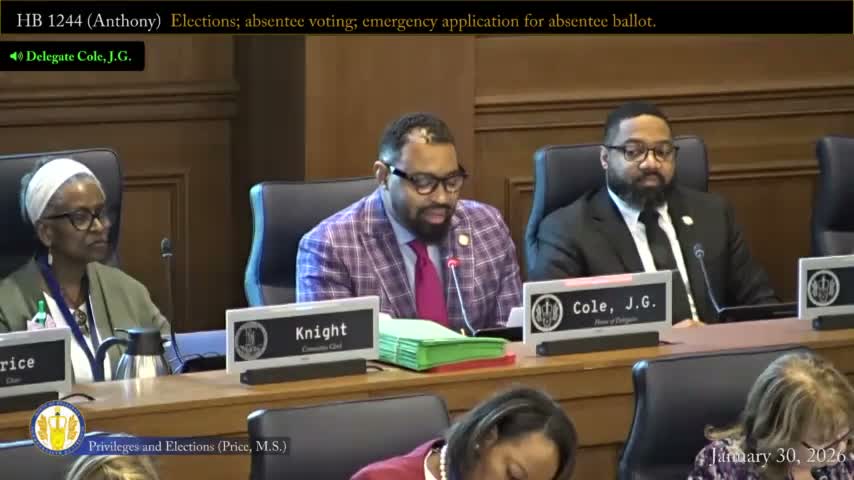
The House Privileges and Elections Subcommittee met and voted to advance a slate of election‑administration measures, moving a set of bills to committees of further review and approving substitutes and amendments on several items.
Top items included House Bill 28, which would bar the Department of Elections from implementing programs to systematically remove names of ineligible voters within 90 days before a primary or general election, while preserving existing exceptions such as removals requested by the registrant, removals for criminal conviction, mental incapacity, or death. The bill also extends the time a registrar may cancel a registration from 30 to 60 days after notice and lengthens the response period to a citizenship‑status cancellation from 14 to 28 days. The committee reported HB 28 with the adopted substitute and referred it to the Appropriations Committee; the motion passed 15–7.
The committee considered a substituted version of House Bill 968 to require ballot‑scanner machines to count machine‑readable ballots and to prohibit routine hand counts. A committee attorney explained the substitute includes narrow exceptions and procedures: “there can only be a hand count if the machine is inoperable, there’s no available scanner, and it would be unreasonable to wait for a scanner to be operational or brought to the precinct,” and it creates a duplication process at the Central Absentee Precinct for ballots that cannot be fed into a machine. Members asked practical questions—such as handling leftover ballots after a precinct machine is closed and how large a bipartisan team should be for duplicating ballots—and were told regulations would provide needed detail. The substitute was recommended and passed 16–6.
The subcommittee also approved HB 1244 (substitute), which expands access to emergency absentee ballots when a voter has applied for but not received an absentee ballot and will be unable to vote on Election Day for specified emergencies; the window for requesting such a ballot was extended from four days to ten days before the election. Other measures advanced included HB 1321 (removing a six‑day law‑enforcement dispatch requirement for late abstracts), HB 1014 (clarifying that a guardianship incapacity finding is not automatically a voting disqualification unless a court specifically so finds by clear and convincing evidence), and HB 640 (eliminating in‑precinct challenges by voters, moving those challenges to circuit court). Several bills were reported unanimously or by lopsided margins; a number were sent forward without extensive debate.
Committee members also approved campaign‑finance timing adjustments in HB 1348 (moving certain large pre‑election contribution reporting to the day before the election) and clarified HB 113’s anti‑bribery language to exempt paying wages to workers conducting voter‑registration drives. During that discussion Delegate Waxman asked whether the language would allow groups to offer incentives such as “free chicken and fish dinners” to attract voters; the chair and members clarified the statute targets exchanges of value given in return for voting or registration, not non‑exchange incentives.
The committee carried over two proposed constitutional amendments to 2027 so they can be reconsidered before an intervening election and completed block votes to report several senate bills and joint resolutions. The meeting closed with a brief welcome to former committee chair Judge Joe Lindsay and an adjournment.
The committee’s next procedural steps are the formal referrals already recorded (including Appropriations for HB 28) and any further regulatory or drafting work requested of staff; the measures that were reported will proceed to the next stages of the legislative process.
Top items included House Bill 28, which would bar the Department of Elections from implementing programs to systematically remove names of ineligible voters within 90 days before a primary or general election, while preserving existing exceptions such as removals requested by the registrant, removals for criminal conviction, mental incapacity, or death. The bill also extends the time a registrar may cancel a registration from 30 to 60 days after notice and lengthens the response period to a citizenship‑status cancellation from 14 to 28 days. The committee reported HB 28 with the adopted substitute and referred it to the Appropriations Committee; the motion passed 15–7.
The committee considered a substituted version of House Bill 968 to require ballot‑scanner machines to count machine‑readable ballots and to prohibit routine hand counts. A committee attorney explained the substitute includes narrow exceptions and procedures: “there can only be a hand count if the machine is inoperable, there’s no available scanner, and it would be unreasonable to wait for a scanner to be operational or brought to the precinct,” and it creates a duplication process at the Central Absentee Precinct for ballots that cannot be fed into a machine. Members asked practical questions—such as handling leftover ballots after a precinct machine is closed and how large a bipartisan team should be for duplicating ballots—and were told regulations would provide needed detail. The substitute was recommended and passed 16–6.
The subcommittee also approved HB 1244 (substitute), which expands access to emergency absentee ballots when a voter has applied for but not received an absentee ballot and will be unable to vote on Election Day for specified emergencies; the window for requesting such a ballot was extended from four days to ten days before the election. Other measures advanced included HB 1321 (removing a six‑day law‑enforcement dispatch requirement for late abstracts), HB 1014 (clarifying that a guardianship incapacity finding is not automatically a voting disqualification unless a court specifically so finds by clear and convincing evidence), and HB 640 (eliminating in‑precinct challenges by voters, moving those challenges to circuit court). Several bills were reported unanimously or by lopsided margins; a number were sent forward without extensive debate.
Committee members also approved campaign‑finance timing adjustments in HB 1348 (moving certain large pre‑election contribution reporting to the day before the election) and clarified HB 113’s anti‑bribery language to exempt paying wages to workers conducting voter‑registration drives. During that discussion Delegate Waxman asked whether the language would allow groups to offer incentives such as “free chicken and fish dinners” to attract voters; the chair and members clarified the statute targets exchanges of value given in return for voting or registration, not non‑exchange incentives.
The committee carried over two proposed constitutional amendments to 2027 so they can be reconsidered before an intervening election and completed block votes to report several senate bills and joint resolutions. The meeting closed with a brief welcome to former committee chair Judge Joe Lindsay and an adjournment.
The committee’s next procedural steps are the formal referrals already recorded (including Appropriations for HB 28) and any further regulatory or drafting work requested of staff; the measures that were reported will proceed to the next stages of the legislative process.
Don't Miss a Word: See the Full Meeting!
Go beyond summaries. Unlock every video, transcript, and key insight with a Founder Membership.
✓
Get instant access to full meeting videos
✓
Search and clip any phrase from complete transcripts
✓
Receive AI-powered summaries & custom alerts
✓
Enjoy lifetime, unrestricted access to government data
30-day money-back guarantee
