Rep. Joshua Dobrevich lays out broad tax-reform plan proposing unified personal income tax
January 31, 2026 | Ways & Means, HOUSE OF REPRESENTATIVES, Committees, Legislative , Vermont
This article was created by AI summarizing key points discussed. AI makes mistakes, so for full details and context, please refer to the video of the full meeting. Please report any errors so we can fix them. Report an error »
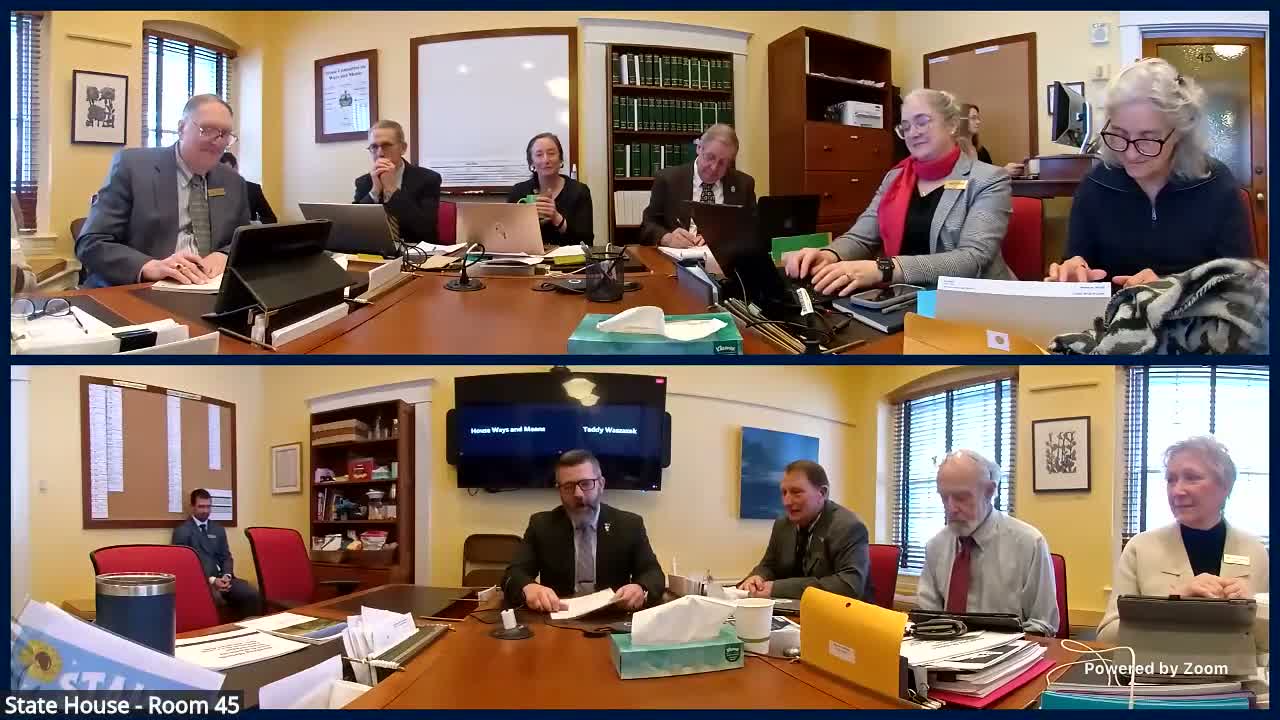
Representative Joshua Dobrevich presented a comprehensive tax-reform bill to the Ways & Means committee, seeking to simplify Vermont’s tax code by repealing several existing taxes and shifting primary revenue collection to a single personal income tax for individuals, estates and trusts. "This bill proposes a major simplification, repealing several existing taxes, including the sales and use tax, education property tax, estate gift estate and gift taxes, property tax transfer, land gains, and others," Dobrevich told the panel.
Dobrevich said the proposal would preserve key targeted reliefs: he explicitly called for continuing the Vermont Veterans Tax Credit and maintaining the existing exemption for federally taxable Social Security benefits referenced in testimony as "32 VSA subsection 5 58 30 e." He described the overall policy goals as greater transparency and predictability and said the bill would include a targeted low-income relief credit to protect lower-income households.
On revenue, Dobrevich gave a preliminary estimate based on the prior year’s budget: "Based on last year's budget, if we remove all of those... 13% should give us a couple million over what our budget was last year." He acknowledged this is an approximate calculation and said he used data tools to help model the proposal but welcomed further staff analysis. He also proposed procedural safeguards for future rate changes: increases would generally require a two-thirds legislative vote and, in some cases, voter approval; the governor could propose a temporary increase subject to a two-thirds vote and limited to a 12-month implementation, renewable under narrow circumstances.
Committee members raised numerous implementation questions: how municipalities and the education property tax would be handled, effects on landlords and renters, how to treat nonresident property owners, and whether to retain fees and sin taxes. Dobrevich defended retaining many fees for fee-for-service functions (DMV, licensing) and argued removing fees would raise the estimated flat rate to about 14 percent.
Members asked for concise one-page summaries and fiscal breakdowns; Dobrevich said he prefers short bills and will provide materials. The committee did not take immediate action; members signaled interest in expert testimony, fiscal modeling and stakeholder outreach before any vote.
Dobrevich said the proposal would preserve key targeted reliefs: he explicitly called for continuing the Vermont Veterans Tax Credit and maintaining the existing exemption for federally taxable Social Security benefits referenced in testimony as "32 VSA subsection 5 58 30 e." He described the overall policy goals as greater transparency and predictability and said the bill would include a targeted low-income relief credit to protect lower-income households.
On revenue, Dobrevich gave a preliminary estimate based on the prior year’s budget: "Based on last year's budget, if we remove all of those... 13% should give us a couple million over what our budget was last year." He acknowledged this is an approximate calculation and said he used data tools to help model the proposal but welcomed further staff analysis. He also proposed procedural safeguards for future rate changes: increases would generally require a two-thirds legislative vote and, in some cases, voter approval; the governor could propose a temporary increase subject to a two-thirds vote and limited to a 12-month implementation, renewable under narrow circumstances.
Committee members raised numerous implementation questions: how municipalities and the education property tax would be handled, effects on landlords and renters, how to treat nonresident property owners, and whether to retain fees and sin taxes. Dobrevich defended retaining many fees for fee-for-service functions (DMV, licensing) and argued removing fees would raise the estimated flat rate to about 14 percent.
Members asked for concise one-page summaries and fiscal breakdowns; Dobrevich said he prefers short bills and will provide materials. The committee did not take immediate action; members signaled interest in expert testimony, fiscal modeling and stakeholder outreach before any vote.
Don't Miss a Word: See the Full Meeting!
Go beyond summaries. Unlock every video, transcript, and key insight with a Founder Membership.
✓
Get instant access to full meeting videos
✓
Search and clip any phrase from complete transcripts
✓
Receive AI-powered summaries & custom alerts
✓
Enjoy lifetime, unrestricted access to government data
30-day money-back guarantee
