House Judiciary committee questions tight timelines, evidence and collection rules in H 5 7 8 animal-cruelty bill
January 31, 2026 | Judiciary, HOUSE OF REPRESENTATIVES, Committees, Legislative , Vermont
This article was created by AI summarizing key points discussed. AI makes mistakes, so for full details and context, please refer to the video of the full meeting. Please report any errors so we can fix them. Report an error »
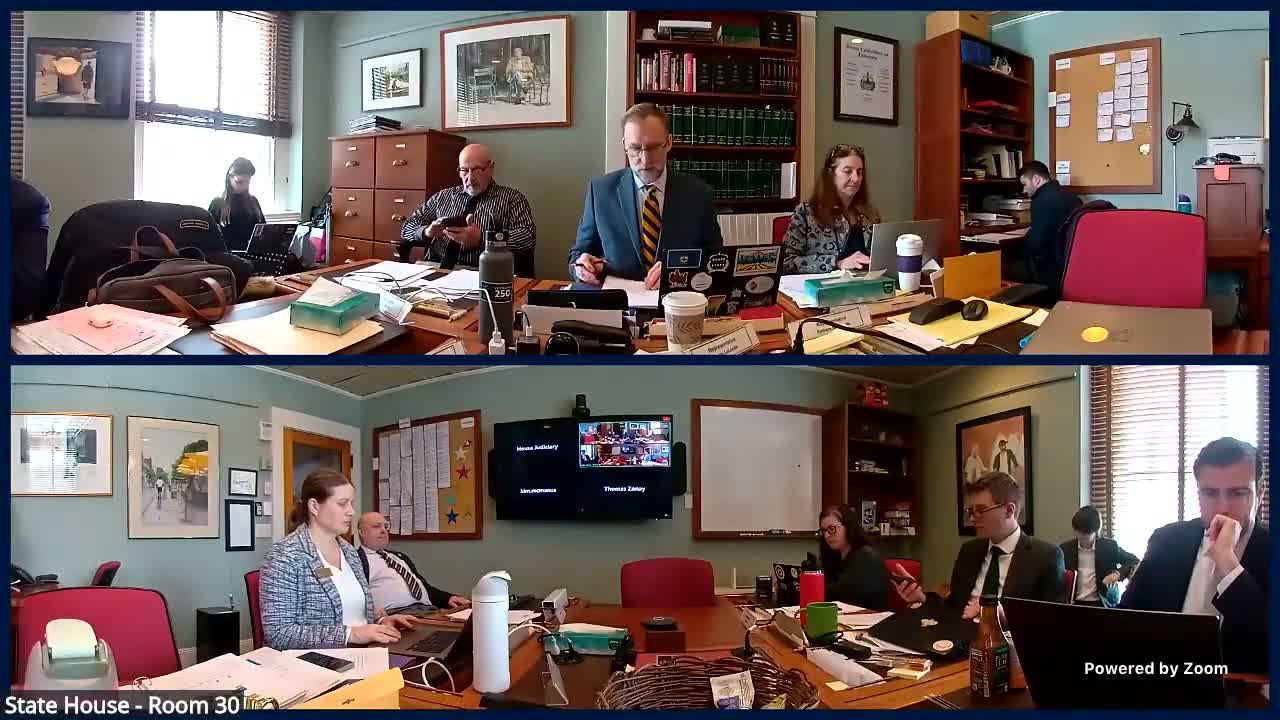
The House Judiciary Committee on Jan. 30 took testimony on H 5 7 8, an animal cruelty bill, as Chief Superior Judge Tom Zone and Kim McManus of the Department of State's Attorneys and Sheriffs urged clarifications to the draft before it advances.
Judge Tom Zone told the committee he had reviewed version 1.1 and raised multiple drafting concerns, including wording that would require a court to "grant the petition without a hearing if neither the state's attorney nor attorney general files an objection." He argued the bill should not force courts into automatic findings when a response is absent and suggested changing mandatory "shall grant" language to discretionary "may" so judges can decide whether to bring parties back into court. "It is a policy decision for the legislature to have that type of 'shall'," Zone said.
Zone also warned of internal inconsistencies on timing. The draft sets short deadlines — including a 10-day window to request hearings and a separate 10-day forfeiture trigger — that could conflict with civil procedure counting rules and with a defendant's last-day filing right. He recommended aligning the measure with civil-procedure timing or starting deadlines "upon notice being effectuated," and said committee drafters should consider a 14-day window to avoid counting errors.
On decisional deadlines, Zone questioned a provision requiring courts to issue a final order within five business days after a hearing and asked what the statutory consequence would be if a judge missed that deadline. He suggested using a standard such as "promptly" rather than a strict five-day limit and noted the judiciary already operates under a 90-day rule for issuing decisions.
The evidentiary regime in the bill also drew scrutiny. The draft would make hearsay admissible while otherwise invoking the rules of evidence; Zone recommended clarifying whether these cases are intended to be summary proceedings, similar to civil-suspension hearings, where the Vermont rules of evidence are largely inapplicable. Committee members planned at minimum to require "reliable hearsay." "If that's the intent here to have...summary proceedings, you may wish to take a closer look at that," Zone said.
Zone raised practical questions about security posted to prevent forfeiture, pointing out the draft requires posting security within 10 days but does not explain how the amount is set or how hardship waivers would be adjudicated within that period. He recommended that notices include the required security amount and clarified procedures for hardship petitions so defendants know how to seek a waiver.
Zone also urged that the court be kept out of collection mechanics for posted funds. "I would suggest the court be kept out of the collection business here," he said, recommending that payments be made "directly to the director of animal welfare" or the appropriate agency rather than routed through the court.
Kim McManus, representing the Department of State's Attorneys and Sheriffs, said prosecutors who reviewed the draft generally supported efforts to shorten timelines and allow proactive seizure, but many of the state attorneys consulted thought "conduct with an animal in and of itself, should be considered a felony." She also warned that language releasing deposited funds "upon the disposition of the related criminal charges" could create problems if a civil forfeiture proceeding remains open; McManus said the bill needs language to avoid releasing funds too early when the civil matter has not concluded.
Committee members asked follow-up questions about whether forfeiture and related preliminary hearings could be run alongside underlying criminal cases; both Zone and other participants said the bill appears designed to keep civil forfeiture proceedings moving separately but that judges could delay for good cause if warranted. The committee agreed to request drafting corrections to align counting rules, clarify evidentiary standards, spell out how security amounts are delivered in notice, and remove any provision that attempts to impose rigid deadlines on the Supreme Court.
Unidentified Speaker 1 said the committee planned to circulate another revised draft and aimed to reconvene on a revision next Thursday to allow legislative counsel time to work on the language. "We'll give you an opportunity to...we're looking at Thursday next week to give our legislative council time to work on this," the speaker said.
The committee did not take a vote during the Jan. 30 session; members said they expect to review another revision before further action.
Judge Tom Zone told the committee he had reviewed version 1.1 and raised multiple drafting concerns, including wording that would require a court to "grant the petition without a hearing if neither the state's attorney nor attorney general files an objection." He argued the bill should not force courts into automatic findings when a response is absent and suggested changing mandatory "shall grant" language to discretionary "may" so judges can decide whether to bring parties back into court. "It is a policy decision for the legislature to have that type of 'shall'," Zone said.
Zone also warned of internal inconsistencies on timing. The draft sets short deadlines — including a 10-day window to request hearings and a separate 10-day forfeiture trigger — that could conflict with civil procedure counting rules and with a defendant's last-day filing right. He recommended aligning the measure with civil-procedure timing or starting deadlines "upon notice being effectuated," and said committee drafters should consider a 14-day window to avoid counting errors.
On decisional deadlines, Zone questioned a provision requiring courts to issue a final order within five business days after a hearing and asked what the statutory consequence would be if a judge missed that deadline. He suggested using a standard such as "promptly" rather than a strict five-day limit and noted the judiciary already operates under a 90-day rule for issuing decisions.
The evidentiary regime in the bill also drew scrutiny. The draft would make hearsay admissible while otherwise invoking the rules of evidence; Zone recommended clarifying whether these cases are intended to be summary proceedings, similar to civil-suspension hearings, where the Vermont rules of evidence are largely inapplicable. Committee members planned at minimum to require "reliable hearsay." "If that's the intent here to have...summary proceedings, you may wish to take a closer look at that," Zone said.
Zone raised practical questions about security posted to prevent forfeiture, pointing out the draft requires posting security within 10 days but does not explain how the amount is set or how hardship waivers would be adjudicated within that period. He recommended that notices include the required security amount and clarified procedures for hardship petitions so defendants know how to seek a waiver.
Zone also urged that the court be kept out of collection mechanics for posted funds. "I would suggest the court be kept out of the collection business here," he said, recommending that payments be made "directly to the director of animal welfare" or the appropriate agency rather than routed through the court.
Kim McManus, representing the Department of State's Attorneys and Sheriffs, said prosecutors who reviewed the draft generally supported efforts to shorten timelines and allow proactive seizure, but many of the state attorneys consulted thought "conduct with an animal in and of itself, should be considered a felony." She also warned that language releasing deposited funds "upon the disposition of the related criminal charges" could create problems if a civil forfeiture proceeding remains open; McManus said the bill needs language to avoid releasing funds too early when the civil matter has not concluded.
Committee members asked follow-up questions about whether forfeiture and related preliminary hearings could be run alongside underlying criminal cases; both Zone and other participants said the bill appears designed to keep civil forfeiture proceedings moving separately but that judges could delay for good cause if warranted. The committee agreed to request drafting corrections to align counting rules, clarify evidentiary standards, spell out how security amounts are delivered in notice, and remove any provision that attempts to impose rigid deadlines on the Supreme Court.
Unidentified Speaker 1 said the committee planned to circulate another revised draft and aimed to reconvene on a revision next Thursday to allow legislative counsel time to work on the language. "We'll give you an opportunity to...we're looking at Thursday next week to give our legislative council time to work on this," the speaker said.
The committee did not take a vote during the Jan. 30 session; members said they expect to review another revision before further action.
View the Full Meeting & All Its Details
This article offers just a summary. Unlock complete video, transcripts, and insights as a Founder Member.
✓
Watch full, unedited meeting videos
✓
Search every word spoken in unlimited transcripts
✓
AI summaries & real-time alerts (all government levels)
✓
Permanent access to expanding government content
30-day money-back guarantee
