Montgomery College requests $499.7 million in CIP; county executive recommends $445.3 million
January 31, 2026 | Montgomery County, Maryland
This article was created by AI summarizing key points discussed. AI makes mistakes, so for full details and context, please refer to the video of the full meeting. Please report any errors so we can fix them. Report an error »
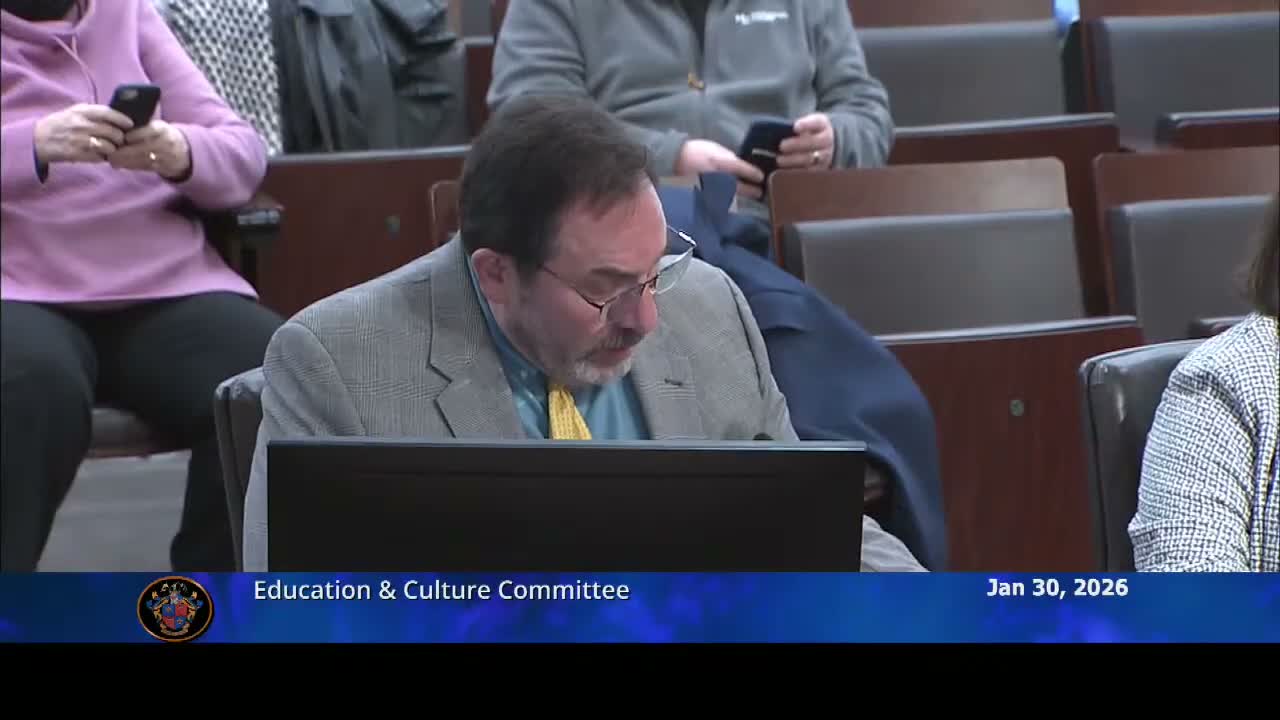
Montgomery College asked the Montgomery County Council's Education & Culture Committee to back a $499,700,000 capital improvement program request in a presentation that framed the projects as essential to workforce training and student access.
College representatives told the committee the request includes three new or substantially expanded projects: a college-wide security system, a capital asset management system (one-time funding), and a college-wide road and parking repairs program. Doug Prouty, senior legislative analyst, summarized the request and said the county executive recommended a $445,300,000 CIP for the college, a reduction from the college's ask.
The college emphasized several priorities. Speaker 5 (addressed in the transcript as Doctor/President Williams) said Montgomery College served 46,341 students in FY25, a 16% increase since FY22, and that about 80% of alumni remain in the county. He described the Rockville Campus Theater Arts building as an academic and workforce generator: constructed in 1965 and last renovated roughly 30 years ago, the building needs modernization to continue serving performing‑arts instruction and related technical trades.
College leaders also highlighted IT modernization: moving legacy student‑information systems to the cloud, upgrading learning-management and financial systems, and improving registration and advising tools that they said reduce barriers for students. They said a lack of funding for technology would slow efforts such as a two‑year schedule initiative planned for FY27 that helps students map degree requirements.
On East County, the college reported strong demand at the East County Education Center (ECEC): phase‑1 enrollment reached about 1,500 students versus a feasibility goal of 1,000, and the college expects increased community engagement and site selection recommendations to the board of trustees around April 2026.
During questioning, council members asked which projects the college would prioritize if funding is reduced. Prouty and college staff said the Theater Arts renovation and IT projects are high priorities; the college noted it has already invested $26,000,000 from fund balance into CIP work and urged the council to send a letter requesting the college's list of potential non‑recommended reductions to reconcile with the county executive's affordability guidance.
What happens next: the committee requested a non‑recommended reductions list from the college and scheduled follow-up CIP sessions later in the winter. The committee emphasized the presentation was preliminary and no decisions were made at this meeting.
College representatives told the committee the request includes three new or substantially expanded projects: a college-wide security system, a capital asset management system (one-time funding), and a college-wide road and parking repairs program. Doug Prouty, senior legislative analyst, summarized the request and said the county executive recommended a $445,300,000 CIP for the college, a reduction from the college's ask.
The college emphasized several priorities. Speaker 5 (addressed in the transcript as Doctor/President Williams) said Montgomery College served 46,341 students in FY25, a 16% increase since FY22, and that about 80% of alumni remain in the county. He described the Rockville Campus Theater Arts building as an academic and workforce generator: constructed in 1965 and last renovated roughly 30 years ago, the building needs modernization to continue serving performing‑arts instruction and related technical trades.
College leaders also highlighted IT modernization: moving legacy student‑information systems to the cloud, upgrading learning-management and financial systems, and improving registration and advising tools that they said reduce barriers for students. They said a lack of funding for technology would slow efforts such as a two‑year schedule initiative planned for FY27 that helps students map degree requirements.
On East County, the college reported strong demand at the East County Education Center (ECEC): phase‑1 enrollment reached about 1,500 students versus a feasibility goal of 1,000, and the college expects increased community engagement and site selection recommendations to the board of trustees around April 2026.
During questioning, council members asked which projects the college would prioritize if funding is reduced. Prouty and college staff said the Theater Arts renovation and IT projects are high priorities; the college noted it has already invested $26,000,000 from fund balance into CIP work and urged the council to send a letter requesting the college's list of potential non‑recommended reductions to reconcile with the county executive's affordability guidance.
What happens next: the committee requested a non‑recommended reductions list from the college and scheduled follow-up CIP sessions later in the winter. The committee emphasized the presentation was preliminary and no decisions were made at this meeting.
Don't Miss a Word: See the Full Meeting!
Go beyond summaries. Unlock every video, transcript, and key insight with a Founder Membership.
✓
Get instant access to full meeting videos
✓
Search and clip any phrase from complete transcripts
✓
Receive AI-powered summaries & custom alerts
✓
Enjoy lifetime, unrestricted access to government data
30-day money-back guarantee
