Proposal would limit towns’ power to zone out farms, set one-acre livestock threshold
January 31, 2026 | Agriculture, Food Resiliency, & Forestry, HOUSE OF REPRESENTATIVES, Committees, Legislative , Vermont
This article was created by AI summarizing key points discussed. AI makes mistakes, so for full details and context, please refer to the video of the full meeting. Please report any errors so we can fix them. Report an error »
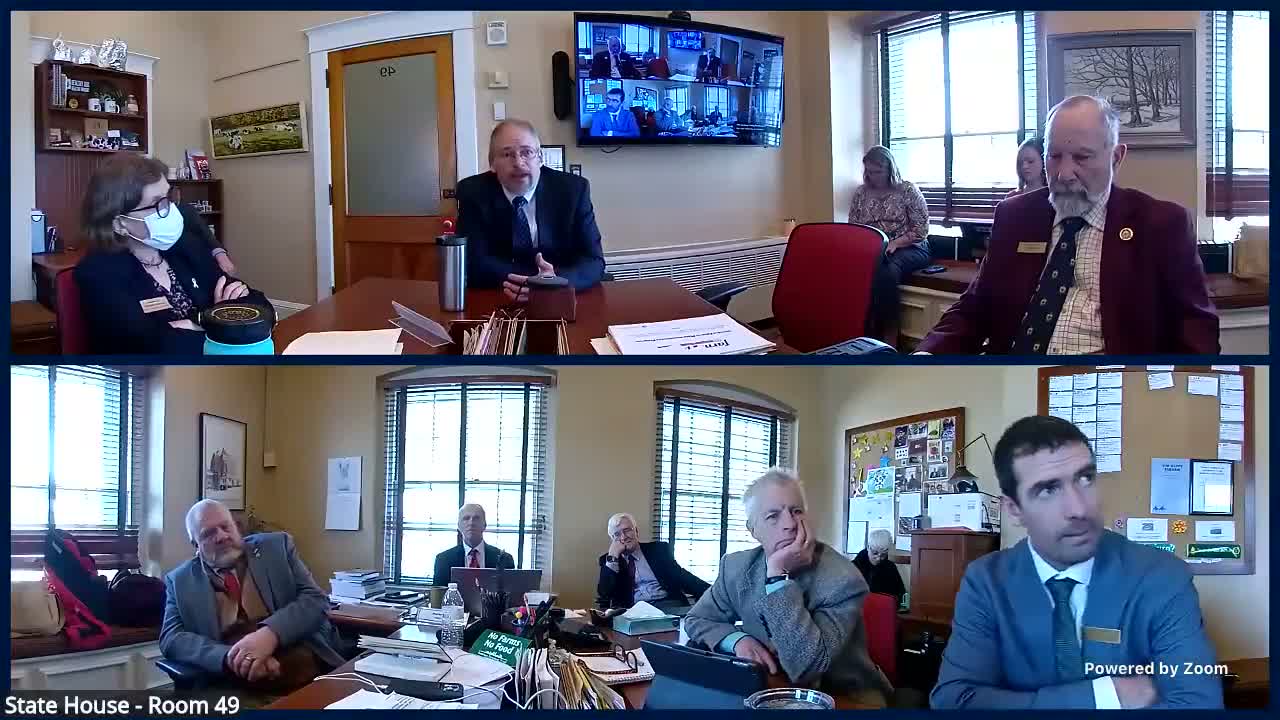
Speaker 1 outlined a proposed approach to municipal zoning of agriculture, saying the group sought to partner with the League of Cities and Towns to influence local rules but wants to protect farming statewide. “You can't have 50 cows in Downtown Montpelier,” Speaker 1 said as an example of an outcome the proposal aims to avoid while still allowing towns to manage density-related problems.
The draft proposal would: preserve a broad "right to grow" for plants; treat poultry as “any domesticated bird” (the draft excludes roosters); and set a one-acre threshold for routine livestock protections so towns could regulate livestock on parcels smaller than one acre. “Anybody can grow plants,” Speaker 1 said, while noting that cannabis would be excluded because it is regulated by the Cannabis Control Board.
The sponsors said the one-acre rule is a compromise to balance neighbor concerns about waste and infrastructure with the interests of small farms. Speaker 1 described the rationale: parcels under an acre are more likely to be in dense neighborhoods where managing animal waste is difficult, while farms on larger parcels should be able to operate like other farms in the state.
Speaker 4 raised concerns about the proposal’s interaction with tiered municipal authority (referred to in the discussion as tier 1a and 1b). Speaker 4 warned that giving towns control in tier 1b areas could extend regulation into communities that are not densely built and could affect farms adjacent to villages. Speaker 1 responded that planned growth areas can include currently viable farms and that the aim is not to drive farms out.
Speakers also flagged limits in data: the Natural Resources Conservation Service (NRCS) has mapped soils, but the agency does not maintain a comprehensive statewide farm registry. Speaker 1 said local zoning maps and USDA survey data are often the better sources for understanding current land use.
The session did not record any formal motions or votes on the proposal. The meeting paused for lunch and was scheduled to resume at 1:00 p.m. to continue discussion and gather reactions.
The draft proposal would: preserve a broad "right to grow" for plants; treat poultry as “any domesticated bird” (the draft excludes roosters); and set a one-acre threshold for routine livestock protections so towns could regulate livestock on parcels smaller than one acre. “Anybody can grow plants,” Speaker 1 said, while noting that cannabis would be excluded because it is regulated by the Cannabis Control Board.
The sponsors said the one-acre rule is a compromise to balance neighbor concerns about waste and infrastructure with the interests of small farms. Speaker 1 described the rationale: parcels under an acre are more likely to be in dense neighborhoods where managing animal waste is difficult, while farms on larger parcels should be able to operate like other farms in the state.
Speaker 4 raised concerns about the proposal’s interaction with tiered municipal authority (referred to in the discussion as tier 1a and 1b). Speaker 4 warned that giving towns control in tier 1b areas could extend regulation into communities that are not densely built and could affect farms adjacent to villages. Speaker 1 responded that planned growth areas can include currently viable farms and that the aim is not to drive farms out.
Speakers also flagged limits in data: the Natural Resources Conservation Service (NRCS) has mapped soils, but the agency does not maintain a comprehensive statewide farm registry. Speaker 1 said local zoning maps and USDA survey data are often the better sources for understanding current land use.
The session did not record any formal motions or votes on the proposal. The meeting paused for lunch and was scheduled to resume at 1:00 p.m. to continue discussion and gather reactions.
Don't Miss a Word: See the Full Meeting!
Go beyond summaries. Unlock every video, transcript, and key insight with a Founder Membership.
✓
Get instant access to full meeting videos
✓
Search and clip any phrase from complete transcripts
✓
Receive AI-powered summaries & custom alerts
✓
Enjoy lifetime, unrestricted access to government data
30-day money-back guarantee
