Venezuela's media episode and hydrocarbons reform highlight fragile press space amid political shifts
This article was created by AI summarizing key points discussed. AI makes mistakes, so for full details and context, please refer to the video of the full meeting. Please report any errors so we can fix them. Report an error »
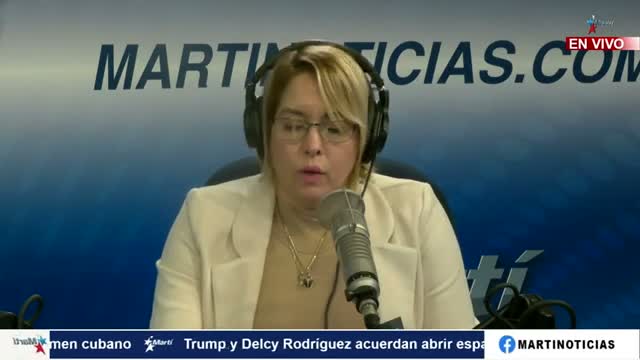
Radio Martí reported that a brief expansion of coverage featuring opposition leader María Corina Machado following a Washington meeting was removed from Venevisión's prime newscast after a public warning from Diosdado Cabello. Reporters and commentators described the removal as an example of indirect pressure that prompts internal self-censorship at Venezuelan outlets.
The program recounted that the domestic episode followed Machado's reported meeting with U.S. Secretary of State Marco Rubio and framed Cabello's reaction as a warning to media outlets not to amplify opposition figures. A correspondent in Caracas told the program that the item had been scheduled for the nightly newscast but was suppressed after the threat; managerial decisions, she said, fit a pattern of editorial caution in the face of political risk.
Separately, the broadcast reported that Venezuela's National Assembly approved amendments to the hydrocarbons law changing some 35 articles to permit direct participation by private national and foreign operators. Officials quoted on air — including Delcy Rodríguez and Jorge Rodríguez — framed the change as a historic step to attract investment and increase production. The program noted the reform coincided with a U.S. Treasury announcement granting certain licenses for operations related to Venezuelan oil, subject to sanctions conditions.
Journalists and analysts told Radio Martí the hydrocarbons reforms and the media suppression episode both reflect a shifting balance of power and the fragility of independent media and political space amid rapidly changing political circumstances in Venezuela. The program recorded reactions and described immediate editorial consequences but did not present independent confirmation of every managerial decision inside Venevisión.
The program recounted that the domestic episode followed Machado's reported meeting with U.S. Secretary of State Marco Rubio and framed Cabello's reaction as a warning to media outlets not to amplify opposition figures. A correspondent in Caracas told the program that the item had been scheduled for the nightly newscast but was suppressed after the threat; managerial decisions, she said, fit a pattern of editorial caution in the face of political risk.
Separately, the broadcast reported that Venezuela's National Assembly approved amendments to the hydrocarbons law changing some 35 articles to permit direct participation by private national and foreign operators. Officials quoted on air — including Delcy Rodríguez and Jorge Rodríguez — framed the change as a historic step to attract investment and increase production. The program noted the reform coincided with a U.S. Treasury announcement granting certain licenses for operations related to Venezuelan oil, subject to sanctions conditions.
Journalists and analysts told Radio Martí the hydrocarbons reforms and the media suppression episode both reflect a shifting balance of power and the fragility of independent media and political space amid rapidly changing political circumstances in Venezuela. The program recorded reactions and described immediate editorial consequences but did not present independent confirmation of every managerial decision inside Venevisión.
Don't Miss a Word: See the Full Meeting!
Go beyond summaries. Unlock every video, transcript, and key insight with a Founder Membership.
✓
Get instant access to full meeting videos
✓
Search and clip any phrase from complete transcripts
✓
Receive AI-powered summaries & custom alerts
✓
Enjoy lifetime, unrestricted access to government data
30-day money-back guarantee
