Committee reviews bills to ensure incarcerated Vermonters get state IDs and replacement licenses
January 30, 2026 | Corrections & Institutions, HOUSE OF REPRESENTATIVES, Committees, Legislative , Vermont
This article was created by AI summarizing key points discussed. AI makes mistakes, so for full details and context, please refer to the video of the full meeting. Please report any errors so we can fix them. Report an error »
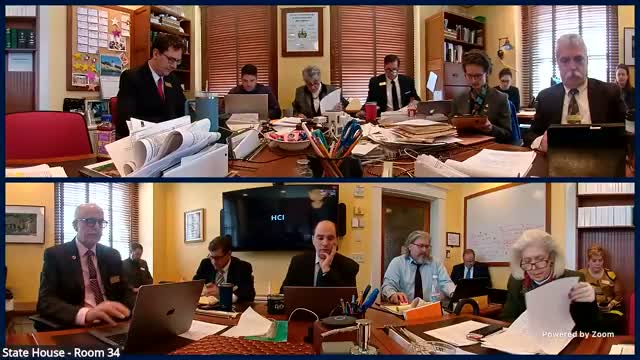
The House Corrections and Institutions Committee on Jan. 29 reviewed a Senate miscellaneous motor-vehicle bill and H.549 to clarify who may receive no‑cost state identification and replacement operator's licenses while incarcerated.
Damien Leonard of the Office of Legislative Council told members the draft initially broadened coverage by drafting error to include both sentenced individuals and those detained in correctional facilities; staff corrected the language to align with existing statutory sections for non‑driver identification. "The language in front of you has been updated since then to make it consistent with the existing language in the non‑driver identification section," Leonard said.
Committee members pressed DMV and corrections officials on how the bill treats Real ID and non‑Real ID credentials. Nancy Prescott, director of operations at the Vermont Department of Motor Vehicles, said DMV treats both credential variants as non‑driver identification cards and, if DMV has previously scanned and retained Real ID documentation, it will not ask for that paperwork again at renewal. "If we have already collected the necessary documents and scanned them in our record, we will not ask for the documents to be provided again when expired," Prescott said.
Under current law, someone sentenced to at least six months can obtain a non‑driver ID at no cost. The bills under review would extend that structure to allow replacement operator's licenses and replacement learner's permits for sentenced people: an unexpired Vermont license, or one expired no more than three years (two years for learner permits), would make an incarcerated person eligible for a replacement license at no fee upon application and submission of required documentation.
Lawmakers asked whether DOC or DMV would collect and forward documentation for people who are detained for six months but not yet sentenced. Committee members suggested a DOC process by which DOC would gather the documents at the six‑month point and either ship them to DMV or make them available so the person could present them after release. DOC officials said the logistics are possible but depend on the detainee volume and would have budget implications for DMV. "There would be a financial impact to DMV," Prescott said, noting DMV absorbs the credential cost today.
Members asked for data on how many detained people would meet the six‑month threshold; DOC said its offender‑management system delayed full reporting but that the department would provide numbers. Leonard and committee staff said they will coordinate between H.549 and the miscellaneous motor‑vehicle bill to avoid conflicting amendments if both move forward.
Next steps: the committee scheduled follow-up testimony from DMV and DOC to resolve mechanics, costs and statutory alignment before advancing H.549 or taking other actions.
Damien Leonard of the Office of Legislative Council told members the draft initially broadened coverage by drafting error to include both sentenced individuals and those detained in correctional facilities; staff corrected the language to align with existing statutory sections for non‑driver identification. "The language in front of you has been updated since then to make it consistent with the existing language in the non‑driver identification section," Leonard said.
Committee members pressed DMV and corrections officials on how the bill treats Real ID and non‑Real ID credentials. Nancy Prescott, director of operations at the Vermont Department of Motor Vehicles, said DMV treats both credential variants as non‑driver identification cards and, if DMV has previously scanned and retained Real ID documentation, it will not ask for that paperwork again at renewal. "If we have already collected the necessary documents and scanned them in our record, we will not ask for the documents to be provided again when expired," Prescott said.
Under current law, someone sentenced to at least six months can obtain a non‑driver ID at no cost. The bills under review would extend that structure to allow replacement operator's licenses and replacement learner's permits for sentenced people: an unexpired Vermont license, or one expired no more than three years (two years for learner permits), would make an incarcerated person eligible for a replacement license at no fee upon application and submission of required documentation.
Lawmakers asked whether DOC or DMV would collect and forward documentation for people who are detained for six months but not yet sentenced. Committee members suggested a DOC process by which DOC would gather the documents at the six‑month point and either ship them to DMV or make them available so the person could present them after release. DOC officials said the logistics are possible but depend on the detainee volume and would have budget implications for DMV. "There would be a financial impact to DMV," Prescott said, noting DMV absorbs the credential cost today.
Members asked for data on how many detained people would meet the six‑month threshold; DOC said its offender‑management system delayed full reporting but that the department would provide numbers. Leonard and committee staff said they will coordinate between H.549 and the miscellaneous motor‑vehicle bill to avoid conflicting amendments if both move forward.
Next steps: the committee scheduled follow-up testimony from DMV and DOC to resolve mechanics, costs and statutory alignment before advancing H.549 or taking other actions.
Don't Miss a Word: See the Full Meeting!
Go beyond summaries. Unlock every video, transcript, and key insight with a Founder Membership.
✓
Get instant access to full meeting videos
✓
Search and clip any phrase from complete transcripts
✓
Receive AI-powered summaries & custom alerts
✓
Enjoy lifetime, unrestricted access to government data
30-day money-back guarantee
