Director urges prevention-first Division of Animal Welfare, proposes task forces and pop-up clinics
January 30, 2026 | Government Operations & Military Affairs, HOUSE OF REPRESENTATIVES, Committees, Legislative , Vermont
This article was created by AI summarizing key points discussed. AI makes mistakes, so for full details and context, please refer to the video of the full meeting. Please report any errors so we can fix them. Report an error »
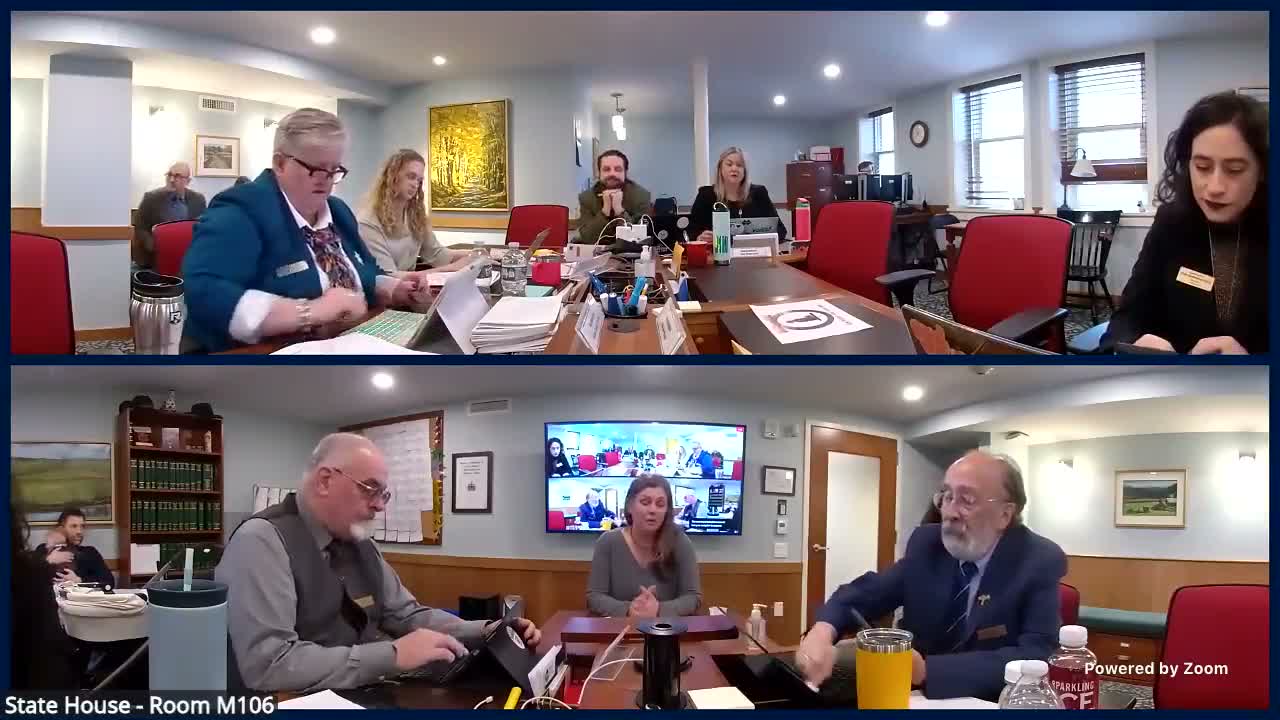
Lisa Mylott, director of animal welfare, told the House Government Operations & Military Affairs Committee on Friday that Vermont should prioritize prevention and create a small Division of Animal Welfare to improve how cruelty complaints are triaged and handled.
Mylott said the state's response is currently fragmented and primarily complaint-driven. "Prevention is really key here," she said, arguing that many cases arise from poverty, lack of knowledge or inertia and can be diverted with resources, education or compliance checks before they become crimes.
Her report, based on eight months of review, found roughly 400 animal-incident calls to Vermont State Police and Fish & Wildlife in 2024, of which she characterized about half as potentially related to cruelty. "Those calls resulted in nine arrests" by the state agencies, she said, and municipal law enforcement reported an additional 44 cruelty arrests, yielding about 53 cruelty arrests statewide in 2024.
Mylott outlined several near-term and medium-term measures: a standardized complaint portal so the division can be copied on reports and provide routing and expertise; a small core staffer and contracted or part-time humane officers to handle scheduled and unscheduled compliance rechecks; task forces that combine social services, rescues, veterinarians and sworn officers for complex cases; and short-term holding facilities or pop-up kennels to triage seized animals.
On sheltering and seizures, Mylott warned that Vermont's reliance on private rescues creates bottlenecks because seized animals may need to be held for six to eight months before they can be spayed/neutered or rehomed. "If animals are held in high-stress kennels for weeks or months, they can suffer lasting harms," she said, and stressed faster decision timelines would free capacity.
She suggested funding options that would not raise taxes: reviewing special-purpose fees (for example, a $1 surcharge on dog licenses that she said yields about $64,000 annually for rabies control), seeking grants and donations, specialty license plates and voluntary income-tax checkboxes, and exploring under-reported sales such as informal puppy sales. Mylott cautioned that some fees already appear fully utilized and any reallocation must respect statutory authority.
Responding to members' questions about rural access, Mylott described pop-up veterinary clinics, mobile services and workforce changes — including Maine's certified rabies vaccinator law and pathways to license foreign-trained veterinarians — as ways to expand care and lower costs for preventive services. She gave operational examples: spay events, low-cost parvo vaccinations ("an $8 vaccine prevents thousands of dollars of treatment"), and microchipping programs (she cited microchips available for about $3 each including lifetime registration).
Committee members asked for public-facing information; Mylott said she had discussed creating a central webpage and dashboard with Commissioner Morrison to list low-cost clinics, rabies clinics, animal-control contacts and other resources.
Mylott asked the committee to identify which options it wishes to prioritize and to authorize a planning year to develop working groups, funding paths and staffing models. The committee thanked her and recessed early for lunch; members signaled interest in further hearings and follow-ups.
Provenance: The presentation and follow-up questions and answers are documented in the committee transcript of the House Government Operations & Military Affairs hearing on Jan. 30, 2026, where Mylott provided the report and detailed recommendations.
Mylott said the state's response is currently fragmented and primarily complaint-driven. "Prevention is really key here," she said, arguing that many cases arise from poverty, lack of knowledge or inertia and can be diverted with resources, education or compliance checks before they become crimes.
Her report, based on eight months of review, found roughly 400 animal-incident calls to Vermont State Police and Fish & Wildlife in 2024, of which she characterized about half as potentially related to cruelty. "Those calls resulted in nine arrests" by the state agencies, she said, and municipal law enforcement reported an additional 44 cruelty arrests, yielding about 53 cruelty arrests statewide in 2024.
Mylott outlined several near-term and medium-term measures: a standardized complaint portal so the division can be copied on reports and provide routing and expertise; a small core staffer and contracted or part-time humane officers to handle scheduled and unscheduled compliance rechecks; task forces that combine social services, rescues, veterinarians and sworn officers for complex cases; and short-term holding facilities or pop-up kennels to triage seized animals.
On sheltering and seizures, Mylott warned that Vermont's reliance on private rescues creates bottlenecks because seized animals may need to be held for six to eight months before they can be spayed/neutered or rehomed. "If animals are held in high-stress kennels for weeks or months, they can suffer lasting harms," she said, and stressed faster decision timelines would free capacity.
She suggested funding options that would not raise taxes: reviewing special-purpose fees (for example, a $1 surcharge on dog licenses that she said yields about $64,000 annually for rabies control), seeking grants and donations, specialty license plates and voluntary income-tax checkboxes, and exploring under-reported sales such as informal puppy sales. Mylott cautioned that some fees already appear fully utilized and any reallocation must respect statutory authority.
Responding to members' questions about rural access, Mylott described pop-up veterinary clinics, mobile services and workforce changes — including Maine's certified rabies vaccinator law and pathways to license foreign-trained veterinarians — as ways to expand care and lower costs for preventive services. She gave operational examples: spay events, low-cost parvo vaccinations ("an $8 vaccine prevents thousands of dollars of treatment"), and microchipping programs (she cited microchips available for about $3 each including lifetime registration).
Committee members asked for public-facing information; Mylott said she had discussed creating a central webpage and dashboard with Commissioner Morrison to list low-cost clinics, rabies clinics, animal-control contacts and other resources.
Mylott asked the committee to identify which options it wishes to prioritize and to authorize a planning year to develop working groups, funding paths and staffing models. The committee thanked her and recessed early for lunch; members signaled interest in further hearings and follow-ups.
Provenance: The presentation and follow-up questions and answers are documented in the committee transcript of the House Government Operations & Military Affairs hearing on Jan. 30, 2026, where Mylott provided the report and detailed recommendations.
Don't Miss a Word: See the Full Meeting!
Go beyond summaries. Unlock every video, transcript, and key insight with a Founder Membership.
✓
Get instant access to full meeting videos
✓
Search and clip any phrase from complete transcripts
✓
Receive AI-powered summaries & custom alerts
✓
Enjoy lifetime, unrestricted access to government data
30-day money-back guarantee
