Northeast Kingdom organizers tell lawmakers mutual-aid groups saved hundreds of homes and ask for state investment
January 30, 2026 | Government Operations & Military Affairs, HOUSE OF REPRESENTATIVES, Committees, Legislative , Vermont
This article was created by AI summarizing key points discussed. AI makes mistakes, so for full details and context, please refer to the video of the full meeting. Please report any errors so we can fix them. Report an error »
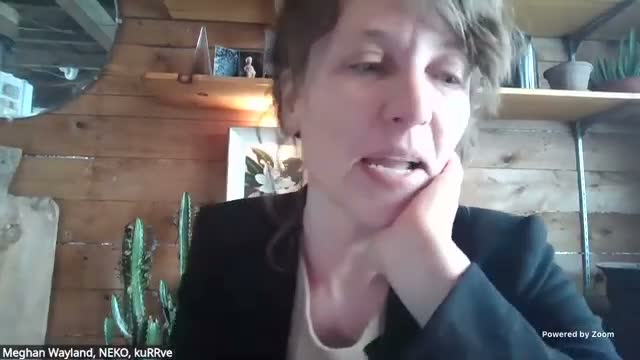
Megan Whalen, former lead organizer and co-director of Northeast Kingdom Organizing (NICO), told the House Committee on Government Operations & Military Affairs on Jan. 29 that grassroots and mutual-aid organizations have been the backbone of flood response in the Kingdom and that modest state investment could multiply local capacity.
Whalen said NICO and allied groups "mucked and gutted" 430 homes across 31 towns with the help of about 450 volunteers, that CURVE (the Kingdom's long-term recovery group) has rebuilt 60 homes and that, across three years, the organizations have "saved about 500 homes" at approximately $600,000 in direct costs to the groups. Whalen said those efforts translate to substantial avoided expenses for residents and the state; she cited an asserted figure of roughly $31,000,000 in savings when comparing local repair work with replacement construction costs.
Why this matters: Whalen framed her testimony around two policy recommendations: (1) provide recurring, modest funding for long-term recovery organizations and resilience hubs, and (2) adopt and fund the Crisis Cleanup digital platform (a mapping and case-management tool) for statewide use and integration with 2-1-1 to coordinate volunteers and track survivor needs.
Whalen described existing funding sources (Vermont Community Foundation and private donations) and grant partnerships (including work with the Land Access and Opportunity Board), but said some funding depends on the Budget Adjustment Act and that stable state support is necessary to sustain hub inventories and case-management capacity. She warned against replicating problems seen where state-run recovery efforts relied heavily on contractors, and advocated channeling funds to organizations working on the ground.
The witness provided a resilience-hub toolkit and photos showing volunteer work, and offered to share presentation materials with the committee. Committee members praised the scale of volunteer work and asked for the materials to be emailed for use in policy deliberations.
Next steps: Whalen urged lawmakers to restore language from earlier flood legislation that emphasized long-term recovery groups and to consider the $5,000,000 allocation discussed in the bill as a resource for the Kingdom if federal declarations do not cover needs.
Whalen said NICO and allied groups "mucked and gutted" 430 homes across 31 towns with the help of about 450 volunteers, that CURVE (the Kingdom's long-term recovery group) has rebuilt 60 homes and that, across three years, the organizations have "saved about 500 homes" at approximately $600,000 in direct costs to the groups. Whalen said those efforts translate to substantial avoided expenses for residents and the state; she cited an asserted figure of roughly $31,000,000 in savings when comparing local repair work with replacement construction costs.
Why this matters: Whalen framed her testimony around two policy recommendations: (1) provide recurring, modest funding for long-term recovery organizations and resilience hubs, and (2) adopt and fund the Crisis Cleanup digital platform (a mapping and case-management tool) for statewide use and integration with 2-1-1 to coordinate volunteers and track survivor needs.
Whalen described existing funding sources (Vermont Community Foundation and private donations) and grant partnerships (including work with the Land Access and Opportunity Board), but said some funding depends on the Budget Adjustment Act and that stable state support is necessary to sustain hub inventories and case-management capacity. She warned against replicating problems seen where state-run recovery efforts relied heavily on contractors, and advocated channeling funds to organizations working on the ground.
The witness provided a resilience-hub toolkit and photos showing volunteer work, and offered to share presentation materials with the committee. Committee members praised the scale of volunteer work and asked for the materials to be emailed for use in policy deliberations.
Next steps: Whalen urged lawmakers to restore language from earlier flood legislation that emphasized long-term recovery groups and to consider the $5,000,000 allocation discussed in the bill as a resource for the Kingdom if federal declarations do not cover needs.
Don't Miss a Word: See the Full Meeting!
Go beyond summaries. Unlock every video, transcript, and key insight with a Founder Membership.
✓
Get instant access to full meeting videos
✓
Search and clip any phrase from complete transcripts
✓
Receive AI-powered summaries & custom alerts
✓
Enjoy lifetime, unrestricted access to government data
30-day money-back guarantee
