Faculty, unions and researchers urge statewide safeguards against 'weaponized' student complaints
January 19, 2026 | Legislative Sessions, Washington
This article was created by AI summarizing key points discussed. AI makes mistakes, so for full details and context, please refer to the video of the full meeting. Please report any errors so we can fix them. Report an error »
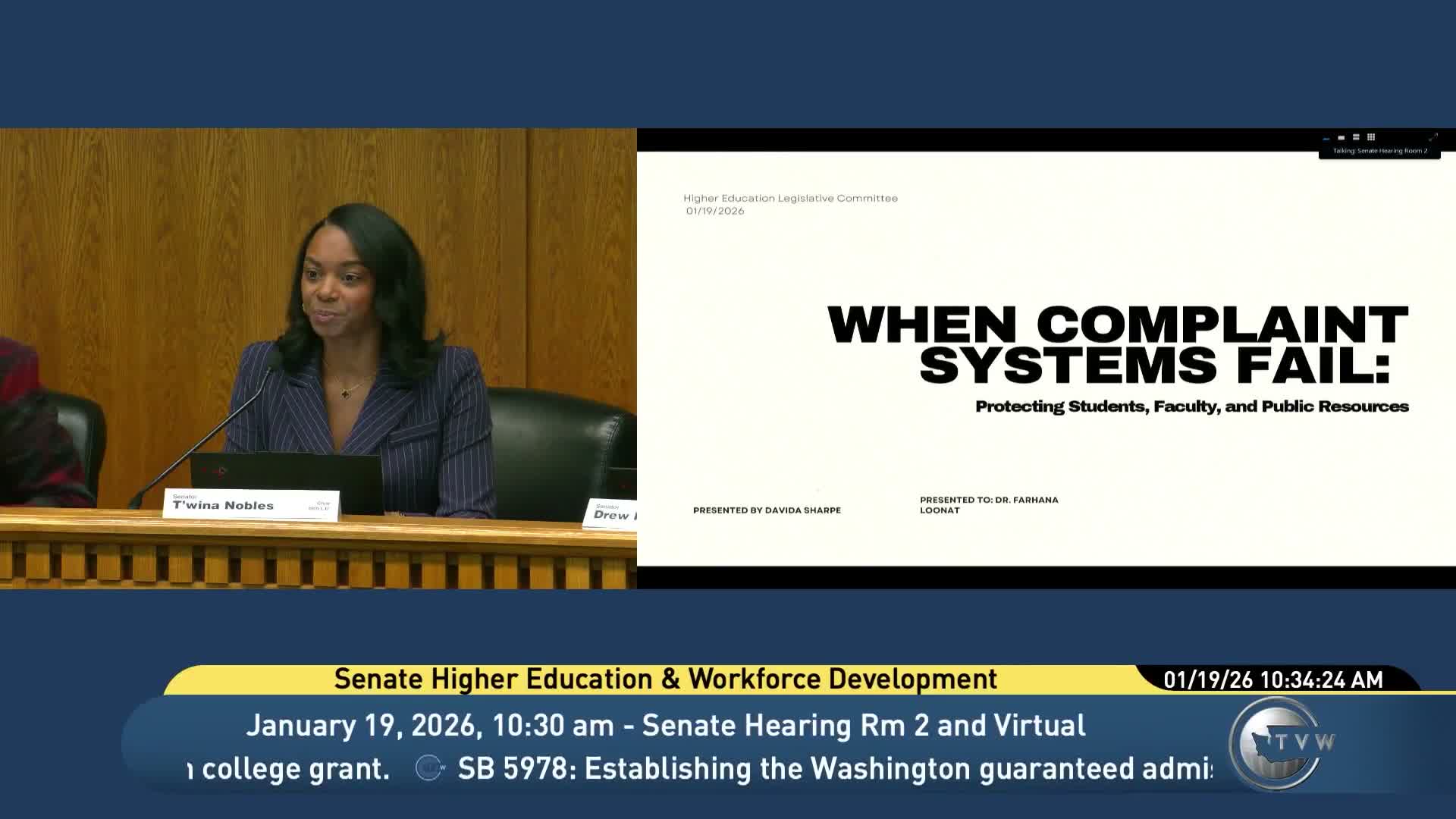
A panel of faculty, union leaders and researchers told the Senate Higher Education and Workforce Development Committee that formal student complaint systems intended to protect students are increasingly being misused to harm faculty, drain institutional resources, and weaken due process.
Davida Sharp, a tenured faculty member, said the presentation was not about limiting student voice but about ‘‘strengthening complaint systems so they function as intended.’’ She and other witnesses described patterns they say indicate systemic misuse: complaints bypassing informal resolution, administrative reliance on risk-management responses instead of investigation, and disproportionate impacts on faculty of color, women and contingent faculty.
Dr. Farhana Lunat testified that without clear screening mechanisms ‘‘complaints may trigger formal investigations without an initial assessment of legitimacy, bias or retaliatory intent,’’ which she said undermines due process and can divert attention from legitimate student harms. Rachel Erstad of the Harry Bridges Center described public-record requests across Washington’s public colleges and universities showing inconsistent tracking of formal complaints and limited demographic data, creating barriers to identifying trends.
Panelists proposed several responses, including routine, non-identifying data collection and equity reviews, merit-based initial screening to detect bad-faith complaints, and a proposed faculty bill of rights that would affirm academic freedom, due process and safe working conditions while maintaining student protections. The witnesses said these measures would protect both students and educators by ensuring grievance systems remain credible and workable.
During questions, senators pressed on FERPA and Title IX constraints; researchers said they requested non-identifying metadata (dates, complaint type, resolution and faculty demographics where available) and worked with records officers to avoid PII disclosures. Committee members signaled interest in follow-up work and potential legislation.
What’s next: Committee members indicated they will continue the conversation and staff flagged potential legislative ideas to address screening, data collection and protections for faculty. No formal action or vote occurred at the meeting.
Davida Sharp, a tenured faculty member, said the presentation was not about limiting student voice but about ‘‘strengthening complaint systems so they function as intended.’’ She and other witnesses described patterns they say indicate systemic misuse: complaints bypassing informal resolution, administrative reliance on risk-management responses instead of investigation, and disproportionate impacts on faculty of color, women and contingent faculty.
Dr. Farhana Lunat testified that without clear screening mechanisms ‘‘complaints may trigger formal investigations without an initial assessment of legitimacy, bias or retaliatory intent,’’ which she said undermines due process and can divert attention from legitimate student harms. Rachel Erstad of the Harry Bridges Center described public-record requests across Washington’s public colleges and universities showing inconsistent tracking of formal complaints and limited demographic data, creating barriers to identifying trends.
Panelists proposed several responses, including routine, non-identifying data collection and equity reviews, merit-based initial screening to detect bad-faith complaints, and a proposed faculty bill of rights that would affirm academic freedom, due process and safe working conditions while maintaining student protections. The witnesses said these measures would protect both students and educators by ensuring grievance systems remain credible and workable.
During questions, senators pressed on FERPA and Title IX constraints; researchers said they requested non-identifying metadata (dates, complaint type, resolution and faculty demographics where available) and worked with records officers to avoid PII disclosures. Committee members signaled interest in follow-up work and potential legislation.
What’s next: Committee members indicated they will continue the conversation and staff flagged potential legislative ideas to address screening, data collection and protections for faculty. No formal action or vote occurred at the meeting.
Don't Miss a Word: See the Full Meeting!
Go beyond summaries. Unlock every video, transcript, and key insight with a Founder Membership.
✓
Get instant access to full meeting videos
✓
Search and clip any phrase from complete transcripts
✓
Receive AI-powered summaries & custom alerts
✓
Enjoy lifetime, unrestricted access to government data
30-day money-back guarantee
