Committee hears bill to expand liability and protections for trafficking survivors
January 19, 2026 | Legislative Sessions, Washington
This article was created by AI summarizing key points discussed. AI makes mistakes, so for full details and context, please refer to the video of the full meeting. Please report any errors so we can fix them. Report an error »
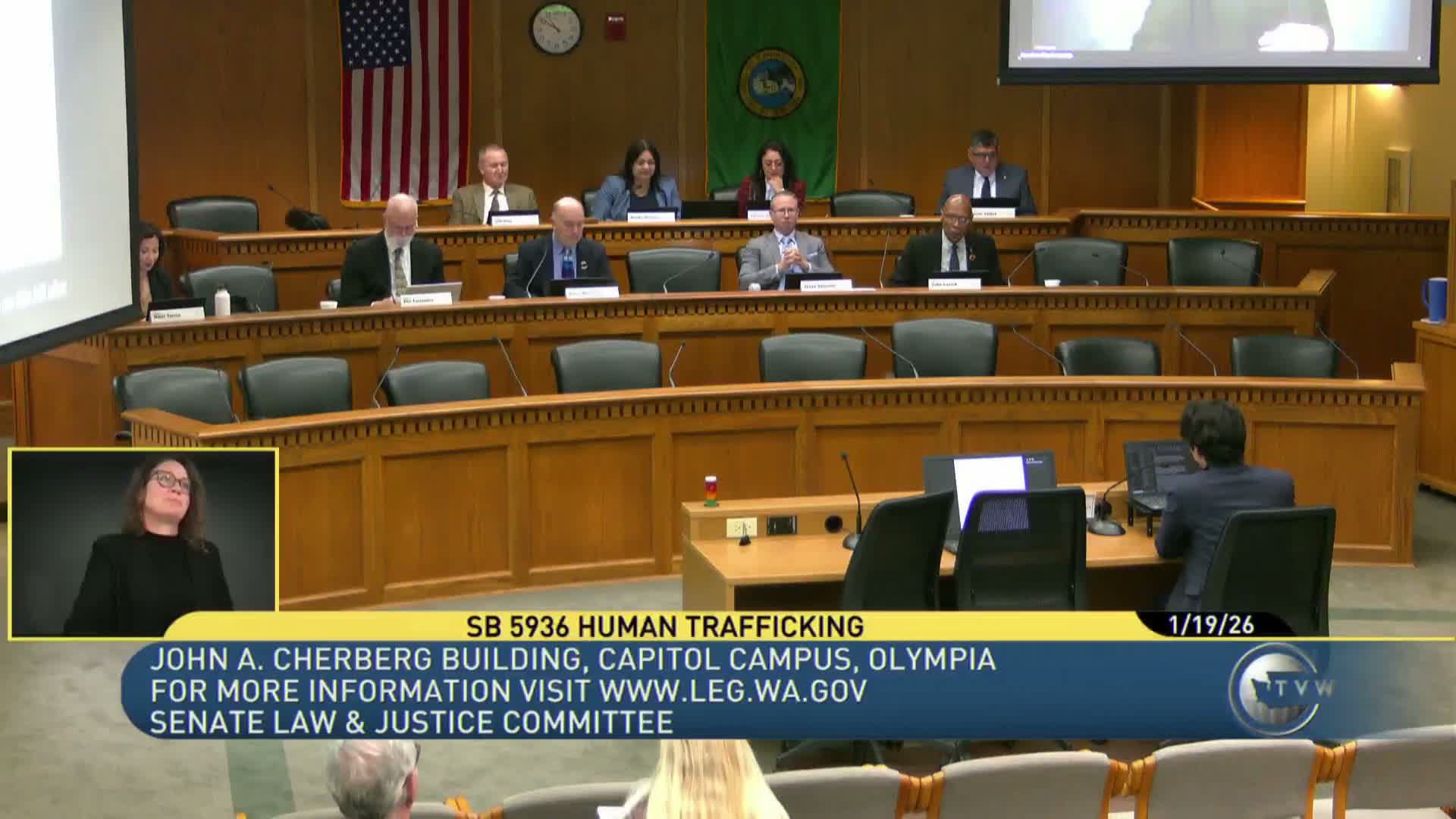
OLYMPIA, Wash. — The Senate Law and Justice Committee took testimony on SB 5936 on Jan. 19, a broad measure aimed at strengthening criminal penalties for human trafficking, protecting victim confidentiality and improving processes for T- and U-visa certifications.
Staff counsel Ryan Giannini told the committee the bill would permit prosecution of business entities that knowingly engage in human trafficking or fail to stop known trafficking by employees when such conduct benefits the entity. It would authorize additional penalties including a fine of up to $1,000,000 per offense, disgorgement of profits, and debarment from state and local contracts. The bill also contains measures to keep victims identities confidential during investigations and to facilitate T- and U-visa support from state and local agencies.
Sen. Tina Orwall, prime sponsor, described trafficking as present in all communities and emphasized survivor-centered protections. "Every action we can take to strengthen our laws to protect survivors, as well as hold perpetrators accountable, I think is a move in the right direction," Orwall said.
Survivors and advocacy groups provided powerful testimony supporting the bill and confidentiality provisions. Noelle Gomez and Robin Miller spoke about exploitation in motels and other local establishments and urged the committee to ensure survivor safety and anonymity in records and public files.
Hospitality-industry representatives and law enforcement expressed support for accountability but pressed for clear definitions of "knowingly engages," for limiting unintended impacts on good actors, and for alignment with existing Washington statutes and protocols related to U- and T-visa processes (witnesses referenced RCW 7.9.8.02 during discussion). The Association of Sheriffs and Police Chiefs urged consolidating duplicative language so new statutory text does not conflict with existing protocols.
The hearing closed with the vice-chair reporting a strong pro sign-in record; committee members and stakeholders signaled future technical amendments to align provisions with existing law.
Next steps: sponsors and stakeholders indicated planned drafting work to resolve duplicative or unclear statutory language before potential committee action.
Staff counsel Ryan Giannini told the committee the bill would permit prosecution of business entities that knowingly engage in human trafficking or fail to stop known trafficking by employees when such conduct benefits the entity. It would authorize additional penalties including a fine of up to $1,000,000 per offense, disgorgement of profits, and debarment from state and local contracts. The bill also contains measures to keep victims identities confidential during investigations and to facilitate T- and U-visa support from state and local agencies.
Sen. Tina Orwall, prime sponsor, described trafficking as present in all communities and emphasized survivor-centered protections. "Every action we can take to strengthen our laws to protect survivors, as well as hold perpetrators accountable, I think is a move in the right direction," Orwall said.
Survivors and advocacy groups provided powerful testimony supporting the bill and confidentiality provisions. Noelle Gomez and Robin Miller spoke about exploitation in motels and other local establishments and urged the committee to ensure survivor safety and anonymity in records and public files.
Hospitality-industry representatives and law enforcement expressed support for accountability but pressed for clear definitions of "knowingly engages," for limiting unintended impacts on good actors, and for alignment with existing Washington statutes and protocols related to U- and T-visa processes (witnesses referenced RCW 7.9.8.02 during discussion). The Association of Sheriffs and Police Chiefs urged consolidating duplicative language so new statutory text does not conflict with existing protocols.
The hearing closed with the vice-chair reporting a strong pro sign-in record; committee members and stakeholders signaled future technical amendments to align provisions with existing law.
Next steps: sponsors and stakeholders indicated planned drafting work to resolve duplicative or unclear statutory language before potential committee action.
View the Full Meeting & All Its Details
This article offers just a summary. Unlock complete video, transcripts, and insights as a Founder Member.
✓
Watch full, unedited meeting videos
✓
Search every word spoken in unlimited transcripts
✓
AI summaries & real-time alerts (all government levels)
✓
Permanent access to expanding government content
30-day money-back guarantee
