Bill would direct JLARC to audit student financial-aid fraud amid AI concerns
January 19, 2026 | Legislative Sessions, Washington
This article was created by AI summarizing key points discussed. AI makes mistakes, so for full details and context, please refer to the video of the full meeting. Please report any errors so we can fix them. Report an error »
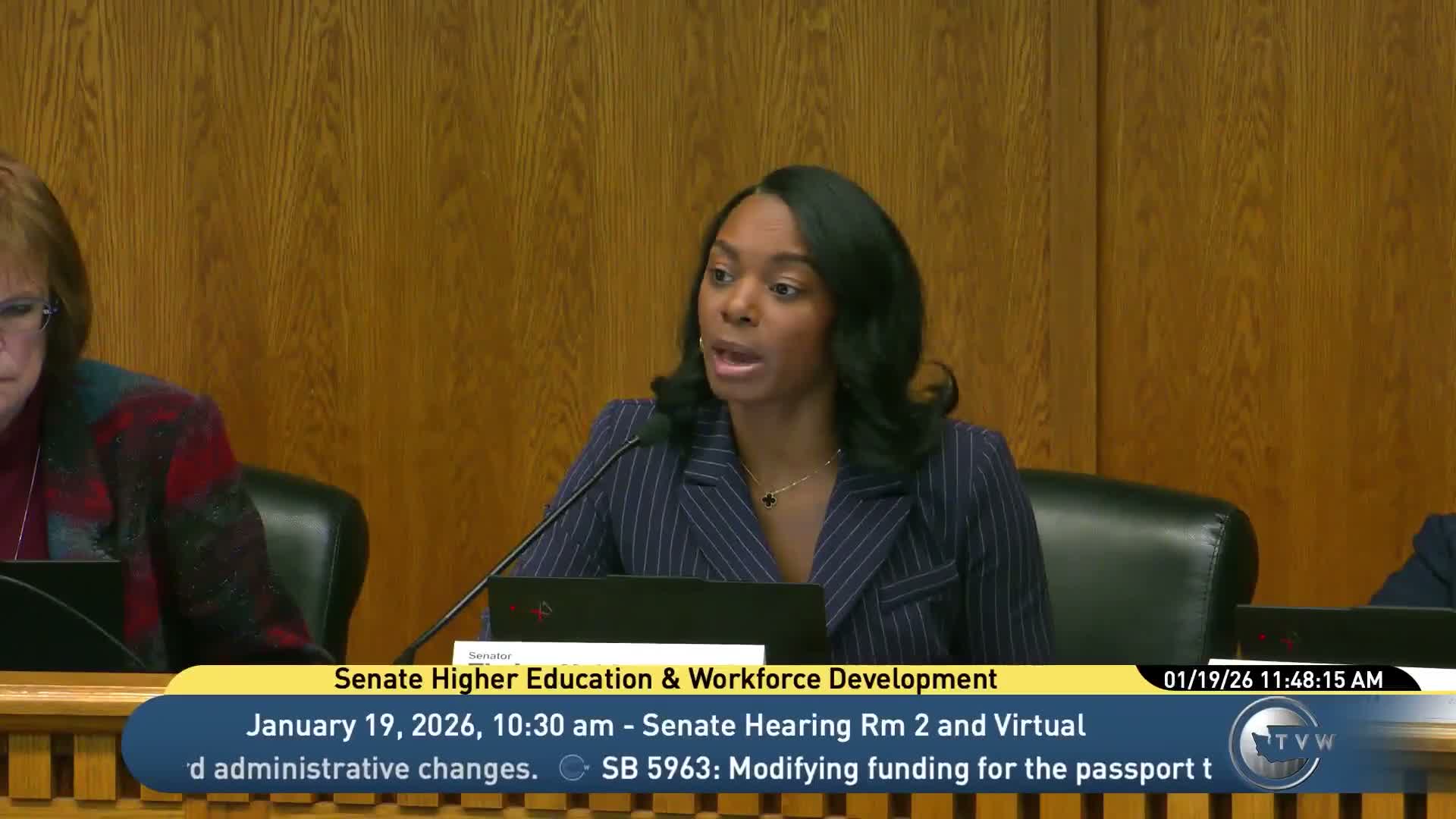
Senate Bill 6082 would require the Joint Legislative Audit and Review Committee (JLARC) to complete a performance audit of fraud in Washington’s student financial-aid programs, including determining numbers of fictitious enrollments, trends in fraudulent activity, amounts lost and recovered, exploitable systemic weaknesses (including AI use), and recommending statutory and regulatory changes. JLARC’s report would be due to the legislature by December 2027.
Sponsor Senator Matt Binky framed the bill as a response to reported incidents of AI-generated or bot-driven fraudulent enrollments and funding losses, saying some institutions have seen sudden, unexplained enrollment spikes tied to fictitious applications. ‘‘These are AI bots that are being used as criminal minds,’’ he said. He argued the audit would identify vulnerabilities and allow the legislature to close loopholes.
College officials and administrators told the committee they already take fraud seriously, described shared detection tools (CTC Link), identity-verification improvements, and local mitigation measures such as application fees and required in-person enrollment checks. Big Bend Community College reported that a large share of applicants in some cycles were suspected fraud and that colleges are handling investigations with limited resources.
Several witnesses warned the audit mandate appears unfunded and that a report due in December 2027 may be too slow to address rapidly evolving AI-enabled threats; some said coordination with federal Department of Education investigations already occurs and cautioned against duplicative reviews. The committee closed the hearing after extensive testimony and discussion of resource needs.
What’s next: The bill will be considered further in committee; lawmakers may address funding and timing concerns raised by institutional witnesses.
Sponsor Senator Matt Binky framed the bill as a response to reported incidents of AI-generated or bot-driven fraudulent enrollments and funding losses, saying some institutions have seen sudden, unexplained enrollment spikes tied to fictitious applications. ‘‘These are AI bots that are being used as criminal minds,’’ he said. He argued the audit would identify vulnerabilities and allow the legislature to close loopholes.
College officials and administrators told the committee they already take fraud seriously, described shared detection tools (CTC Link), identity-verification improvements, and local mitigation measures such as application fees and required in-person enrollment checks. Big Bend Community College reported that a large share of applicants in some cycles were suspected fraud and that colleges are handling investigations with limited resources.
Several witnesses warned the audit mandate appears unfunded and that a report due in December 2027 may be too slow to address rapidly evolving AI-enabled threats; some said coordination with federal Department of Education investigations already occurs and cautioned against duplicative reviews. The committee closed the hearing after extensive testimony and discussion of resource needs.
What’s next: The bill will be considered further in committee; lawmakers may address funding and timing concerns raised by institutional witnesses.
View the Full Meeting & All Its Details
This article offers just a summary. Unlock complete video, transcripts, and insights as a Founder Member.
✓
Watch full, unedited meeting videos
✓
Search every word spoken in unlimited transcripts
✓
AI summaries & real-time alerts (all government levels)
✓
Permanent access to expanding government content
30-day money-back guarantee
