Debate grows over bill to ban interest on medical debt and shorten collection windows
January 19, 2026 | Legislative Sessions, Washington
This article was created by AI summarizing key points discussed. AI makes mistakes, so for full details and context, please refer to the video of the full meeting. Please report any errors so we can fix them. Report an error »
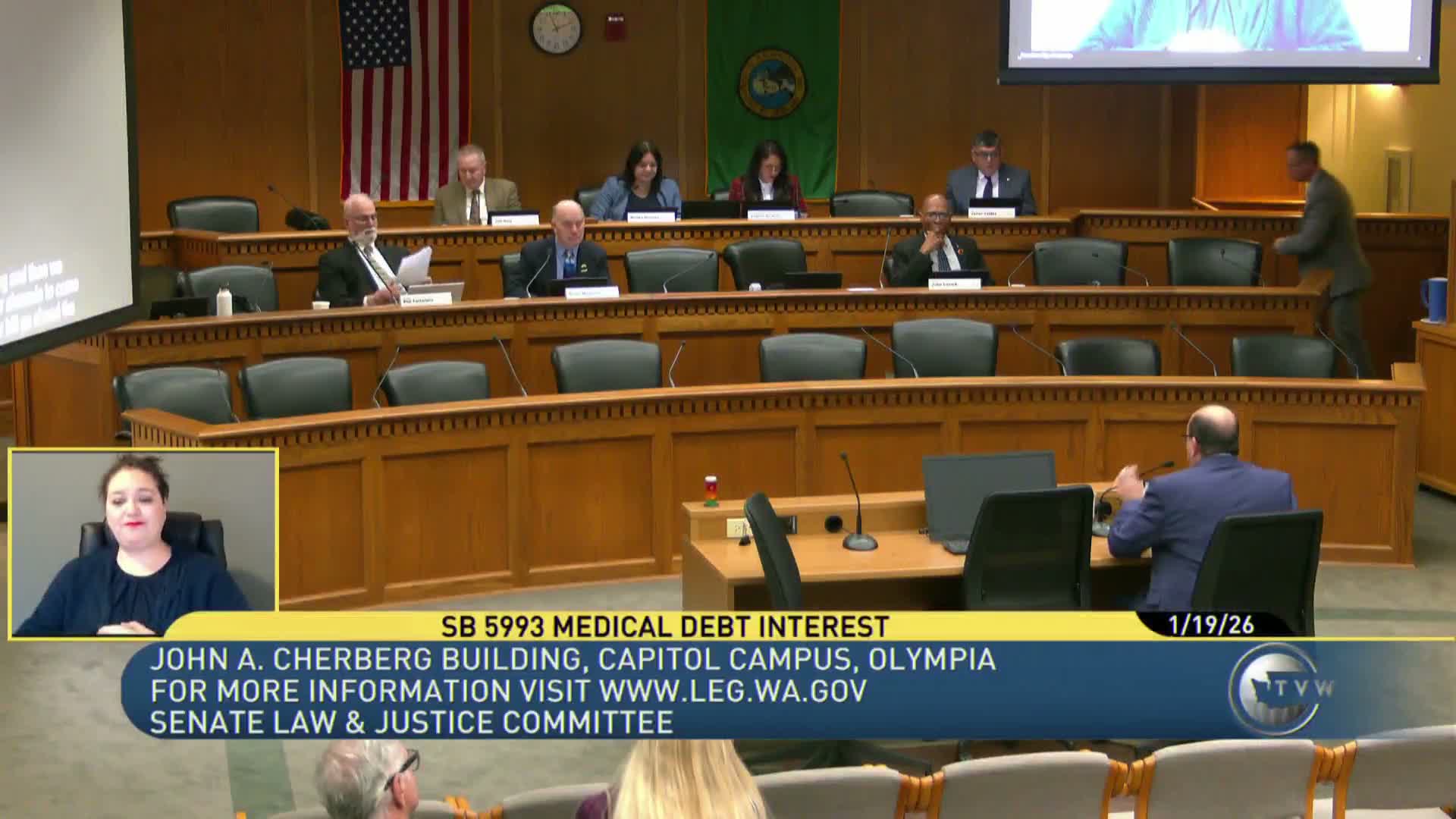
OLYMPIA, Wash. — Lawmakers heard hours of testimony on SB 5993 on Jan. 19, a high-stakes affordability measure that would prohibit interest on new and unpaid medical debt and shorten the enforceability and renewal period for judgments that include medical obligations.
Tim Ford, committee staff, told senators the bill would ban interest on new and unpaid medical debt, limit the enforceability of judgments that include medical debt to six years from entry, and bar renewal of such judgments. Under current law, prejudgment interest on medical debt is capped at 9% and judgments can be extended; SB 5993 would substantially shorten that timeline.
Sen. Emily Alvarado, the sponsor, framed the legislation as a response to households overwhelmed by medical bills and cited cross-state examples where lawmakers limited or banned interest on medical debt. "This bill doesn't forgive a debt, but it helps them out," she said, urging the committee to consider affordability and the long-term harm of compounding interest on judgments.
Consumer advocates, legal-aid groups and patient organizations urged swift action. Sam Leonard (Northwest Consumer Law Center), Julia Kellison (Northwest Justice Project) and representatives of AARP argued that medical debt drives bankruptcies, that interest and long judgment horizons trap people for decades, and that the bill would give debtors a practical chance to repay.
Hospitals, providers and industry groups strongly opposed the bill as drafted. Lisa Thatcher (Washington State Hospital Association), Mallory Toman (Washington State Medical Association), and others warned that eliminating interest and shortening collection windows could increase uncompensated care, harm small and rural providers, incentivize predatory third-party financing and shift costs onto paying patients. Providers reported early data of increased bad debt after recent collection reforms and asked for stakeholder study before sweeping changes.
Trade groups including the Receivables Management Association International and the Northwest Collectors Association requested amendments — for example, allowing limited renewal periods — to preserve enforceability while reducing the overall judgment horizon.
The hearing closed with significant pro and con sign-ins (vice chair reported 129 pro, 80 con), multiple requests for stakeholder collaboration and no recorded committee votes. Sponsors and opponents signaled willingness to engage further on technical adjustments.
Next steps: committee staff and stakeholders indicated additional meetings to study fiscal and access impacts and to refine statutory language before any committee action.
Tim Ford, committee staff, told senators the bill would ban interest on new and unpaid medical debt, limit the enforceability of judgments that include medical debt to six years from entry, and bar renewal of such judgments. Under current law, prejudgment interest on medical debt is capped at 9% and judgments can be extended; SB 5993 would substantially shorten that timeline.
Sen. Emily Alvarado, the sponsor, framed the legislation as a response to households overwhelmed by medical bills and cited cross-state examples where lawmakers limited or banned interest on medical debt. "This bill doesn't forgive a debt, but it helps them out," she said, urging the committee to consider affordability and the long-term harm of compounding interest on judgments.
Consumer advocates, legal-aid groups and patient organizations urged swift action. Sam Leonard (Northwest Consumer Law Center), Julia Kellison (Northwest Justice Project) and representatives of AARP argued that medical debt drives bankruptcies, that interest and long judgment horizons trap people for decades, and that the bill would give debtors a practical chance to repay.
Hospitals, providers and industry groups strongly opposed the bill as drafted. Lisa Thatcher (Washington State Hospital Association), Mallory Toman (Washington State Medical Association), and others warned that eliminating interest and shortening collection windows could increase uncompensated care, harm small and rural providers, incentivize predatory third-party financing and shift costs onto paying patients. Providers reported early data of increased bad debt after recent collection reforms and asked for stakeholder study before sweeping changes.
Trade groups including the Receivables Management Association International and the Northwest Collectors Association requested amendments — for example, allowing limited renewal periods — to preserve enforceability while reducing the overall judgment horizon.
The hearing closed with significant pro and con sign-ins (vice chair reported 129 pro, 80 con), multiple requests for stakeholder collaboration and no recorded committee votes. Sponsors and opponents signaled willingness to engage further on technical adjustments.
Next steps: committee staff and stakeholders indicated additional meetings to study fiscal and access impacts and to refine statutory language before any committee action.
Don't Miss a Word: See the Full Meeting!
Go beyond summaries. Unlock every video, transcript, and key insight with a Founder Membership.
✓
Get instant access to full meeting videos
✓
Search and clip any phrase from complete transcripts
✓
Receive AI-powered summaries & custom alerts
✓
Enjoy lifetime, unrestricted access to government data
30-day money-back guarantee
