Washington bill would add tribal voting member to Board of Natural Resources
January 19, 2026 | Legislative Sessions, Washington
This article was created by AI summarizing key points discussed. AI makes mistakes, so for full details and context, please refer to the video of the full meeting. Please report any errors so we can fix them. Report an error »
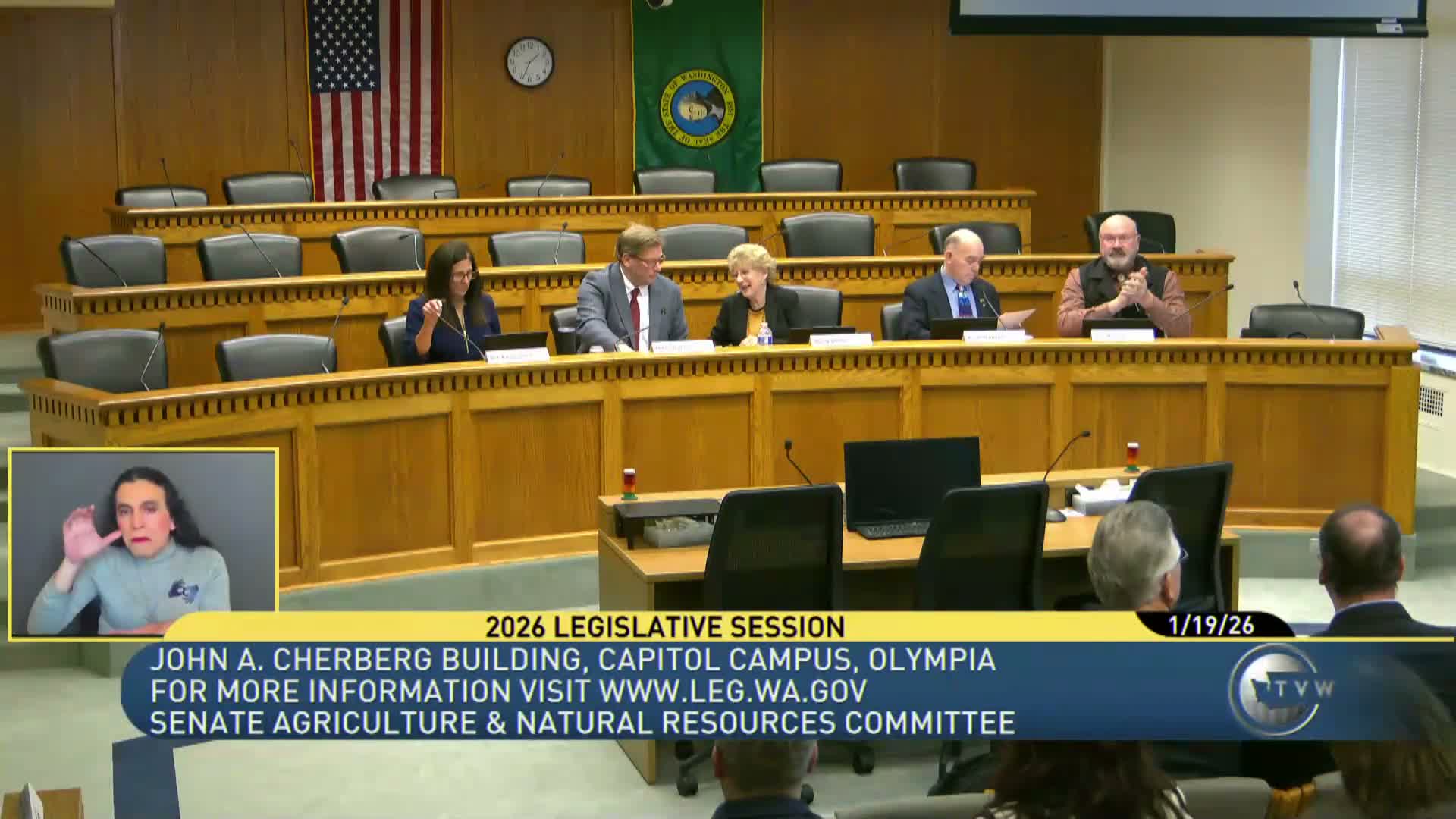
Senate Bill 5838 would add a seventh, voting member to Washington’s Board of Natural Resources, requiring the governor to appoint a representative who is a member of a federally recognized tribe and to consult statewide tribal organizations in the selection process.
Sen. Claudia Kauffman, the bill’s prime sponsor, introduced the proposal during the Senate Agriculture and Natural Resources Committee hearing. "This is about equity," Kauffman said, arguing that tribal leadership, experience and traditional ecological knowledge should be represented "at the highest level of decision making." She said the appointee would be selected through an open, collaborative nomination process.
Department of Natural Resources Commissioner Dave Upthegrove testified in support, telling the committee that tribes "have stewarded lands since time immemorial" and that a seat on the board would add a distinct perspective while not changing the board’s legal responsibilities. "This does not substitute for tribal consultation that continues to occur," he said, and added that the seat would "allow for a vote, not just a voice."
Supporters from several tribes and tribal organizations described tribal forest-management experience and widespread interest across both eastern and western Washington. Jared Michael Erickson, identified as an elected tribal chairman, said tribal resource stewardship provides resilience and economic support to tribal governments and communities and urged the committee to back the bill.
County officials and timber‑industry representatives said they were not opposed in principle but urged caution. Paul Jewell of the Washington State Association of Counties said counties were not consulted before the proposal was developed and stressed that the Board’s fiduciary duty to trust beneficiaries — including counties and local taxing districts that receive proceeds from state trust lands — must be preserved. He said: "That same obligation remains" regardless of board composition.
Business groups from timber‑dependent regions said they would welcome tribal participation if trust objectives and local economies were protected; some urged a broader review of the board’s purpose before changing its composition.
The staff report said the tribal appointee would serve a four‑year term beginning July 1, 2026, and must be a member of a federally recognized tribe; a fiscal note was not yet available at the time of the hearing. The committee received written input (142 submissions: 33 pro, 107 con, 2 other) and heard multiple public witnesses before moving on to subsequent agenda items.
The committee did not take a final vote on the bill during the hearing. The next step is for sponsors and staff to consider amendments and for the committee to decide whether to advance the bill for further action.
Sen. Claudia Kauffman, the bill’s prime sponsor, introduced the proposal during the Senate Agriculture and Natural Resources Committee hearing. "This is about equity," Kauffman said, arguing that tribal leadership, experience and traditional ecological knowledge should be represented "at the highest level of decision making." She said the appointee would be selected through an open, collaborative nomination process.
Department of Natural Resources Commissioner Dave Upthegrove testified in support, telling the committee that tribes "have stewarded lands since time immemorial" and that a seat on the board would add a distinct perspective while not changing the board’s legal responsibilities. "This does not substitute for tribal consultation that continues to occur," he said, and added that the seat would "allow for a vote, not just a voice."
Supporters from several tribes and tribal organizations described tribal forest-management experience and widespread interest across both eastern and western Washington. Jared Michael Erickson, identified as an elected tribal chairman, said tribal resource stewardship provides resilience and economic support to tribal governments and communities and urged the committee to back the bill.
County officials and timber‑industry representatives said they were not opposed in principle but urged caution. Paul Jewell of the Washington State Association of Counties said counties were not consulted before the proposal was developed and stressed that the Board’s fiduciary duty to trust beneficiaries — including counties and local taxing districts that receive proceeds from state trust lands — must be preserved. He said: "That same obligation remains" regardless of board composition.
Business groups from timber‑dependent regions said they would welcome tribal participation if trust objectives and local economies were protected; some urged a broader review of the board’s purpose before changing its composition.
The staff report said the tribal appointee would serve a four‑year term beginning July 1, 2026, and must be a member of a federally recognized tribe; a fiscal note was not yet available at the time of the hearing. The committee received written input (142 submissions: 33 pro, 107 con, 2 other) and heard multiple public witnesses before moving on to subsequent agenda items.
The committee did not take a final vote on the bill during the hearing. The next step is for sponsors and staff to consider amendments and for the committee to decide whether to advance the bill for further action.
Don't Miss a Word: See the Full Meeting!
Go beyond summaries. Unlock every video, transcript, and key insight with a Founder Membership.
✓
Get instant access to full meeting videos
✓
Search and clip any phrase from complete transcripts
✓
Receive AI-powered summaries & custom alerts
✓
Enjoy lifetime, unrestricted access to government data
30-day money-back guarantee
