Proposal would require predator mitigation if ungulate herds drop 25% below 10‑year average; scientists and stakeholders disagree
January 19, 2026 | Legislative Sessions, Washington
This article was created by AI summarizing key points discussed. AI makes mistakes, so for full details and context, please refer to the video of the full meeting. Please report any errors so we can fix them. Report an error »
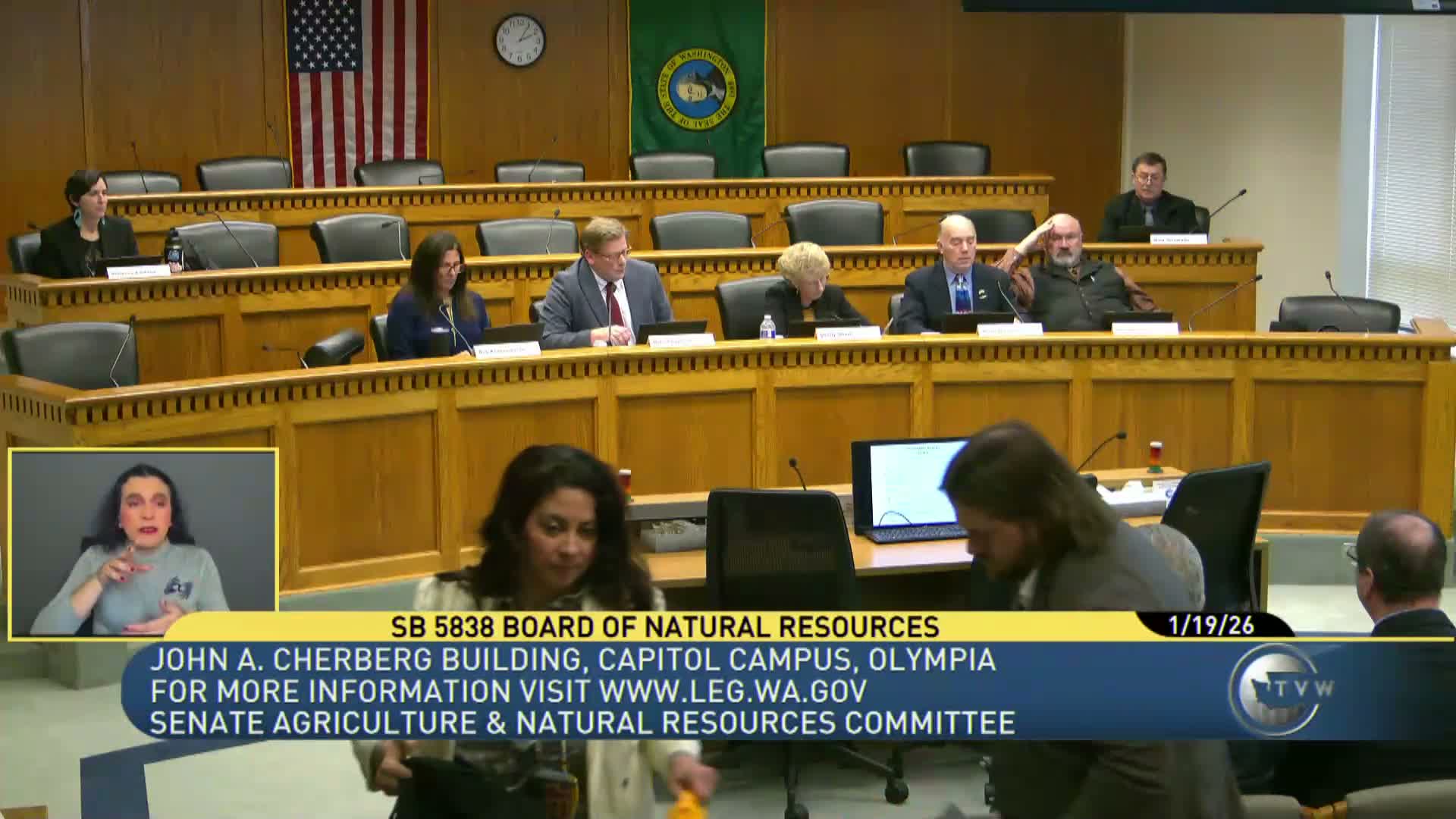
A Senate bill would require the Washington Department of Fish and Wildlife (WDFW) to designate an ungulate population as "at risk" and begin predator‑management actions within 60 days if the population falls 25% or more below its 10‑year rolling average.
Sen. Shelley Short, prime sponsor of SB 5960, said the bill aims to restore balance for rural communities reliant on hunting and timber and to give the department clearer direction when localized declines occur. "It's not about one or the other, it's about all of it," Short said, describing concerns about declining deer and elk in parts of northeastern and southeastern Washington.
The staff overview described mitigation options in the bill including seasonal or geographic predator reduction around sensitive ranges, in‑state translocation of wolves, and targeted removal or non‑lethal measures. The committee heard a department fiscal estimate referenced during testimony indicating implementation costs; staff noted the department prepared the fiscal estimate.
Testimony reflected a deep split. Proponents — including livestock and ranching groups, county representatives and many rural residents — argued for using the management tools described in the bill to address chronic depredation and local declines. Don Peeker (a Northeast Washington resident and appraiser) and county ranchers described local observations of sharp declines in white‑tailed deer and urged action.
Opponents including conservation groups, wildlife scientists and several NGOs cited the five‑year predator‑prey study commissioned by the legislature and presented to the Fish and Wildlife Commission. Francisco Santiago Avila (Washington Wildlife First) and Liz Carr (Kettle Range Conservation Group) summarized that research as finding statewide white‑tailed deer largely stable and elk increasing, and concluded carnivores are not the main driver of declines in most areas. "The bill ignores these findings and manufactures a crisis that doesn't exist," Avila said.
WDFW wildlife program director Meg Cope told the committee the department shares concerns about ungulate populations but flagged implementation challenges and costs, saying some directions in the bill were "not practical or logically feasible" on the timelines proposed and that legislative approval may be required for certain actions.
Several witnesses recommended amendments: some conservation and hunting groups sought tighter alignment with WDFW science and existing management plans; industry groups asked to remove or revise an in‑state translocation provision. The committee received large volumes of written input (numbers summarized at the hearing) and did not take a vote.
The committee requested data follow‑up from WDFW (buck/doe ratios, fawn recruitment and 10‑year rolling averages) to inform further deliberation.
Sen. Shelley Short, prime sponsor of SB 5960, said the bill aims to restore balance for rural communities reliant on hunting and timber and to give the department clearer direction when localized declines occur. "It's not about one or the other, it's about all of it," Short said, describing concerns about declining deer and elk in parts of northeastern and southeastern Washington.
The staff overview described mitigation options in the bill including seasonal or geographic predator reduction around sensitive ranges, in‑state translocation of wolves, and targeted removal or non‑lethal measures. The committee heard a department fiscal estimate referenced during testimony indicating implementation costs; staff noted the department prepared the fiscal estimate.
Testimony reflected a deep split. Proponents — including livestock and ranching groups, county representatives and many rural residents — argued for using the management tools described in the bill to address chronic depredation and local declines. Don Peeker (a Northeast Washington resident and appraiser) and county ranchers described local observations of sharp declines in white‑tailed deer and urged action.
Opponents including conservation groups, wildlife scientists and several NGOs cited the five‑year predator‑prey study commissioned by the legislature and presented to the Fish and Wildlife Commission. Francisco Santiago Avila (Washington Wildlife First) and Liz Carr (Kettle Range Conservation Group) summarized that research as finding statewide white‑tailed deer largely stable and elk increasing, and concluded carnivores are not the main driver of declines in most areas. "The bill ignores these findings and manufactures a crisis that doesn't exist," Avila said.
WDFW wildlife program director Meg Cope told the committee the department shares concerns about ungulate populations but flagged implementation challenges and costs, saying some directions in the bill were "not practical or logically feasible" on the timelines proposed and that legislative approval may be required for certain actions.
Several witnesses recommended amendments: some conservation and hunting groups sought tighter alignment with WDFW science and existing management plans; industry groups asked to remove or revise an in‑state translocation provision. The committee received large volumes of written input (numbers summarized at the hearing) and did not take a vote.
The committee requested data follow‑up from WDFW (buck/doe ratios, fawn recruitment and 10‑year rolling averages) to inform further deliberation.
View the Full Meeting & All Its Details
This article offers just a summary. Unlock complete video, transcripts, and insights as a Founder Member.
✓
Watch full, unedited meeting videos
✓
Search every word spoken in unlimited transcripts
✓
AI summaries & real-time alerts (all government levels)
✓
Permanent access to expanding government content
30-day money-back guarantee
