Tribe and local groups press for predator suppression to revive Lake Washington sockeye
January 19, 2026 | Legislative Sessions, Washington
This article was created by AI summarizing key points discussed. AI makes mistakes, so for full details and context, please refer to the video of the full meeting. Please report any errors so we can fix them. Report an error »
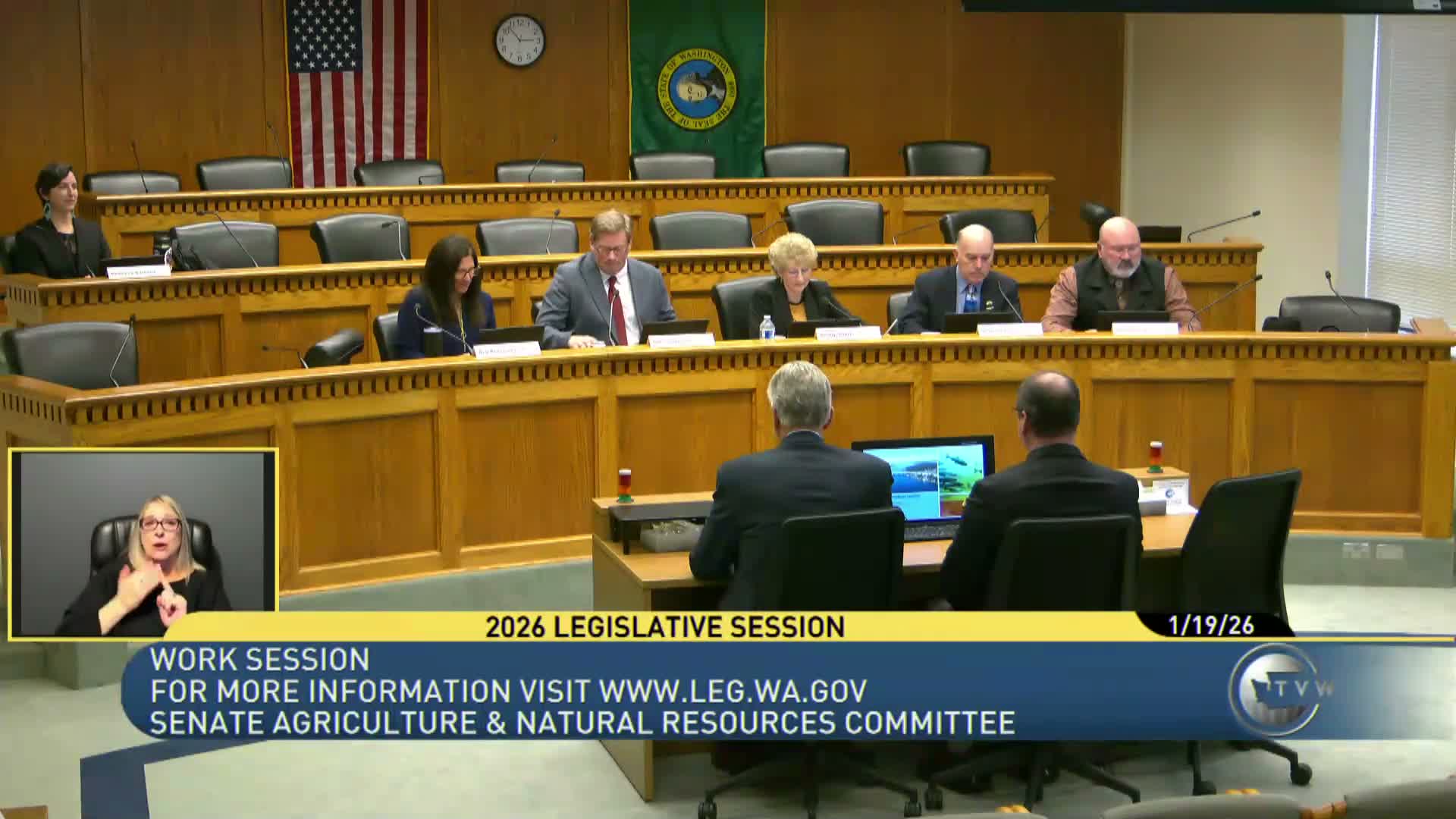
Speakers at a committee work session outlined research and management proposals to address predation on juvenile salmon in the Lake Washington basin. Tribal scientists and local recovery advocates said invasive and predatory fish have consumed the majority of sockeye fry entering the system and called for targeted suppression.
Larry Phillips (founder, Cedar River Council) and Dr. Jason Schaffler (fisheries division director, Muckleshoot Indian Tribe) described long‑term declines in sockeye returns — from roughly 500,000 in earlier decades to counts near 18,000 at the Locks in the most recent season — and attributed much of the recent loss to predation by species such as walleye, rock bass, yellow perch, northern pike and resident American shad.
Schaffler presented netting and diet data collected with the tribe and WDFW showing rock bass and perch with salmon smolts in their stomachs and described detections of northern pike and walleye in the basin. He said targeted removals and increased fishing pressure on large invasive predators have already reduced average predator size in some sampling and that programmatic removals could allow habitat restoration and hatchery investments to be effective.
Presenters asked for modest, sustained funding and for the committee to consider restoring or augmenting prior state support that was reduced in recent budget cycles. "If we do this, we can restore these runs to a fishery," Phillips said, estimating a possible run of 60,000 sockeye in the medium term if predation is addressed alongside habitat work.
Committee members asked about methods and community engagement; presenters recommended size‑selective removals, public engagement events, and continued monitoring. The work session produced no formal decision but highlighted the tribe’s fisheries role and urged legislative support for targeted predation control as a complement to habitat investments.
Larry Phillips (founder, Cedar River Council) and Dr. Jason Schaffler (fisheries division director, Muckleshoot Indian Tribe) described long‑term declines in sockeye returns — from roughly 500,000 in earlier decades to counts near 18,000 at the Locks in the most recent season — and attributed much of the recent loss to predation by species such as walleye, rock bass, yellow perch, northern pike and resident American shad.
Schaffler presented netting and diet data collected with the tribe and WDFW showing rock bass and perch with salmon smolts in their stomachs and described detections of northern pike and walleye in the basin. He said targeted removals and increased fishing pressure on large invasive predators have already reduced average predator size in some sampling and that programmatic removals could allow habitat restoration and hatchery investments to be effective.
Presenters asked for modest, sustained funding and for the committee to consider restoring or augmenting prior state support that was reduced in recent budget cycles. "If we do this, we can restore these runs to a fishery," Phillips said, estimating a possible run of 60,000 sockeye in the medium term if predation is addressed alongside habitat work.
Committee members asked about methods and community engagement; presenters recommended size‑selective removals, public engagement events, and continued monitoring. The work session produced no formal decision but highlighted the tribe’s fisheries role and urged legislative support for targeted predation control as a complement to habitat investments.
Don't Miss a Word: See the Full Meeting!
Go beyond summaries. Unlock every video, transcript, and key insight with a Founder Membership.
✓
Get instant access to full meeting videos
✓
Search and clip any phrase from complete transcripts
✓
Receive AI-powered summaries & custom alerts
✓
Enjoy lifetime, unrestricted access to government data
30-day money-back guarantee
