Bill would elevate some repeat fourth-degree assaults to felony status under specified motivation rule
January 19, 2026 | Legislative Sessions, Washington
This article was created by AI summarizing key points discussed. AI makes mistakes, so for full details and context, please refer to the video of the full meeting. Please report any errors so we can fix them. Report an error »
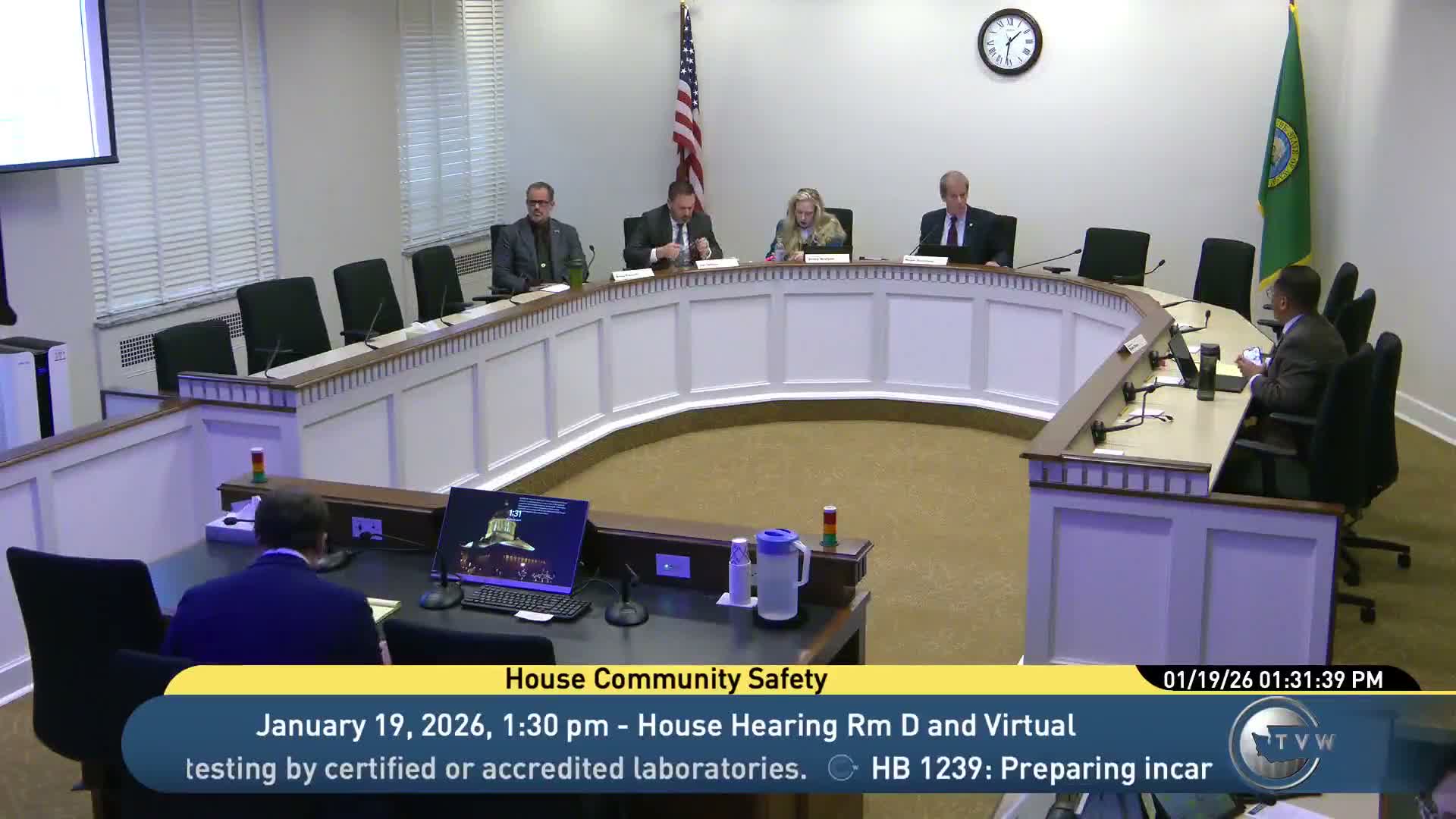
OLYMPIA, Wash. — Representative Madison Richards told the House Committee on Community Safety on Jan. 19 that House Bill 23-10 aims to increase accountability for repeat perpetrators by elevating select fourth-degree assaults with a specified motivation to a class C felony when the defendant has two or more qualifying prior adult convictions within a 10-year period.
Staff briefed the committee that fourth-degree assault is generally a gross misdemeanor but that the bill would make it a class C felony, ranked at seriousness level 4, for defendants with the required prior convictions. That elevation would trigger criminal‑justice consequences such as offender registration and a presumptive 12‑month sentencing enhancement in many cases. Staff said the measure is prospective: only offenses that occur on or after the bill’s effective date count as priors for the purpose of elevation.
Sponsor Madison Richards, who described the bill as informed by survivor accounts, said the proposal is meant to target repeat behavior while recognizing the difficulty of intimate‑partner cases. "This is a bill about providing some additional protection for survivors and acting upon other stories when we do hear them," she said.
Opponents raised concerns about collateral consequences. Ramona Brandes (Washington Defender Association) told lawmakers the bill could trigger extensive Sexual Registration Act consequences, increase immigration removability risks because sentences over one year become aggravated felonies for immigration purposes, and eliminate plea options commonly used to resolve cases where evidence does not support a higher-level offense. Brandes urged referral to the offender policy board for review.
Prosecutors and law enforcement associations said they support changes that address repetitive offending and suggested clarifying amendments. Russell Brown (Washington Association of Prosecuting Attorneys) and James McMahon (Association of Sheriffs and Police Chiefs) said the bill could help if the statute is clear about whether the 10-year period is measured from date of sentence or date of release and whether prior predicate offenses include prior qualifying felonies.
Committee members asked questions about the definition and breadth of the motivation element and noted that some assaults that carry the motivation finding may be minor in scope while others are more serious. Stakeholders recommended technical amendments to ensure proportionality and to direct the bill to the existing offender-policy review process before adoption.
What happens next: The committee held the hearing open for further work on clarifying amendments; no vote was recorded during the Jan. 19 hearing.
Staff briefed the committee that fourth-degree assault is generally a gross misdemeanor but that the bill would make it a class C felony, ranked at seriousness level 4, for defendants with the required prior convictions. That elevation would trigger criminal‑justice consequences such as offender registration and a presumptive 12‑month sentencing enhancement in many cases. Staff said the measure is prospective: only offenses that occur on or after the bill’s effective date count as priors for the purpose of elevation.
Sponsor Madison Richards, who described the bill as informed by survivor accounts, said the proposal is meant to target repeat behavior while recognizing the difficulty of intimate‑partner cases. "This is a bill about providing some additional protection for survivors and acting upon other stories when we do hear them," she said.
Opponents raised concerns about collateral consequences. Ramona Brandes (Washington Defender Association) told lawmakers the bill could trigger extensive Sexual Registration Act consequences, increase immigration removability risks because sentences over one year become aggravated felonies for immigration purposes, and eliminate plea options commonly used to resolve cases where evidence does not support a higher-level offense. Brandes urged referral to the offender policy board for review.
Prosecutors and law enforcement associations said they support changes that address repetitive offending and suggested clarifying amendments. Russell Brown (Washington Association of Prosecuting Attorneys) and James McMahon (Association of Sheriffs and Police Chiefs) said the bill could help if the statute is clear about whether the 10-year period is measured from date of sentence or date of release and whether prior predicate offenses include prior qualifying felonies.
Committee members asked questions about the definition and breadth of the motivation element and noted that some assaults that carry the motivation finding may be minor in scope while others are more serious. Stakeholders recommended technical amendments to ensure proportionality and to direct the bill to the existing offender-policy review process before adoption.
What happens next: The committee held the hearing open for further work on clarifying amendments; no vote was recorded during the Jan. 19 hearing.
View the Full Meeting & All Its Details
This article offers just a summary. Unlock complete video, transcripts, and insights as a Founder Member.
✓
Watch full, unedited meeting videos
✓
Search every word spoken in unlimited transcripts
✓
AI summaries & real-time alerts (all government levels)
✓
Permanent access to expanding government content
30-day money-back guarantee
