Sponsor says litter task force and bag-thickness change will reduce roadside litter; retailers and Ecology weigh in
January 19, 2026 | Legislative Sessions, Washington
This article was created by AI summarizing key points discussed. AI makes mistakes, so for full details and context, please refer to the video of the full meeting. Please report any errors so we can fix them. Report an error »
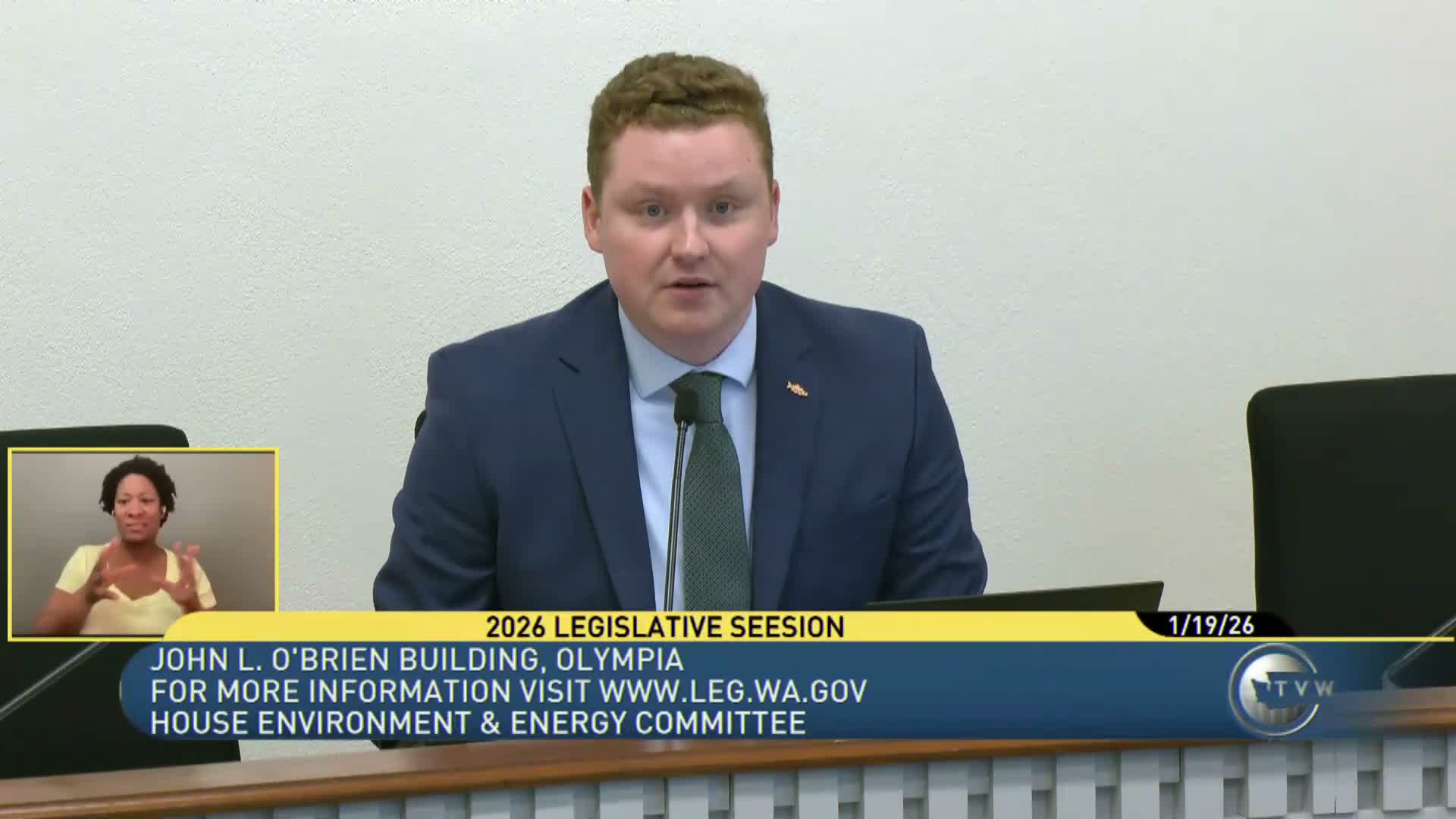
Representative Beth Dye asked the committee to advance House Bill 22-84 as a practical, data-driven approach to reducing litter from carryout bags. "House Bill 22-84 is about results and accountability using the dollars people already pay to get cleaner roads," Dye said, citing a Department of Ecology study that staff told the committee found roughly 38,000,000 pounds of litter statewide each year.
Supporters from retail and industry said the bill preserves predictable rules for retailers and avoids fee-driven approaches that they said would punish consumers. Crystal Leatherman, director of policy and government affairs for the Washington Retailers Association, said the bill’s task force would “identify what is actually ending up as litter and where it’s occurring,” and urged inclusion of retailers and waste managers on that task force.
The Department of Ecology raised fiscal and staffing concerns. Peter Lyon, program manager for Ecology’s solid waste program, told the committee the bill would require Ecology to convene a littering solutions task force and that the agency was already contracting for a statewide litter study due in 2027. Lyon recommended adding members representing overburdened communities, an environmental-justice organization, the Department of Corrections and a tribe or tribal organization to the task force.
Lawmakers and public witnesses debated trade-offs between bag thickness, reuse, and environmental outcomes. Industry and some researchers said increasing bag thickness can increase material use without increasing reuse; advocates emphasized that the bill preserves penalties on thicker bags to keep a signal to reduce unnecessary plastic. The committee suspended the hearing on HB 22-84 after panels offered testimony and will consider the staff study and the task-force recommendations going forward.
The bill does not include a formal appropriation for the Ecology-convened task force in the materials presented at the hearing; Ecology said the costs are not accounted for in the governor’s budget and flagged implementation questions that could be addressed in amendment.
Supporters from retail and industry said the bill preserves predictable rules for retailers and avoids fee-driven approaches that they said would punish consumers. Crystal Leatherman, director of policy and government affairs for the Washington Retailers Association, said the bill’s task force would “identify what is actually ending up as litter and where it’s occurring,” and urged inclusion of retailers and waste managers on that task force.
The Department of Ecology raised fiscal and staffing concerns. Peter Lyon, program manager for Ecology’s solid waste program, told the committee the bill would require Ecology to convene a littering solutions task force and that the agency was already contracting for a statewide litter study due in 2027. Lyon recommended adding members representing overburdened communities, an environmental-justice organization, the Department of Corrections and a tribe or tribal organization to the task force.
Lawmakers and public witnesses debated trade-offs between bag thickness, reuse, and environmental outcomes. Industry and some researchers said increasing bag thickness can increase material use without increasing reuse; advocates emphasized that the bill preserves penalties on thicker bags to keep a signal to reduce unnecessary plastic. The committee suspended the hearing on HB 22-84 after panels offered testimony and will consider the staff study and the task-force recommendations going forward.
The bill does not include a formal appropriation for the Ecology-convened task force in the materials presented at the hearing; Ecology said the costs are not accounted for in the governor’s budget and flagged implementation questions that could be addressed in amendment.
Don't Miss a Word: See the Full Meeting!
Go beyond summaries. Unlock every video, transcript, and key insight with a Founder Membership.
✓
Get instant access to full meeting videos
✓
Search and clip any phrase from complete transcripts
✓
Receive AI-powered summaries & custom alerts
✓
Enjoy lifetime, unrestricted access to government data
30-day money-back guarantee
