Committee debates low-sulfur maritime fuel standard as ports and environmental groups clash
January 19, 2026 | Legislative Sessions, Washington
This article was created by AI summarizing key points discussed. AI makes mistakes, so for full details and context, please refer to the video of the full meeting. Please report any errors so we can fix them. Report an error »
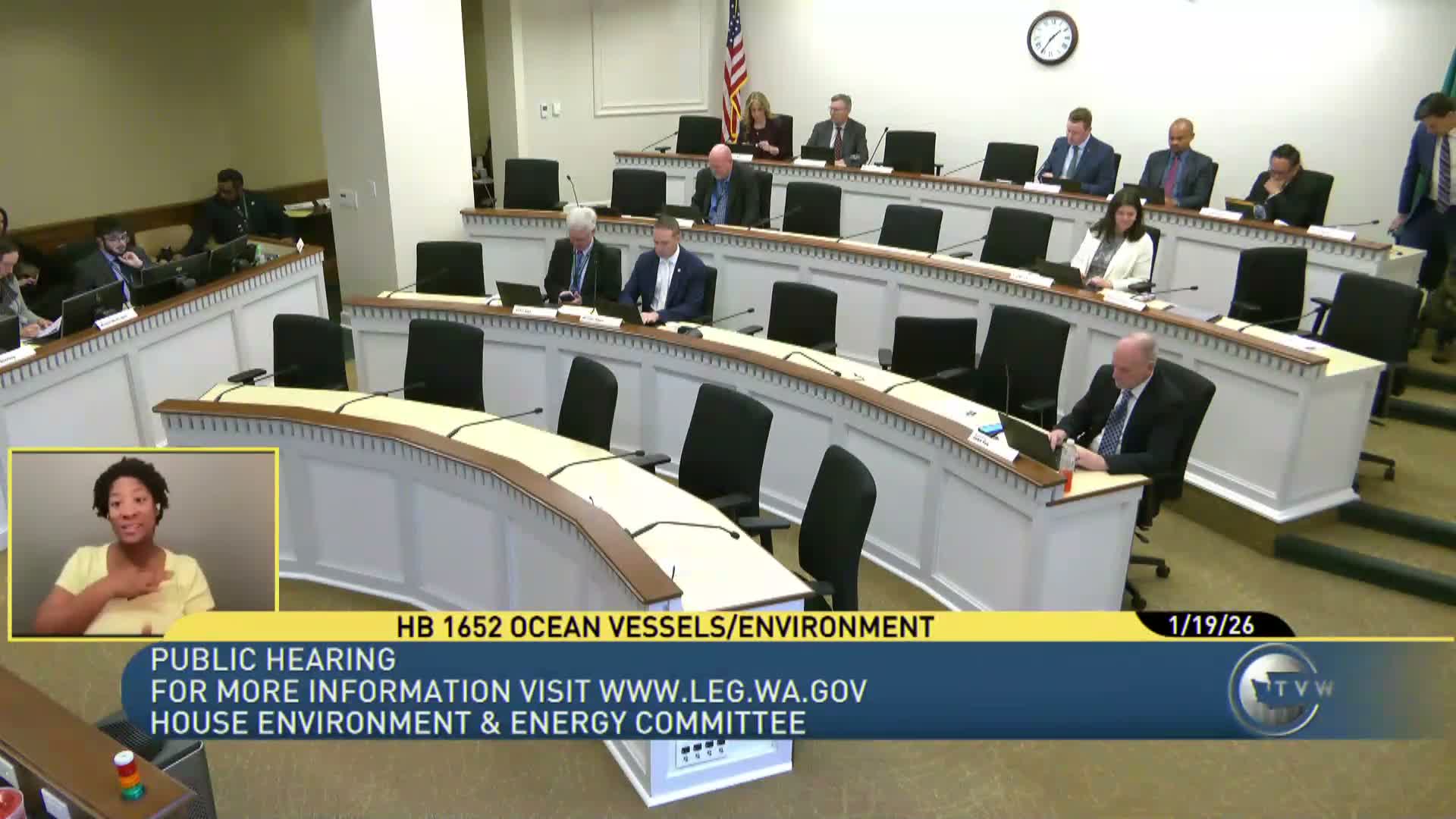
Staff told the committee House Bill 16-52 would establish a 0.1% sulfur standard for certain ocean-going vessels operating in Washington waters (within three miles), require recordkeeping and allow the Department of Ecology to adopt implementing rules and fees. Staff described international standards (IMO) and emissions control areas (ECAs) as the regulatory context.
Representative Deborah Lekanoff, the bill’s sponsor, said the measure would reduce use of high-sulfur fuels and the discharge of scrubber washwater that transfers pollution into state waters. "Adoption of low sulfur fuel will contribute to what we love most about Washington, clean water, clean air, healthier wildlife," Lekanoff said, and noted the bill’s delayed effective date to allow industry time to comply.
Ports and maritime trade groups objected that the bill, as drafted, would effectively make exhaust-gas-cleaning systems (scrubbers) redundant and could disincentivize calls to Washington ports. John (Port of Seattle) and Carly Michaels (Washington Public Ports Association) urged more stakeholder engagement, data on fuel inventories and fuel access for irregular callers, and clarity about which vessel classes the bill would cover.
Environmental organizations, public-health advocates and the Puget Sound Partnership supported the proposed substitute. Earthjustice said the substitute is within state authority and would reduce toxic washwater discharges; Washington Physicians for Social Responsibility highlighted links between sulfur oxides and particulate matter and human health harms near ports.
Several witnesses said cruise lines and some carriers currently limit scrubber discharges voluntarily in Puget Sound; cruise industry representatives said they are voluntarily not discharging washwater in Puget Sound and urged a risk-analysis process before any prescriptive restrictions. Ecology’s role in permitting, fee collection and enforcement was a recurring implementation question.
The committee heard testimony from both sides and asked technical questions about whether the state's ferry fleet or certain exempted vessel categories would be covered; no formal amendments or votes were recorded during the hearing.
Representative Deborah Lekanoff, the bill’s sponsor, said the measure would reduce use of high-sulfur fuels and the discharge of scrubber washwater that transfers pollution into state waters. "Adoption of low sulfur fuel will contribute to what we love most about Washington, clean water, clean air, healthier wildlife," Lekanoff said, and noted the bill’s delayed effective date to allow industry time to comply.
Ports and maritime trade groups objected that the bill, as drafted, would effectively make exhaust-gas-cleaning systems (scrubbers) redundant and could disincentivize calls to Washington ports. John (Port of Seattle) and Carly Michaels (Washington Public Ports Association) urged more stakeholder engagement, data on fuel inventories and fuel access for irregular callers, and clarity about which vessel classes the bill would cover.
Environmental organizations, public-health advocates and the Puget Sound Partnership supported the proposed substitute. Earthjustice said the substitute is within state authority and would reduce toxic washwater discharges; Washington Physicians for Social Responsibility highlighted links between sulfur oxides and particulate matter and human health harms near ports.
Several witnesses said cruise lines and some carriers currently limit scrubber discharges voluntarily in Puget Sound; cruise industry representatives said they are voluntarily not discharging washwater in Puget Sound and urged a risk-analysis process before any prescriptive restrictions. Ecology’s role in permitting, fee collection and enforcement was a recurring implementation question.
The committee heard testimony from both sides and asked technical questions about whether the state's ferry fleet or certain exempted vessel categories would be covered; no formal amendments or votes were recorded during the hearing.
Don't Miss a Word: See the Full Meeting!
Go beyond summaries. Unlock every video, transcript, and key insight with a Founder Membership.
✓
Get instant access to full meeting videos
✓
Search and clip any phrase from complete transcripts
✓
Receive AI-powered summaries & custom alerts
✓
Enjoy lifetime, unrestricted access to government data
30-day money-back guarantee
