Bill would end long-standing coal exemptions and repeal coal sales-tax break; sponsors cite Centralia transition
January 19, 2026 | Legislative Sessions, Washington
This article was created by AI summarizing key points discussed. AI makes mistakes, so for full details and context, please refer to the video of the full meeting. Please report any errors so we can fix them. Report an error »
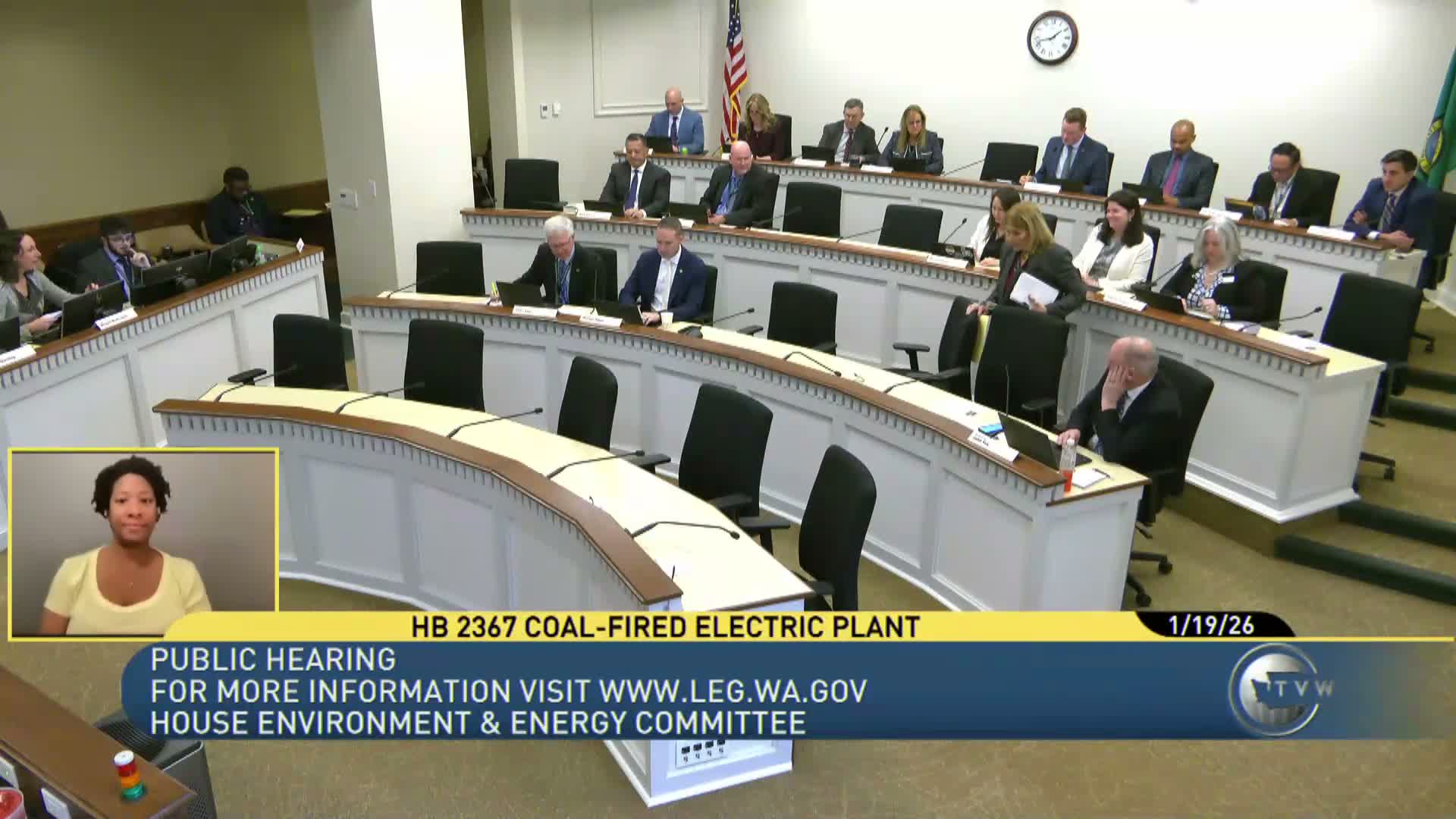
Committee staff described House Bill 23-67 as three measures: (1) limit coal-exemption status to emissions occurring before 2026, (2) remove the statutory prohibition on agencies imposing additional greenhouse-gas rules on certain legacy coal facilities, and (3) repeal longstanding coal sales-and-use tax exemptions tied to plants in operation between 1969 and 1975.
Representative Joe Fitzgibbon, sponsor, described the Centralia/TransAlta memorandum of agreement from 2011 that set a phase-out trajectory for the plant and included community investments. Fitzgibbon said TransAlta largely complied with the MOA and that the bill seeks to keep Washington on a path toward eliminating coal combustion for electricity generation. He noted a recent federal order that briefly required the plant to continue operating, creating legal uncertainty.
Climate and public-interest groups — including Climate Solutions, Washington Conservation Action and the Northwest Energy Coalition — testified in support, saying the bill affirms state climate policy and prevents special treatment for coal that could prolong high-carbon investments. Business and petroleum interests (Association of Washington Business, Western States Petroleum Association) raised concerns about impacts to allowance supply under the Climate Commitment Act and requested legislative language or flexibility to adjust allowances or budgets if a plant is brought into the cap-and-trade program.
Panelists asked technical questions about whether historical emissions were reported (Fitzgibbon said TransAlta reported emissions to state and federal authorities but was not required to buy allowances under the Climate Commitment Act), and whether bringing a plant back online would be counted under the CCA. No vote was taken during the hearing; the committee closed testimony and moved to other agenda items.
Representative Joe Fitzgibbon, sponsor, described the Centralia/TransAlta memorandum of agreement from 2011 that set a phase-out trajectory for the plant and included community investments. Fitzgibbon said TransAlta largely complied with the MOA and that the bill seeks to keep Washington on a path toward eliminating coal combustion for electricity generation. He noted a recent federal order that briefly required the plant to continue operating, creating legal uncertainty.
Climate and public-interest groups — including Climate Solutions, Washington Conservation Action and the Northwest Energy Coalition — testified in support, saying the bill affirms state climate policy and prevents special treatment for coal that could prolong high-carbon investments. Business and petroleum interests (Association of Washington Business, Western States Petroleum Association) raised concerns about impacts to allowance supply under the Climate Commitment Act and requested legislative language or flexibility to adjust allowances or budgets if a plant is brought into the cap-and-trade program.
Panelists asked technical questions about whether historical emissions were reported (Fitzgibbon said TransAlta reported emissions to state and federal authorities but was not required to buy allowances under the Climate Commitment Act), and whether bringing a plant back online would be counted under the CCA. No vote was taken during the hearing; the committee closed testimony and moved to other agenda items.
Don't Miss a Word: See the Full Meeting!
Go beyond summaries. Unlock every video, transcript, and key insight with a Founder Membership.
✓
Get instant access to full meeting videos
✓
Search and clip any phrase from complete transcripts
✓
Receive AI-powered summaries & custom alerts
✓
Enjoy lifetime, unrestricted access to government data
30-day money-back guarantee
