House committee hears bill to protect tenants during extreme-heat alerts
January 19, 2026 | Legislative Sessions, Washington
This article was created by AI summarizing key points discussed. AI makes mistakes, so for full details and context, please refer to the video of the full meeting. Please report any errors so we can fix them. Report an error »
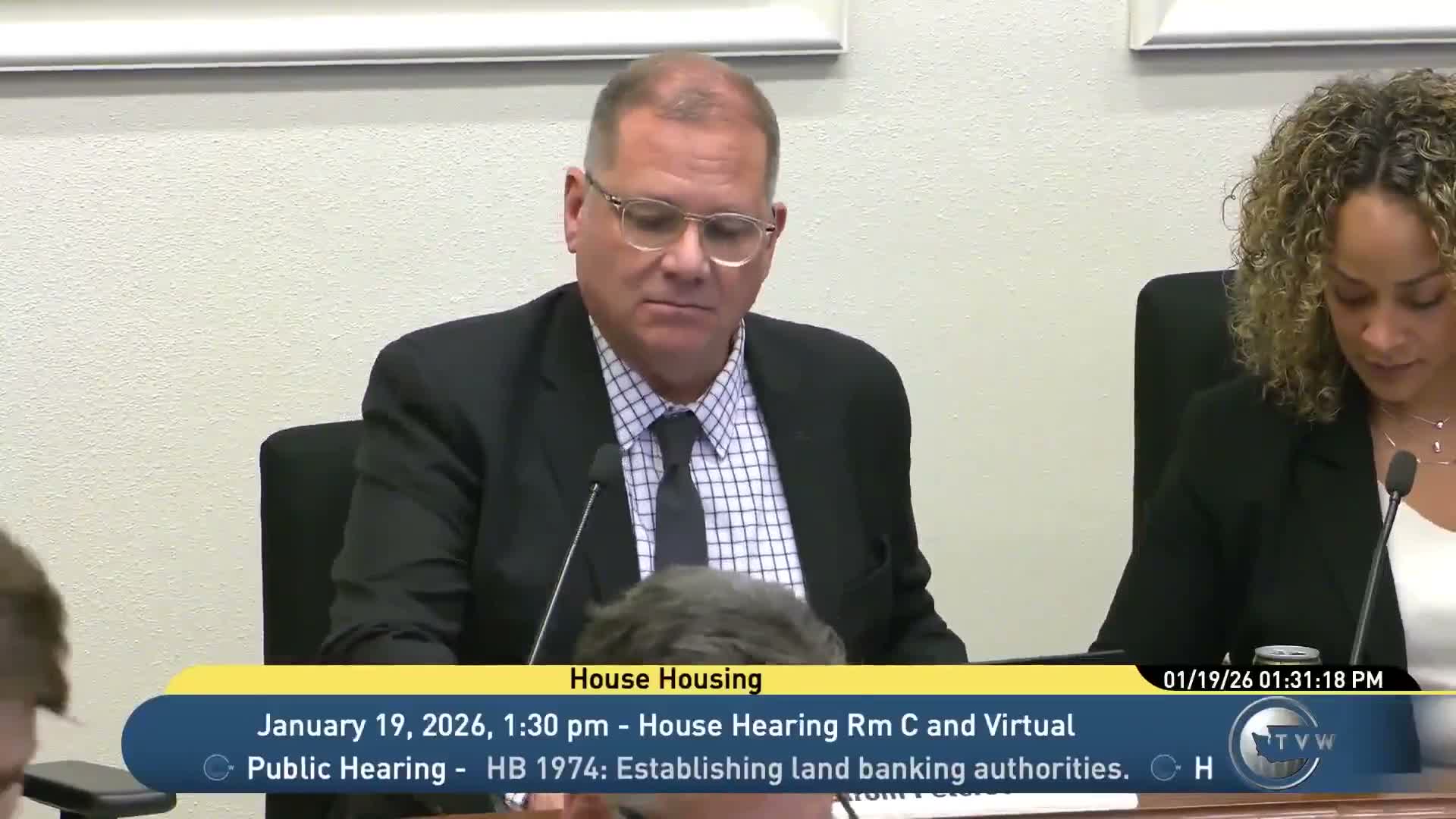
A House Housing Committee hearing on Jan. 19 examined House Bill 2,265, a proposal to expand tenant protections during periods of extreme heat.
Audrey Vazik, staff to the committee, told members the bill has three main components: it bars landlords from prohibiting the installation of portable cooling devices (with listed exceptions), it adds a landlord duty under the Residential Landlord Tenant Act (RLTA) to provide cooling “as reasonably required by the tenant,” and it prevents sheriffs from executing writs of restitution or physically evicting tenants during a defined "period of extreme heat" tied to National Weather Service alerts. Vazik explained the bill defines that period as starting 24 hours before an NWS heat-related alert and ending 48 hours after the alert expires or is canceled.
“House Bill 2,265 protects tenants from periods of extreme heat,” Vazik said during her briefing to the committee.
Prime sponsor Representative Charlotte Menna, who identified herself for the record as representing the 29th District, framed the bill as driven by public-health experience from the 2021 heat dome. “Extreme heat is now one of the deadliest weather threats in Washington,” she said, arguing existing habitability protections for cold should be mirrored for heat. Menna said the bill is intended as a first step: to allow tenant-installed cooling while the legislature and stakeholders work toward standards for when landlords must provide cooling.
Supporters at the hearing described both technical and humanitarian reasons for the bill. Michael Iason, an architect specializing in climate adaptation, said U.S. multifamily design often lacks cross-ventilation and exterior shading, leaving many apartments unable to cool without mechanical systems. “Over half of Washington renters do not have access to cooling,” he testified. Public-health advocates highlighted mortality during the 2021 event: Chris Covert Bolds of Washington Physicians for Social Responsibility cited the 441 Washingtonians who died in the June 2021 heat wave as a reason to act.
Landlords, property managers and industry groups urged changes to the bill’s language or more implementation detail. Crystal Perkey of the Washington Multifamily Housing Association praised liability limits in the draft but said it lacks explicit safety exemptions for high-rise buildings and that insurance and operational controls need clarification. Jim Henderson of the National Association of Residential Property Managers and Daniel Bannon of the Rental Housing Association warned that a duty to provide cooling could require substantial, costly renovations in older buildings and that the eviction-timing restrictions could complicate sheriff scheduling and already delayed unlawful-detainer processes.
Industry witnesses raised specific operational concerns: whether buildings have the electrical capacity for many tenant-installed units; the risk that improperly installed window units could trigger insurance cancellations; and how a 24-hour-before/48-hour-after eviction pause tied to NWS alerts would practically be enforced, particularly in jurisdictions with existing seasonal eviction restrictions.
Tenant advocates pressed for stronger obligations on landlords. Ethan Martez of Tenants Revolt said the bill largely “permits” tenant-installed cooling but does not ensure access or affordability: “This bill is mostly a permission slip, not a protection,” he said, urging amendments to treat cooling during declared extreme heat as a habitability requirement and to require landlords to provide effective cooling options rather than shifting costs and risk to tenants.
Committee members asked technical questions about how often NWS extreme-heat alerts occur, how to define what cooling is “reasonably required,” whether the standard should vary by building type or tenant need, and whether the state should reimburse housing providers for lost rent if eviction timing changes. Sponsor Menna and staff said they would work with sheriffs, stakeholders and landlords on implementation details and potential amendments.
The hearing closed without a committee vote. The bill remains subject to amendment as sponsors and stakeholders reconcile public-health goals with industry concerns about safety, liability, cost and enforcement logistics.
Audrey Vazik, staff to the committee, told members the bill has three main components: it bars landlords from prohibiting the installation of portable cooling devices (with listed exceptions), it adds a landlord duty under the Residential Landlord Tenant Act (RLTA) to provide cooling “as reasonably required by the tenant,” and it prevents sheriffs from executing writs of restitution or physically evicting tenants during a defined "period of extreme heat" tied to National Weather Service alerts. Vazik explained the bill defines that period as starting 24 hours before an NWS heat-related alert and ending 48 hours after the alert expires or is canceled.
“House Bill 2,265 protects tenants from periods of extreme heat,” Vazik said during her briefing to the committee.
Prime sponsor Representative Charlotte Menna, who identified herself for the record as representing the 29th District, framed the bill as driven by public-health experience from the 2021 heat dome. “Extreme heat is now one of the deadliest weather threats in Washington,” she said, arguing existing habitability protections for cold should be mirrored for heat. Menna said the bill is intended as a first step: to allow tenant-installed cooling while the legislature and stakeholders work toward standards for when landlords must provide cooling.
Supporters at the hearing described both technical and humanitarian reasons for the bill. Michael Iason, an architect specializing in climate adaptation, said U.S. multifamily design often lacks cross-ventilation and exterior shading, leaving many apartments unable to cool without mechanical systems. “Over half of Washington renters do not have access to cooling,” he testified. Public-health advocates highlighted mortality during the 2021 event: Chris Covert Bolds of Washington Physicians for Social Responsibility cited the 441 Washingtonians who died in the June 2021 heat wave as a reason to act.
Landlords, property managers and industry groups urged changes to the bill’s language or more implementation detail. Crystal Perkey of the Washington Multifamily Housing Association praised liability limits in the draft but said it lacks explicit safety exemptions for high-rise buildings and that insurance and operational controls need clarification. Jim Henderson of the National Association of Residential Property Managers and Daniel Bannon of the Rental Housing Association warned that a duty to provide cooling could require substantial, costly renovations in older buildings and that the eviction-timing restrictions could complicate sheriff scheduling and already delayed unlawful-detainer processes.
Industry witnesses raised specific operational concerns: whether buildings have the electrical capacity for many tenant-installed units; the risk that improperly installed window units could trigger insurance cancellations; and how a 24-hour-before/48-hour-after eviction pause tied to NWS alerts would practically be enforced, particularly in jurisdictions with existing seasonal eviction restrictions.
Tenant advocates pressed for stronger obligations on landlords. Ethan Martez of Tenants Revolt said the bill largely “permits” tenant-installed cooling but does not ensure access or affordability: “This bill is mostly a permission slip, not a protection,” he said, urging amendments to treat cooling during declared extreme heat as a habitability requirement and to require landlords to provide effective cooling options rather than shifting costs and risk to tenants.
Committee members asked technical questions about how often NWS extreme-heat alerts occur, how to define what cooling is “reasonably required,” whether the standard should vary by building type or tenant need, and whether the state should reimburse housing providers for lost rent if eviction timing changes. Sponsor Menna and staff said they would work with sheriffs, stakeholders and landlords on implementation details and potential amendments.
The hearing closed without a committee vote. The bill remains subject to amendment as sponsors and stakeholders reconcile public-health goals with industry concerns about safety, liability, cost and enforcement logistics.
Don't Miss a Word: See the Full Meeting!
Go beyond summaries. Unlock every video, transcript, and key insight with a Founder Membership.
✓
Get instant access to full meeting videos
✓
Search and clip any phrase from complete transcripts
✓
Receive AI-powered summaries & custom alerts
✓
Enjoy lifetime, unrestricted access to government data
30-day money-back guarantee
