Lawmakers weigh 6PPD phase-out and mitigation fee as scientists warn of salmon kills and industry flags safety concerns
January 19, 2026 | Legislative Sessions, Washington
This article was created by AI summarizing key points discussed. AI makes mistakes, so for full details and context, please refer to the video of the full meeting. Please report any errors so we can fix them. Report an error »
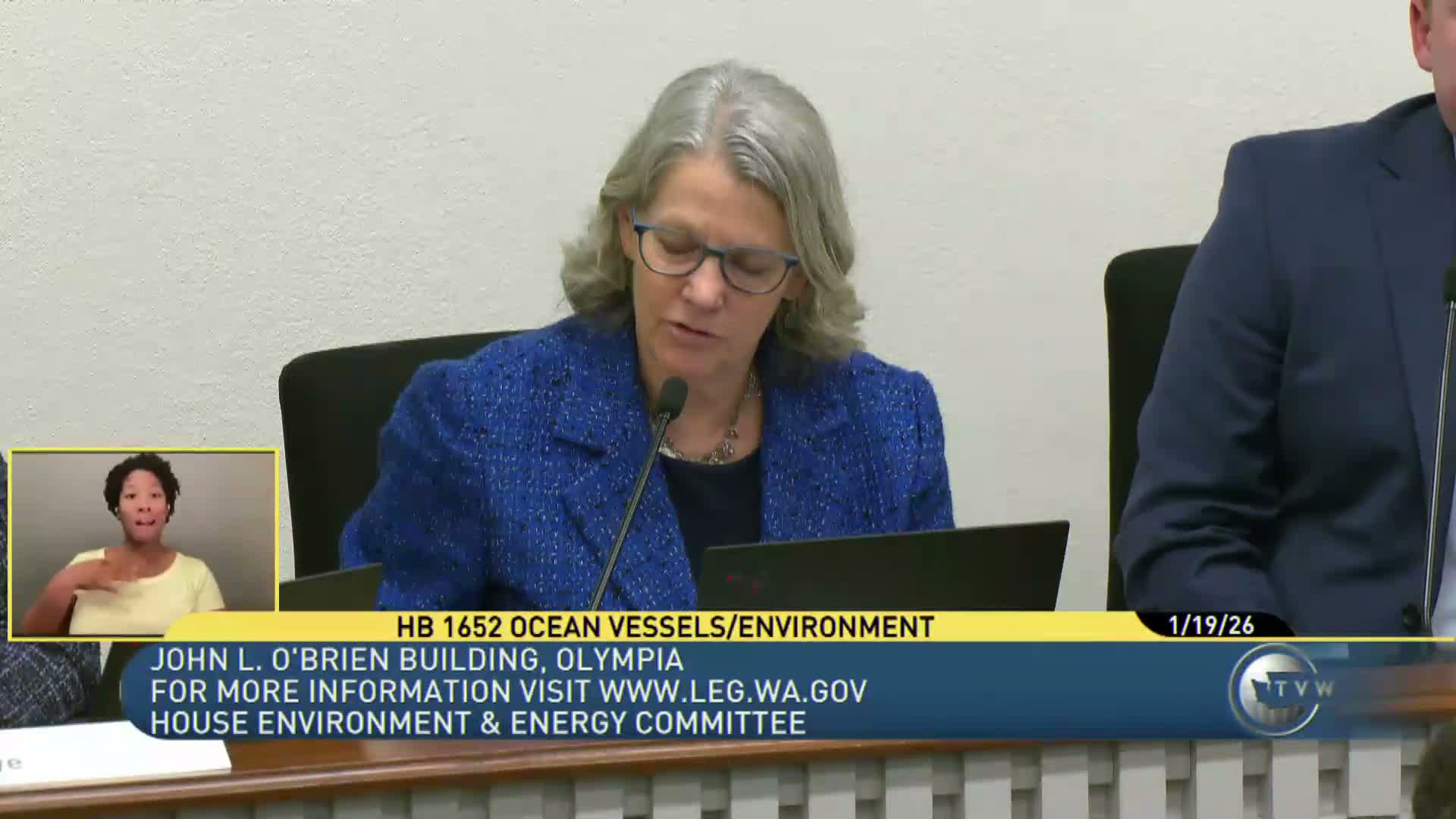
Committee staff told the panel that House Bill 24-21 would prohibit 6PPD and certain regrettable substitutes in motor-vehicle tires by 2035, require Ecology to identify unsafe substitutes, and establish a mitigation fee on tires beginning in 2027 (tiered fees: $3 for lighter tires, $6 for heavier tires, increasing 10% annually) to fund monitoring, stormwater sampling and waste-tire cleanup.
Environmental scientists and local utilities described evidence linking 6PPD-quinone (6PPDQ) to mass coho salmon mortality. Alexei Kalam Bakidis (fish-conservation group) and Laurie Valeriano (Toxic Free Future) cited University of Washington and Washington State University research that identified 6PPDQ as lethal to returning adult salmon at very low concentrations. "This problem is killing salmon before they spawn," Valeriano said, urging a deadline to accelerate safer alternatives and avoid “regrettable substitutes.”
Local governments and utility officials (Seattle Public Utilities) supported a limited fee and a 2035 phase-out timeline, saying modest mitigation funding would support monitoring and removal of illegally dumped tires in fish-bearing streams. "Because tires have an average lifespan of 5 to 7 years, most consumers will only pay this fee once," Maggie Use said.
Tire makers and retailers testified in opposition. Les Schwab warned the timeline might be premature and said mandatory higher fees could burden consumers; Tracy Norberg of the U.S. Tire Manufacturers Association said no commercially available 6PPD-free tires are currently certified and warned that premature bans could jeopardize motorist safety and long testing programs could be required. Industry witnesses said some green infrastructure and filtration systems can reduce 6PPDQ in stormwater today and urged coordination with ongoing Safer Products for Washington regulatory work.
Community members, tribal representatives and youth advocates urged quicker action, citing local observations of salmon declines and the need to protect culturally important runs. The committee closed the hearing on HB 24-21 and adjourned for the day.
Environmental scientists and local utilities described evidence linking 6PPD-quinone (6PPDQ) to mass coho salmon mortality. Alexei Kalam Bakidis (fish-conservation group) and Laurie Valeriano (Toxic Free Future) cited University of Washington and Washington State University research that identified 6PPDQ as lethal to returning adult salmon at very low concentrations. "This problem is killing salmon before they spawn," Valeriano said, urging a deadline to accelerate safer alternatives and avoid “regrettable substitutes.”
Local governments and utility officials (Seattle Public Utilities) supported a limited fee and a 2035 phase-out timeline, saying modest mitigation funding would support monitoring and removal of illegally dumped tires in fish-bearing streams. "Because tires have an average lifespan of 5 to 7 years, most consumers will only pay this fee once," Maggie Use said.
Tire makers and retailers testified in opposition. Les Schwab warned the timeline might be premature and said mandatory higher fees could burden consumers; Tracy Norberg of the U.S. Tire Manufacturers Association said no commercially available 6PPD-free tires are currently certified and warned that premature bans could jeopardize motorist safety and long testing programs could be required. Industry witnesses said some green infrastructure and filtration systems can reduce 6PPDQ in stormwater today and urged coordination with ongoing Safer Products for Washington regulatory work.
Community members, tribal representatives and youth advocates urged quicker action, citing local observations of salmon declines and the need to protect culturally important runs. The committee closed the hearing on HB 24-21 and adjourned for the day.
Don't Miss a Word: See the Full Meeting!
Go beyond summaries. Unlock every video, transcript, and key insight with a Founder Membership.
✓
Get instant access to full meeting videos
✓
Search and clip any phrase from complete transcripts
✓
Receive AI-powered summaries & custom alerts
✓
Enjoy lifetime, unrestricted access to government data
30-day money-back guarantee
