Bill to ease certified-mail rule for rent increases draws mixed reaction
January 19, 2026 | Legislative Sessions, Washington
This article was created by AI summarizing key points discussed. AI makes mistakes, so for full details and context, please refer to the video of the full meeting. Please report any errors so we can fix them. Report an error »
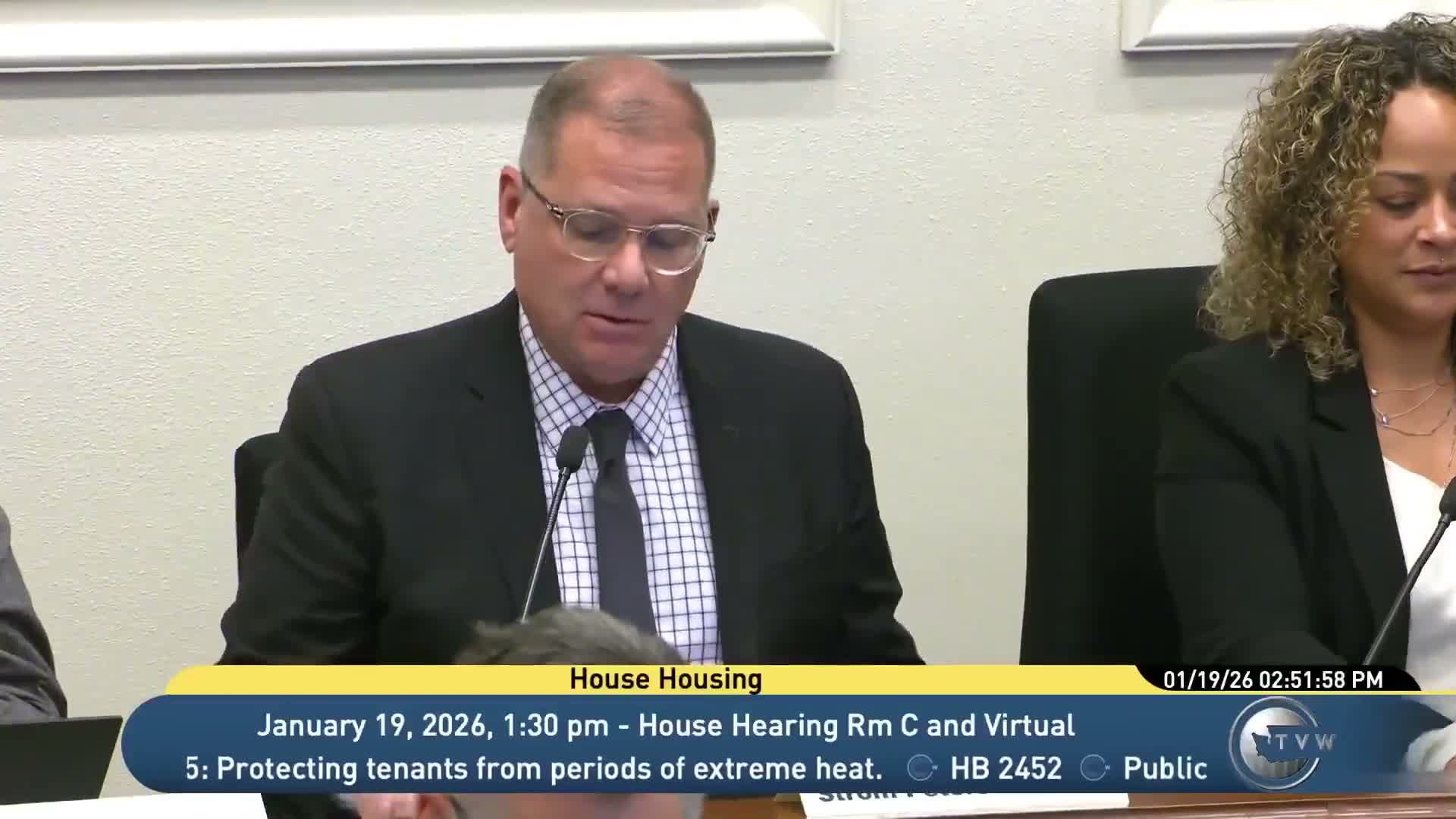
House Bill 2,452 was the final bill heard by the House Housing Committee on Jan. 19. Committee staff and the prime sponsor described the measure as a technical fix to address problems created when last session’s statutory changes required certified mail for many landlord notices.
Audrey Vazik said the bill removes the requirement that rent-increase notices be served in the same manner as unlawful-detainer notices and instead requires service by at least one of these methods: personal delivery, first-class mail, or affixing the notice in a conspicuous place on the dwelling unit. If mailed, the bill provides an additional five days of notice.
"We are looking at changing these mailing requirements because certified mail has proven to be inefficient and often prevents tenants from actually receiving the notice," sponsor Rep. April Connors told the committee, citing tenant confusion and return rates at post offices.
Property managers and housing associations urged the committee to approve the change. Jake Mason of the Washington Multifamily Housing Association said certified-mail requirements had produced a large administrative burden — including tens of thousands of certified-mail pieces that often are returned and never reach tenants — and generated substantial paper waste. Small landlords and rural providers testified that certified mail is inconvenient for tenants who live far from post offices and can create fear or confusion when delivered.
Tenant advocates opposed the bill as written, arguing that weaker service standards would create a practical loophole that allows landlords to claim notice was mailed even when tenants never receive or see it. Tenants Revolt urged requiring door-posting plus mailing or preserving a stronger in-person-verification standard. "A 90-day notice does not protect tenants if they do not actually receive it," Ethan Martez testified, urging protections that ensure tenants get timely, verifiable notice.
Committee members asked whether electronic notice with an initial verification process at move-in could be part of a compromise; tenant advocates said they were wary of electronic-only notice because it can be missed and is difficult to authenticate without additional safeguards.
The hearing closed after panels for and against the bill finished testimony; sponsors said they will consider stakeholder suggestions on verification and local-code preemption issues.
Audrey Vazik said the bill removes the requirement that rent-increase notices be served in the same manner as unlawful-detainer notices and instead requires service by at least one of these methods: personal delivery, first-class mail, or affixing the notice in a conspicuous place on the dwelling unit. If mailed, the bill provides an additional five days of notice.
"We are looking at changing these mailing requirements because certified mail has proven to be inefficient and often prevents tenants from actually receiving the notice," sponsor Rep. April Connors told the committee, citing tenant confusion and return rates at post offices.
Property managers and housing associations urged the committee to approve the change. Jake Mason of the Washington Multifamily Housing Association said certified-mail requirements had produced a large administrative burden — including tens of thousands of certified-mail pieces that often are returned and never reach tenants — and generated substantial paper waste. Small landlords and rural providers testified that certified mail is inconvenient for tenants who live far from post offices and can create fear or confusion when delivered.
Tenant advocates opposed the bill as written, arguing that weaker service standards would create a practical loophole that allows landlords to claim notice was mailed even when tenants never receive or see it. Tenants Revolt urged requiring door-posting plus mailing or preserving a stronger in-person-verification standard. "A 90-day notice does not protect tenants if they do not actually receive it," Ethan Martez testified, urging protections that ensure tenants get timely, verifiable notice.
Committee members asked whether electronic notice with an initial verification process at move-in could be part of a compromise; tenant advocates said they were wary of electronic-only notice because it can be missed and is difficult to authenticate without additional safeguards.
The hearing closed after panels for and against the bill finished testimony; sponsors said they will consider stakeholder suggestions on verification and local-code preemption issues.
View the Full Meeting & All Its Details
This article offers just a summary. Unlock complete video, transcripts, and insights as a Founder Member.
✓
Watch full, unedited meeting videos
✓
Search every word spoken in unlimited transcripts
✓
AI summaries & real-time alerts (all government levels)
✓
Permanent access to expanding government content
30-day money-back guarantee
