Senate Education advances draft of S.161 to let Vermont recognize scholarship organizations for a new federal education tax credit
January 30, 2026 | Education, SENATE, Committees, Legislative , Vermont
This article was created by AI summarizing key points discussed. AI makes mistakes, so for full details and context, please refer to the video of the full meeting. Please report any errors so we can fix them. Report an error »
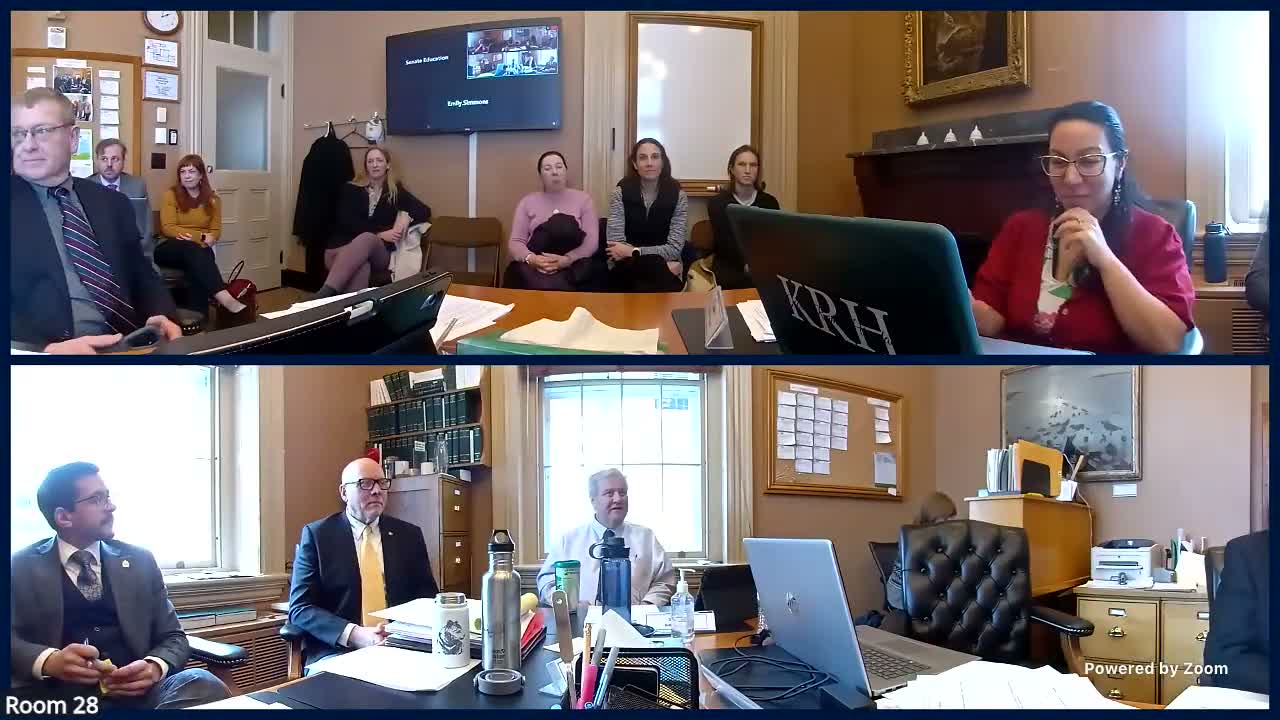
The Senate Education Committee reviewed S.161 on June 29, a bill intended to allow Vermont to participate in a new federal scholarship tax‑credit program by recognizing eligible scholarship‑granting organizations (SGOs).
Emily Simmons, general counsel at the Agency of Education, told the committee that the federal Department of the Treasury is drafting regulations for the program but that Vermont’s proposed legislation hews closely to the federal statutory language. Simmons said the state draft adds Vermont‑specific language to emphasize SGOs whose core mission is to support economically disadvantaged students through after‑school programs, summer programs and tutoring.
Under the federal statute discussed in committee (HR 1), the federal credit allows donors to receive a federal tax credit — not a deduction — for contributions to SGOs; Simmons and other participants said federal guidance was pending but that individual scholarship awards and many design elements (including the $1,700 federal credit limit per donor) are set by federal law. Committee discussion referenced an eligibility threshold for students receiving scholarships at roughly 300% of area median income and noted federal expectations that SGOs spend a high percentage of receipts on scholarships (committee discussion cited a 90% scholarship‑spending requirement).
Kirby Day (committee drafter) explained that for an SGO to participate it generally must be approved by a state authority (the bill would give the governor authority to recognize and audit SGOs or set the recognition process by state law). Committee members pressed staff on what the state can and cannot change; speakers said Vermont can set criteria for organizations recognized by the state but likely cannot alter the federal credit’s dollar amount or impose new donor‑level means tests.
Committee members expressed concern about who would qualify to receive scholarship funds and noted that many SGOs will likely be newly created nonprofits or organizations already operating in states with similar programs. The bill’s added Vermont requirement — that recognized SGOs have a mission focused on educational opportunities for economically disadvantaged students through after‑school, summer and tutoring programs — is intended to limit eligible organizations.
The committee approved a small drafting change (adding the word "programs" after "after‑school" and "summer") by voice vote; the motion is recorded in committee minutes as adopted, and the chair indicated the committee could advance the bill further and seek additional guidance once federal regulations are published.
The committee did not set final implementation dates; staff warned timing could be tight depending on when Treasury publishes federal regulations.
Emily Simmons, general counsel at the Agency of Education, told the committee that the federal Department of the Treasury is drafting regulations for the program but that Vermont’s proposed legislation hews closely to the federal statutory language. Simmons said the state draft adds Vermont‑specific language to emphasize SGOs whose core mission is to support economically disadvantaged students through after‑school programs, summer programs and tutoring.
Under the federal statute discussed in committee (HR 1), the federal credit allows donors to receive a federal tax credit — not a deduction — for contributions to SGOs; Simmons and other participants said federal guidance was pending but that individual scholarship awards and many design elements (including the $1,700 federal credit limit per donor) are set by federal law. Committee discussion referenced an eligibility threshold for students receiving scholarships at roughly 300% of area median income and noted federal expectations that SGOs spend a high percentage of receipts on scholarships (committee discussion cited a 90% scholarship‑spending requirement).
Kirby Day (committee drafter) explained that for an SGO to participate it generally must be approved by a state authority (the bill would give the governor authority to recognize and audit SGOs or set the recognition process by state law). Committee members pressed staff on what the state can and cannot change; speakers said Vermont can set criteria for organizations recognized by the state but likely cannot alter the federal credit’s dollar amount or impose new donor‑level means tests.
Committee members expressed concern about who would qualify to receive scholarship funds and noted that many SGOs will likely be newly created nonprofits or organizations already operating in states with similar programs. The bill’s added Vermont requirement — that recognized SGOs have a mission focused on educational opportunities for economically disadvantaged students through after‑school, summer and tutoring programs — is intended to limit eligible organizations.
The committee approved a small drafting change (adding the word "programs" after "after‑school" and "summer") by voice vote; the motion is recorded in committee minutes as adopted, and the chair indicated the committee could advance the bill further and seek additional guidance once federal regulations are published.
The committee did not set final implementation dates; staff warned timing could be tight depending on when Treasury publishes federal regulations.
View the Full Meeting & All Its Details
This article offers just a summary. Unlock complete video, transcripts, and insights as a Founder Member.
✓
Watch full, unedited meeting videos
✓
Search every word spoken in unlimited transcripts
✓
AI summaries & real-time alerts (all government levels)
✓
Permanent access to expanding government content
30-day money-back guarantee
