House committee hears bill to create voluntary 'blue envelope' for neurodivergent drivers
January 19, 2026 | Legislative Sessions, Washington
This article was created by AI summarizing key points discussed. AI makes mistakes, so for full details and context, please refer to the video of the full meeting. Please report any errors so we can fix them. Report an error »
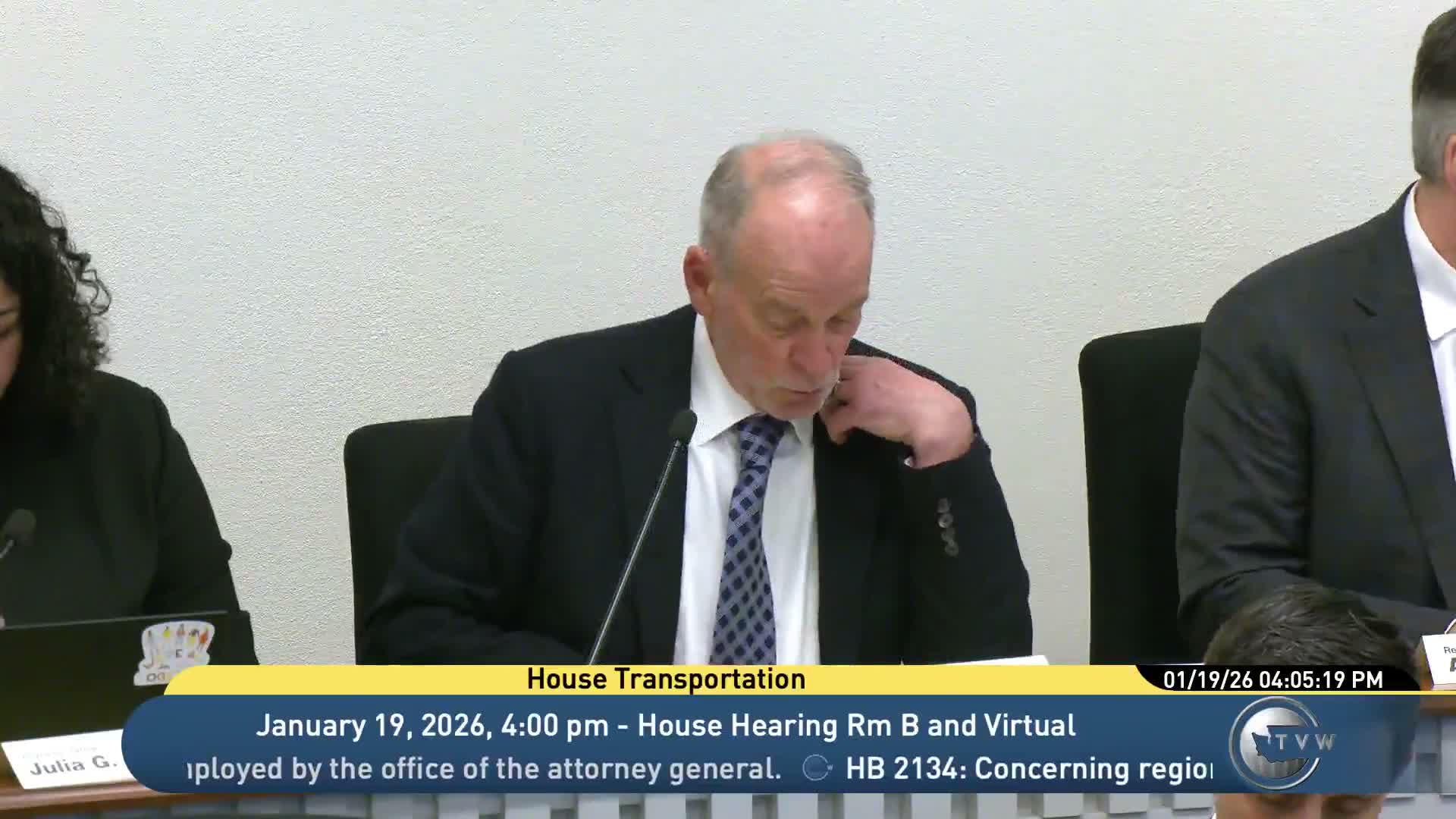
Chair Feige opened a public hearing on House Bill 2,323, which would establish a voluntary Blue Envelope Program through the Washington Department of Licensing to improve communication between neurodivergent drivers and law enforcement during traffic stops.
Sandy Meyer, staff to the committee, said the envelope would contain printed guidance for the driver and officer, and list what documents to include (registration, proof of insurance and emergency contact information). The Department of Licensing would maintain accessible program information online and provide the envelope at no cost at driver licensing offices statewide. Meyer said the Washington State Patrol would incur an estimated one-time cost of $76,000 in fiscal year 2027 (split $73,000 to the State Patrol Highway account and $3,000 general fund) for training commissioned officers and cadets. DOL estimated $14,000 in annual costs to produce and mail envelopes, based on an estimate of 18,000 envelopes per year.
Sponsor Representative Carolyn Eslick said the idea came from families who use the envelope in other states and described how it explains what to expect during a stop — for example, why officers use lights or flashlights and how a driver can indicate they have a blue envelope and keep their hands on the wheel. "I believe that this program can save lives," Eslick said, and emphasized the program would be voluntary and free.
Several people with direct experience testified in support. Nora Borick, testifying remotely, said her family uses the envelope to communicate calm, clear instructions and include emergency contacts so officers can reach family members if a driver becomes overwhelmed. "This is not about special treatment. It's about communication, de‑escalation and public safety," she said. Her son, Nick Borick, who identified himself as a person with autism, said, "This is my blue envelope," and described handing it to officers to help the stop stay calmer and safer. Advocacy groups and individuals, including John Lemus of AtWork and Ryan Fox, also urged passage and noted the program could be inexpensive to implement — Fox said officers could be trained with a five‑minute video and envelopes could be stocked at DMVs and community organizations.
The public hearing concluded with no committee action taken at the session. The bill's effective date in the bill text is 90 days after adjournment; no vote or amendment was recorded at this hearing.
Sandy Meyer, staff to the committee, said the envelope would contain printed guidance for the driver and officer, and list what documents to include (registration, proof of insurance and emergency contact information). The Department of Licensing would maintain accessible program information online and provide the envelope at no cost at driver licensing offices statewide. Meyer said the Washington State Patrol would incur an estimated one-time cost of $76,000 in fiscal year 2027 (split $73,000 to the State Patrol Highway account and $3,000 general fund) for training commissioned officers and cadets. DOL estimated $14,000 in annual costs to produce and mail envelopes, based on an estimate of 18,000 envelopes per year.
Sponsor Representative Carolyn Eslick said the idea came from families who use the envelope in other states and described how it explains what to expect during a stop — for example, why officers use lights or flashlights and how a driver can indicate they have a blue envelope and keep their hands on the wheel. "I believe that this program can save lives," Eslick said, and emphasized the program would be voluntary and free.
Several people with direct experience testified in support. Nora Borick, testifying remotely, said her family uses the envelope to communicate calm, clear instructions and include emergency contacts so officers can reach family members if a driver becomes overwhelmed. "This is not about special treatment. It's about communication, de‑escalation and public safety," she said. Her son, Nick Borick, who identified himself as a person with autism, said, "This is my blue envelope," and described handing it to officers to help the stop stay calmer and safer. Advocacy groups and individuals, including John Lemus of AtWork and Ryan Fox, also urged passage and noted the program could be inexpensive to implement — Fox said officers could be trained with a five‑minute video and envelopes could be stocked at DMVs and community organizations.
The public hearing concluded with no committee action taken at the session. The bill's effective date in the bill text is 90 days after adjournment; no vote or amendment was recorded at this hearing.
Don't Miss a Word: See the Full Meeting!
Go beyond summaries. Unlock every video, transcript, and key insight with a Founder Membership.
✓
Get instant access to full meeting videos
✓
Search and clip any phrase from complete transcripts
✓
Receive AI-powered summaries & custom alerts
✓
Enjoy lifetime, unrestricted access to government data
30-day money-back guarantee
