Bill would require certain regional plans to address greenhouse gas and vehicle‑miles‑traveled targets
January 19, 2026 | Legislative Sessions, Washington
This article was created by AI summarizing key points discussed. AI makes mistakes, so for full details and context, please refer to the video of the full meeting. Please report any errors so we can fix them. Report an error »
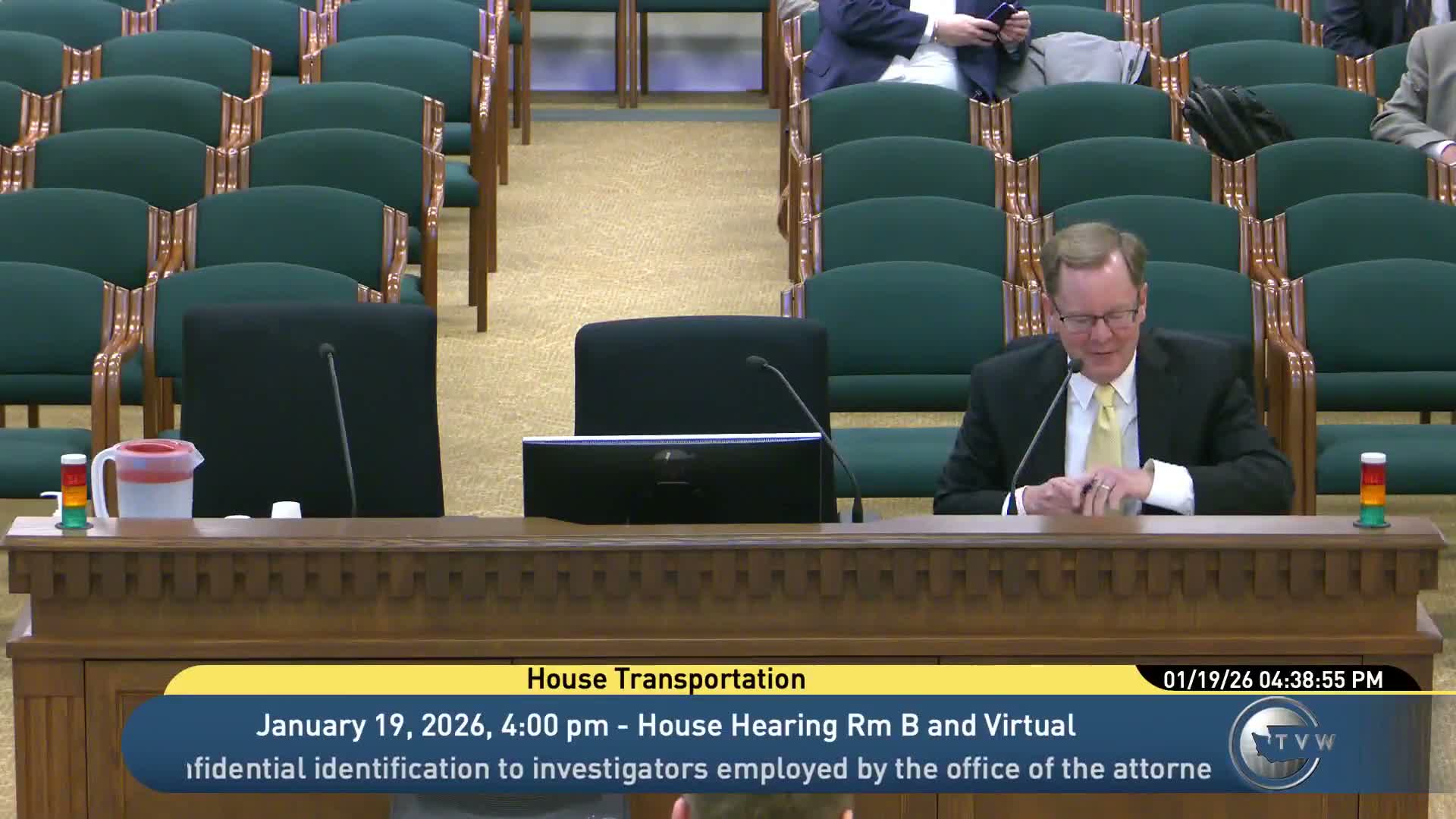
House Bill 2,134 would require regional transportation planning organizations (RTPOs) that include counties meeting specified population, density or growth criteria to provide for reductions in greenhouse gas emissions and vehicle miles traveled (VMT) in their regional transportation plans.
David Monnakey, staff to the committee, said the requirement would apply to RTPOs that contain counties meeting one or more criteria (population density and size, growth rates, or location relative to the Cascades) and listed affected counties. The bill would take effect 90 days after adjournment. The Department of Transportation reported no fiscal impact; local governments listed indeterminate costs related to staffing and travel.
Representative Davina Dewar (1st District) said the change aims to align regional plans with local comprehensive plans that include a GMA climate element, and to help regions meet state greenhouse‑gas and VMT reduction targets. Supporters — including Bryce C. Aden of FutureWise, Katie Riccudio of the Transportation Choices Coalition and Eric Lowe of Spokane Reimagined — said the bill would create consistency, enable more reliable transit and active‑transportation planning, and help prioritize investments that reduce congestion and greenhouse gases.
Opposition testimony included Mike Annas for ICON Materials, who warned that requiring RTPOs to plan for VMT reductions could bias funding away from road preservation toward lesser‑used modes, and noted concerns about an existing statewide road‑preservation funding gap. Committee members and witnesses discussed tailoring language to identify affected RTPOs and avoiding duplicate obligations for a county that sits in multiple RTPOs.
The public hearing concluded with no committee action recorded.
David Monnakey, staff to the committee, said the requirement would apply to RTPOs that contain counties meeting one or more criteria (population density and size, growth rates, or location relative to the Cascades) and listed affected counties. The bill would take effect 90 days after adjournment. The Department of Transportation reported no fiscal impact; local governments listed indeterminate costs related to staffing and travel.
Representative Davina Dewar (1st District) said the change aims to align regional plans with local comprehensive plans that include a GMA climate element, and to help regions meet state greenhouse‑gas and VMT reduction targets. Supporters — including Bryce C. Aden of FutureWise, Katie Riccudio of the Transportation Choices Coalition and Eric Lowe of Spokane Reimagined — said the bill would create consistency, enable more reliable transit and active‑transportation planning, and help prioritize investments that reduce congestion and greenhouse gases.
Opposition testimony included Mike Annas for ICON Materials, who warned that requiring RTPOs to plan for VMT reductions could bias funding away from road preservation toward lesser‑used modes, and noted concerns about an existing statewide road‑preservation funding gap. Committee members and witnesses discussed tailoring language to identify affected RTPOs and avoiding duplicate obligations for a county that sits in multiple RTPOs.
The public hearing concluded with no committee action recorded.
Don't Miss a Word: See the Full Meeting!
Go beyond summaries. Unlock every video, transcript, and key insight with a Founder Membership.
✓
Get instant access to full meeting videos
✓
Search and clip any phrase from complete transcripts
✓
Receive AI-powered summaries & custom alerts
✓
Enjoy lifetime, unrestricted access to government data
30-day money-back guarantee
