Senate committee hears bill to allow state agencies to charge private EV drivers for charging at state facilities
January 19, 2026 | Legislative Sessions, Washington
This article was created by AI summarizing key points discussed. AI makes mistakes, so for full details and context, please refer to the video of the full meeting. Please report any errors so we can fix them. Report an error »
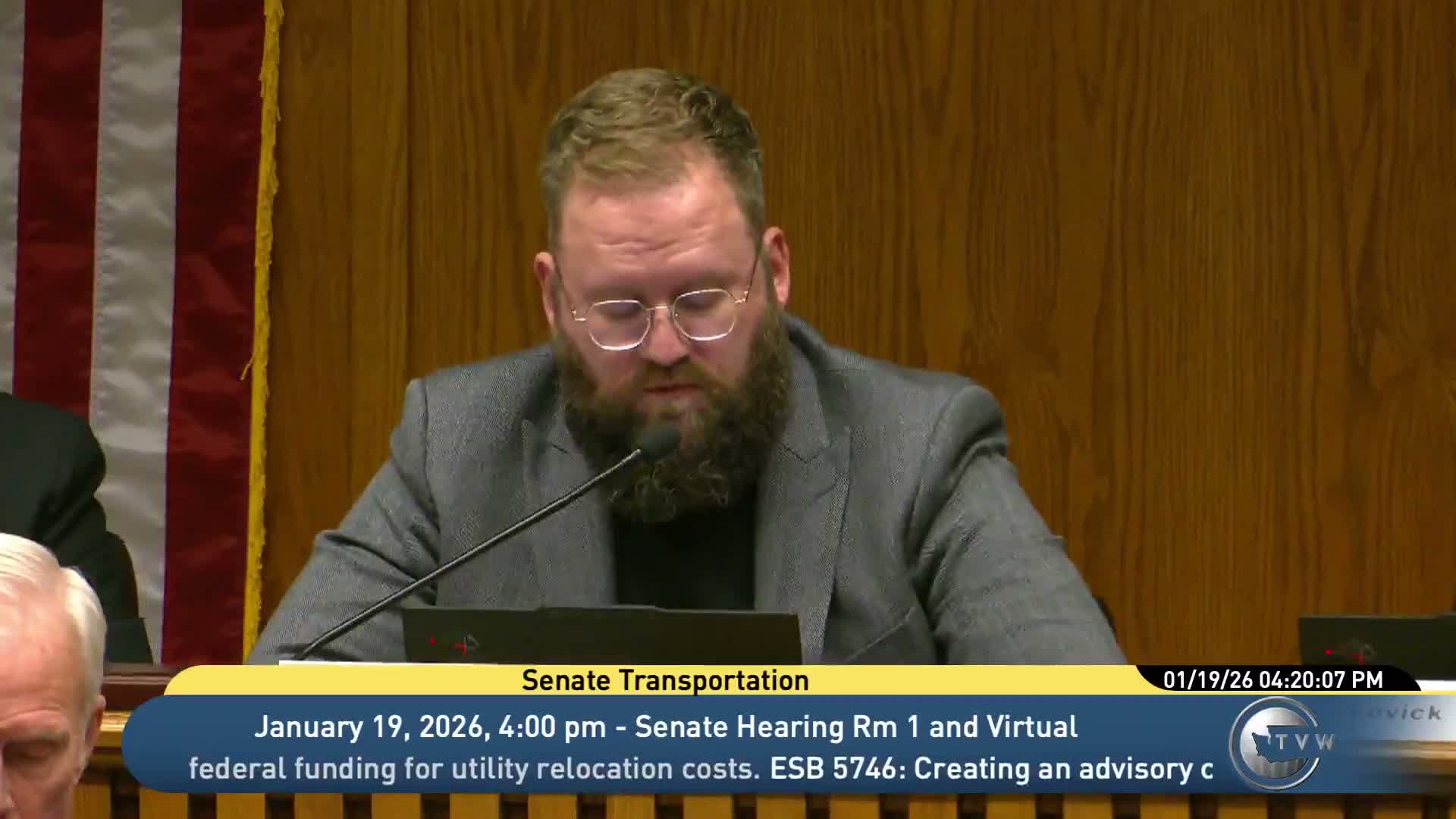
The Senate Transportation Committee received testimony on Senate Bill 5,750, which would authorize state agencies to provide charging at state office locations for privately owned electric vehicles and require any such fees to be deposited into the motor vehicle fund.
Brandon Popovac, committee staff, said current law permits the state to purchase power to charge vehicles used for state business; SB 5,750 would explicitly allow agencies to provide paid charging to private vehicles present at state locations for business or other purposes. Popovac said a fiscal note had been requested and that revenues and costs would be indeterminate because the bill provides permissive authority rather than mandatory programmatic change.
Senator Jeff Wilson, the bill sponsor, argued the change would "level the playing field" because more than 400 state‑owned or leased chargers are effectively providing free electricity to private drivers. "Free fuel is not fair fuel," Wilson said, adding that collected fees would be deposited into the motor vehicle fund and would not affect the state fleet.
Senator McEwen asked whether administrative solutions with the executive branch had been explored rather than legislation; Wilson said agencies have discussed options but legislation provides a consistent rule across state facilities, and noted existing account‑based payment systems (ChargePoint, others) could segregate campus users from outside users.
The committee closed the public hearing after recording 82 pro and 3 con sign‑ins. No formal committee action was taken during the hearing.
Brandon Popovac, committee staff, said current law permits the state to purchase power to charge vehicles used for state business; SB 5,750 would explicitly allow agencies to provide paid charging to private vehicles present at state locations for business or other purposes. Popovac said a fiscal note had been requested and that revenues and costs would be indeterminate because the bill provides permissive authority rather than mandatory programmatic change.
Senator Jeff Wilson, the bill sponsor, argued the change would "level the playing field" because more than 400 state‑owned or leased chargers are effectively providing free electricity to private drivers. "Free fuel is not fair fuel," Wilson said, adding that collected fees would be deposited into the motor vehicle fund and would not affect the state fleet.
Senator McEwen asked whether administrative solutions with the executive branch had been explored rather than legislation; Wilson said agencies have discussed options but legislation provides a consistent rule across state facilities, and noted existing account‑based payment systems (ChargePoint, others) could segregate campus users from outside users.
The committee closed the public hearing after recording 82 pro and 3 con sign‑ins. No formal committee action was taken during the hearing.
View the Full Meeting & All Its Details
This article offers just a summary. Unlock complete video, transcripts, and insights as a Founder Member.
✓
Watch full, unedited meeting videos
✓
Search every word spoken in unlimited transcripts
✓
AI summaries & real-time alerts (all government levels)
✓
Permanent access to expanding government content
30-day money-back guarantee
