Sen. introduces bill to ban prior authorization for HIV antivirals in state plans; one-person testimony recounts medication access disruption
January 22, 2026 | Legislative Sessions, Washington
This article was created by AI summarizing key points discussed. AI makes mistakes, so for full details and context, please refer to the video of the full meeting. Please report any errors so we can fix them. Report an error »
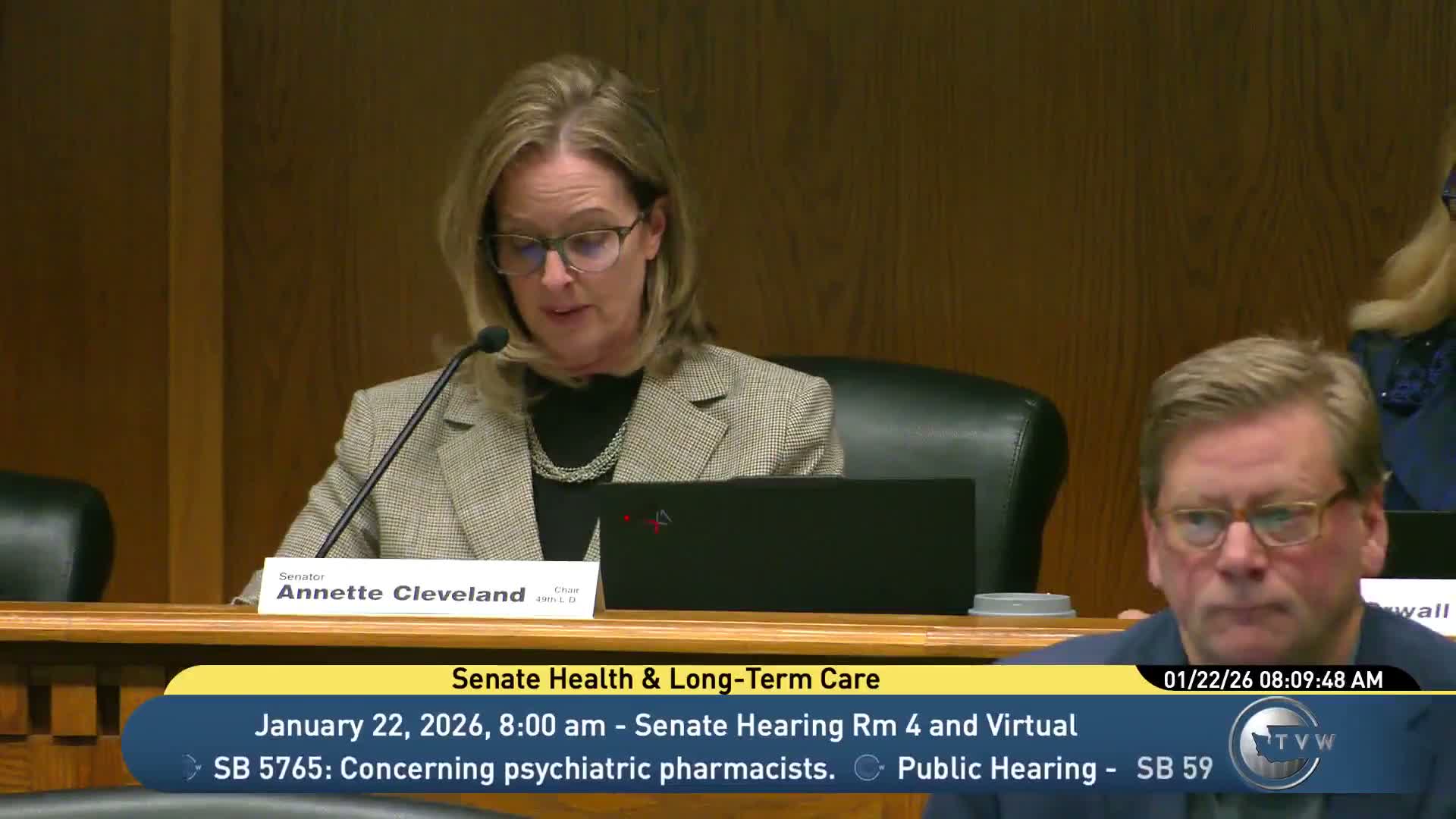
Senator (identified in the transcript as the prime sponsor) presented Senate Bill 6183 to the Senate Health and Long Term Care Committee on Jan. 22, proposing that health carriers, including plans offered to public employees, provide coverage for all FDA-approved HIV antiviral drugs without prior authorization, step therapy or other utilization-management protocols beginning Jan. 1, 2027.
Greg Attenasio, committee staff, briefed members on the bill and noted the Food and Drug Administration’s approval of multiple dosing options, including daily pills and long-acting injectables. Staff said the bill would prohibit prior authorization and step-therapy protocols for HIV antivirals, with one exception: when more than one therapeutic equivalent exists for an HIV-prevention drug, a carrier must cover at least one version without prior authorization.
Senator Marco Lias (as named in the transcript) said the policy had already been adopted for Medicaid plans in recent budget actions and reported no significant cost increases there, arguing the change balances patient needs and cost controls. He emphasized rapid access to treatment is critical to prevent disease progression and to reduce onward transmission.
A single remote witness, Ami Romero, who identified themselves as a commissioner and legislative chair with the Washington LGBTQ+ Commission (speaking in a personal capacity), described living with HIV and said insurance-related interruption to medication once made their viral load detectable: “When I was first diagnosed, it took 4 years before I could have in-depth conversations about my diagnosis… it took a change in insurance that affected my access to medication” (paraphrased from testimony). Romero urged the committee to vote yes.
Committee staff recorded public sign-in counts (53 pro, 58 con and 1 other). The hearing closed without questions for the prime sponsor.
Next steps: The committee closed the hearing on SB 6183 and will determine whether to move the bill forward through the committee process.
Greg Attenasio, committee staff, briefed members on the bill and noted the Food and Drug Administration’s approval of multiple dosing options, including daily pills and long-acting injectables. Staff said the bill would prohibit prior authorization and step-therapy protocols for HIV antivirals, with one exception: when more than one therapeutic equivalent exists for an HIV-prevention drug, a carrier must cover at least one version without prior authorization.
Senator Marco Lias (as named in the transcript) said the policy had already been adopted for Medicaid plans in recent budget actions and reported no significant cost increases there, arguing the change balances patient needs and cost controls. He emphasized rapid access to treatment is critical to prevent disease progression and to reduce onward transmission.
A single remote witness, Ami Romero, who identified themselves as a commissioner and legislative chair with the Washington LGBTQ+ Commission (speaking in a personal capacity), described living with HIV and said insurance-related interruption to medication once made their viral load detectable: “When I was first diagnosed, it took 4 years before I could have in-depth conversations about my diagnosis… it took a change in insurance that affected my access to medication” (paraphrased from testimony). Romero urged the committee to vote yes.
Committee staff recorded public sign-in counts (53 pro, 58 con and 1 other). The hearing closed without questions for the prime sponsor.
Next steps: The committee closed the hearing on SB 6183 and will determine whether to move the bill forward through the committee process.
View the Full Meeting & All Its Details
This article offers just a summary. Unlock complete video, transcripts, and insights as a Founder Member.
✓
Watch full, unedited meeting videos
✓
Search every word spoken in unlimited transcripts
✓
AI summaries & real-time alerts (all government levels)
✓
Permanent access to expanding government content
30-day money-back guarantee
