Education committee advances bill restricting student restraint and barring new isolation rooms
January 22, 2026 | Legislative Sessions, Washington
This article was created by AI summarizing key points discussed. AI makes mistakes, so for full details and context, please refer to the video of the full meeting. Please report any errors so we can fix them. Report an error »
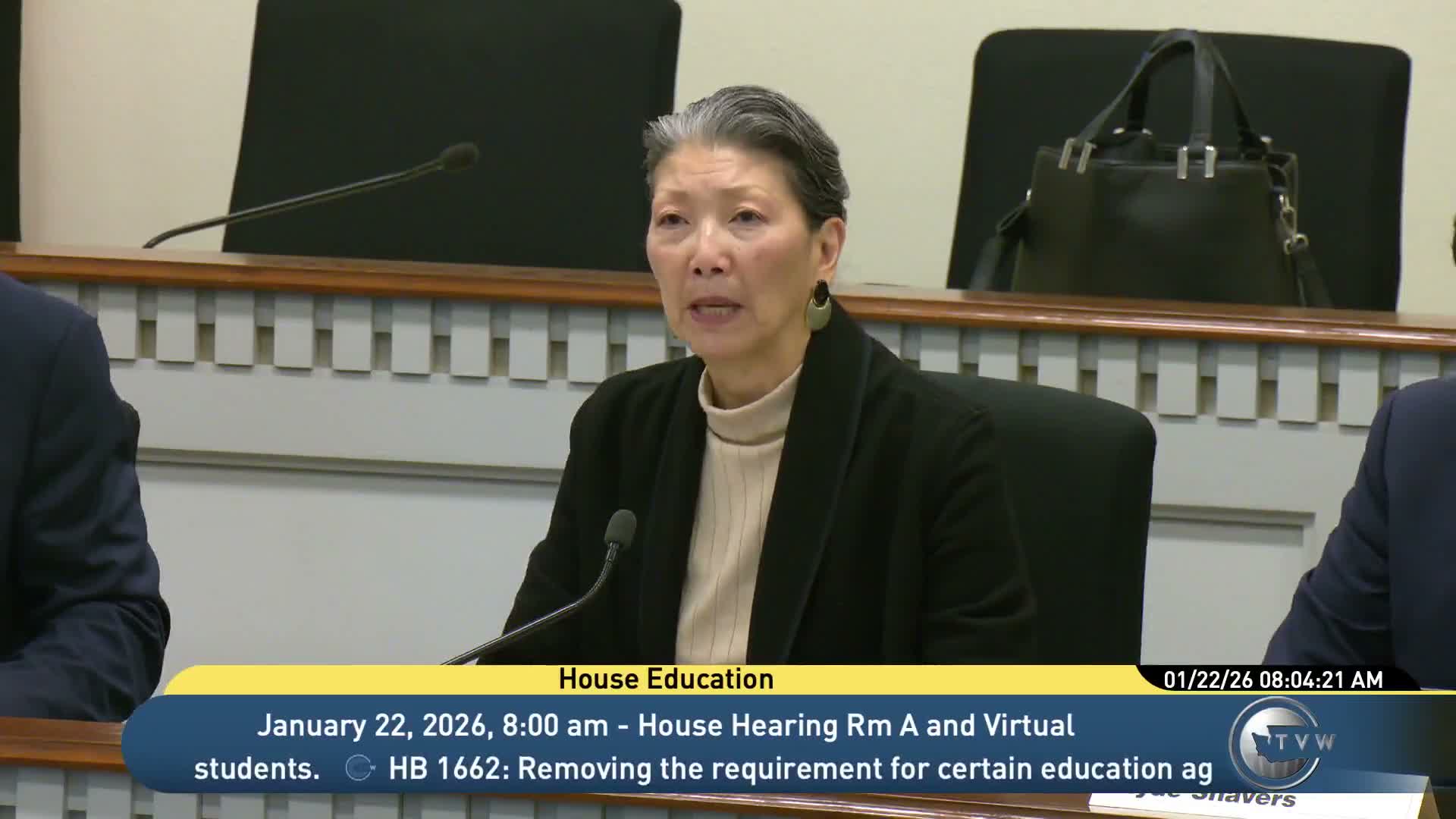
The House Education Committee on Thursday reported proposed substitute House Bill 17 95 (identified as H 2,871.1) out of committee with a "due pass as amended" recommendation, adopting amendments that narrow allowable use of restraint and limit construction of spaces intended primarily for student isolation.
Megan Wardacki, counsel to the committee, summarized the proposed substitute as prohibiting staff use of mechanical and chemical restraints and of physical restraints that are life‑threatening or that restrict breathing or blood flow. She said the bill would restrict the use of isolation as a planned behavioral intervention except when a licensed health care provider documents medical necessity in writing and a parent or guardian gives informed voluntary written consent. "The effect of that is to prohibit staff members of school districts from using any of the following interventions: mechanical restraint, chemical restraint, and physical restraint ..." Wardacki said.
The committee adopted an amendment by Representative Rood clarifying that an "imminent likelihood of serious harm" for purposes of allowing restraint or isolation includes harm "to the student or to another person," language supporters said makes the statute's object explicit. Representative Rood urged members to support the clarification so that the standard would apply to risks to other people as well as the student.
Representative Kallen successfully moved an amendment prohibiting school districts and other public educational service providers from "designing, constructing, remodeling, reconfiguring, repurposing, or otherwise establishing any room or other enclosed area for the primary purpose of student isolation, irrespective of how the space is labeled." Kallen said the amendment seeks to prevent creation of rooms built specifically to isolate children while preserving calming or sensory rooms that are not primarily intended to isolate.
Representative Couture moved a null‑and‑void amendment that would have rendered the bill inoperative unless funded in the budget, citing the state's fiscal constraints as a reason. The chair responded that appropriations decisions are the responsibility of the Appropriations Committee; the null‑and‑void motion failed.
After incorporation of adopted amendments, the committee proceeded to a roll call vote. Clerk Hannah announced the result: "Madam Chair, there are 10 ayes, 7 nays, and 2 excused." By that vote the committee reported the proposed substitute House Bill 17 95 from committee with a due‑pass as amended recommendation.
Supporters framed the bill as tightening limits on restraint and clarifying what methods remain allowable so educators can keep students and staff safe, while opponents warned about unintended consequences for classroom safety if districts lose the option of a secure room in extreme cases. Representative Keaton, speaking in opposition to the isolation‑room prohibition, said teachers and districts had raised concerns about the safety of pupils and staff in rare situations where a locked, padded space may be the safest option.
The bill now moves to the next committee or the House calendar for further action.
Megan Wardacki, counsel to the committee, summarized the proposed substitute as prohibiting staff use of mechanical and chemical restraints and of physical restraints that are life‑threatening or that restrict breathing or blood flow. She said the bill would restrict the use of isolation as a planned behavioral intervention except when a licensed health care provider documents medical necessity in writing and a parent or guardian gives informed voluntary written consent. "The effect of that is to prohibit staff members of school districts from using any of the following interventions: mechanical restraint, chemical restraint, and physical restraint ..." Wardacki said.
The committee adopted an amendment by Representative Rood clarifying that an "imminent likelihood of serious harm" for purposes of allowing restraint or isolation includes harm "to the student or to another person," language supporters said makes the statute's object explicit. Representative Rood urged members to support the clarification so that the standard would apply to risks to other people as well as the student.
Representative Kallen successfully moved an amendment prohibiting school districts and other public educational service providers from "designing, constructing, remodeling, reconfiguring, repurposing, or otherwise establishing any room or other enclosed area for the primary purpose of student isolation, irrespective of how the space is labeled." Kallen said the amendment seeks to prevent creation of rooms built specifically to isolate children while preserving calming or sensory rooms that are not primarily intended to isolate.
Representative Couture moved a null‑and‑void amendment that would have rendered the bill inoperative unless funded in the budget, citing the state's fiscal constraints as a reason. The chair responded that appropriations decisions are the responsibility of the Appropriations Committee; the null‑and‑void motion failed.
After incorporation of adopted amendments, the committee proceeded to a roll call vote. Clerk Hannah announced the result: "Madam Chair, there are 10 ayes, 7 nays, and 2 excused." By that vote the committee reported the proposed substitute House Bill 17 95 from committee with a due‑pass as amended recommendation.
Supporters framed the bill as tightening limits on restraint and clarifying what methods remain allowable so educators can keep students and staff safe, while opponents warned about unintended consequences for classroom safety if districts lose the option of a secure room in extreme cases. Representative Keaton, speaking in opposition to the isolation‑room prohibition, said teachers and districts had raised concerns about the safety of pupils and staff in rare situations where a locked, padded space may be the safest option.
The bill now moves to the next committee or the House calendar for further action.
Don't Miss a Word: See the Full Meeting!
Go beyond summaries. Unlock every video, transcript, and key insight with a Founder Membership.
✓
Get instant access to full meeting videos
✓
Search and clip any phrase from complete transcripts
✓
Receive AI-powered summaries & custom alerts
✓
Enjoy lifetime, unrestricted access to government data
30-day money-back guarantee
