Committee backs bill to create behavioral‑health technical assistance framework for schools
January 22, 2026 | Legislative Sessions, Washington
This article was created by AI summarizing key points discussed. AI makes mistakes, so for full details and context, please refer to the video of the full meeting. Please report any errors so we can fix them. Report an error »
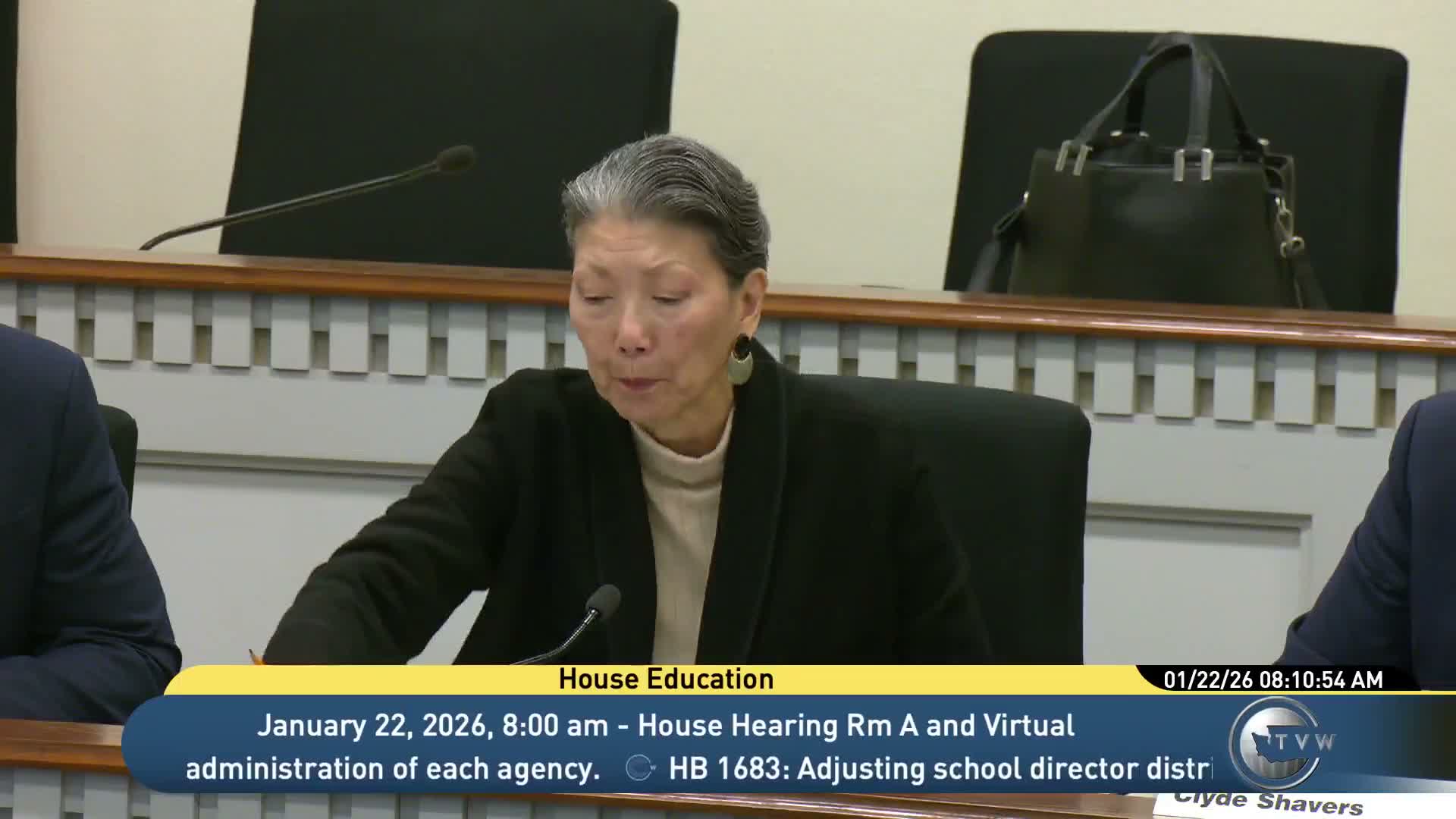
The House Education Committee reported second substitute House Bill 16 34 (identified as H‑3,108.1) from committee with a due‑pass recommendation after members debated a budget contingency amendment that failed.
Megan Wardacki, counsel to the committee, summarized the proposed second substitute as directing the Office of the Superintendent of Public Instruction (OSPI) and the Educational Service Districts (ESDs) to collaborate with behavioral‑health agencies and community partners to develop a technical assistance and training framework to support student behavioral health. Wardacki said the framework would require a system‑level needs assessment and resource mapping and include minimum components aligned to the legislatively directed Washington Thriving Strategic Plan. She noted version differences: an earlier version required districts to use the framework once developed and to post it on public websites by 08/01/2027; the second proposed substitute removes the mandatory use and the posting requirement and expands consultation with family‑advocacy organizations.
Representative Couture urged adoption of a null‑and‑void amendment, citing a fiscal note he described as $5,500,000 over four years and expressing concern about unfunded mandates in a tight budget. The chair and other members responded that fiscal decisions are appropriately handled in the Appropriations Committee and that the substitute seeks to offer technical assistance districts may use rather than impose spending mandates. The null‑and‑void amendment failed on a voice vote.
After discussion, the clerk called the roll and the committee recorded 12 ayes, 5 nays and 2 excused, reporting second substitute House Bill 16 34 with a due‑pass recommendation. Supporters said the framework aims to increase access to prevention, early identification, intervention and crisis supports by coordinating existing services and improving technical assistance for districts; opponents warned of potential costs and unfunded mandates and pressed for clarity on funding and implementation.
The bill will proceed to the next legislative step for further consideration.
Megan Wardacki, counsel to the committee, summarized the proposed second substitute as directing the Office of the Superintendent of Public Instruction (OSPI) and the Educational Service Districts (ESDs) to collaborate with behavioral‑health agencies and community partners to develop a technical assistance and training framework to support student behavioral health. Wardacki said the framework would require a system‑level needs assessment and resource mapping and include minimum components aligned to the legislatively directed Washington Thriving Strategic Plan. She noted version differences: an earlier version required districts to use the framework once developed and to post it on public websites by 08/01/2027; the second proposed substitute removes the mandatory use and the posting requirement and expands consultation with family‑advocacy organizations.
Representative Couture urged adoption of a null‑and‑void amendment, citing a fiscal note he described as $5,500,000 over four years and expressing concern about unfunded mandates in a tight budget. The chair and other members responded that fiscal decisions are appropriately handled in the Appropriations Committee and that the substitute seeks to offer technical assistance districts may use rather than impose spending mandates. The null‑and‑void amendment failed on a voice vote.
After discussion, the clerk called the roll and the committee recorded 12 ayes, 5 nays and 2 excused, reporting second substitute House Bill 16 34 with a due‑pass recommendation. Supporters said the framework aims to increase access to prevention, early identification, intervention and crisis supports by coordinating existing services and improving technical assistance for districts; opponents warned of potential costs and unfunded mandates and pressed for clarity on funding and implementation.
The bill will proceed to the next legislative step for further consideration.
View the Full Meeting & All Its Details
This article offers just a summary. Unlock complete video, transcripts, and insights as a Founder Member.
✓
Watch full, unedited meeting videos
✓
Search every word spoken in unlimited transcripts
✓
AI summaries & real-time alerts (all government levels)
✓
Permanent access to expanding government content
30-day money-back guarantee
