Bill expanding fatal-crash review authority advances after committee hearing; supporters stress prevention, some experts ask for drafting tweaks
January 22, 2026 | Legislative Sessions, Washington
This article was created by AI summarizing key points discussed. AI makes mistakes, so for full details and context, please refer to the video of the full meeting. Please report any errors so we can fix them. Report an error »
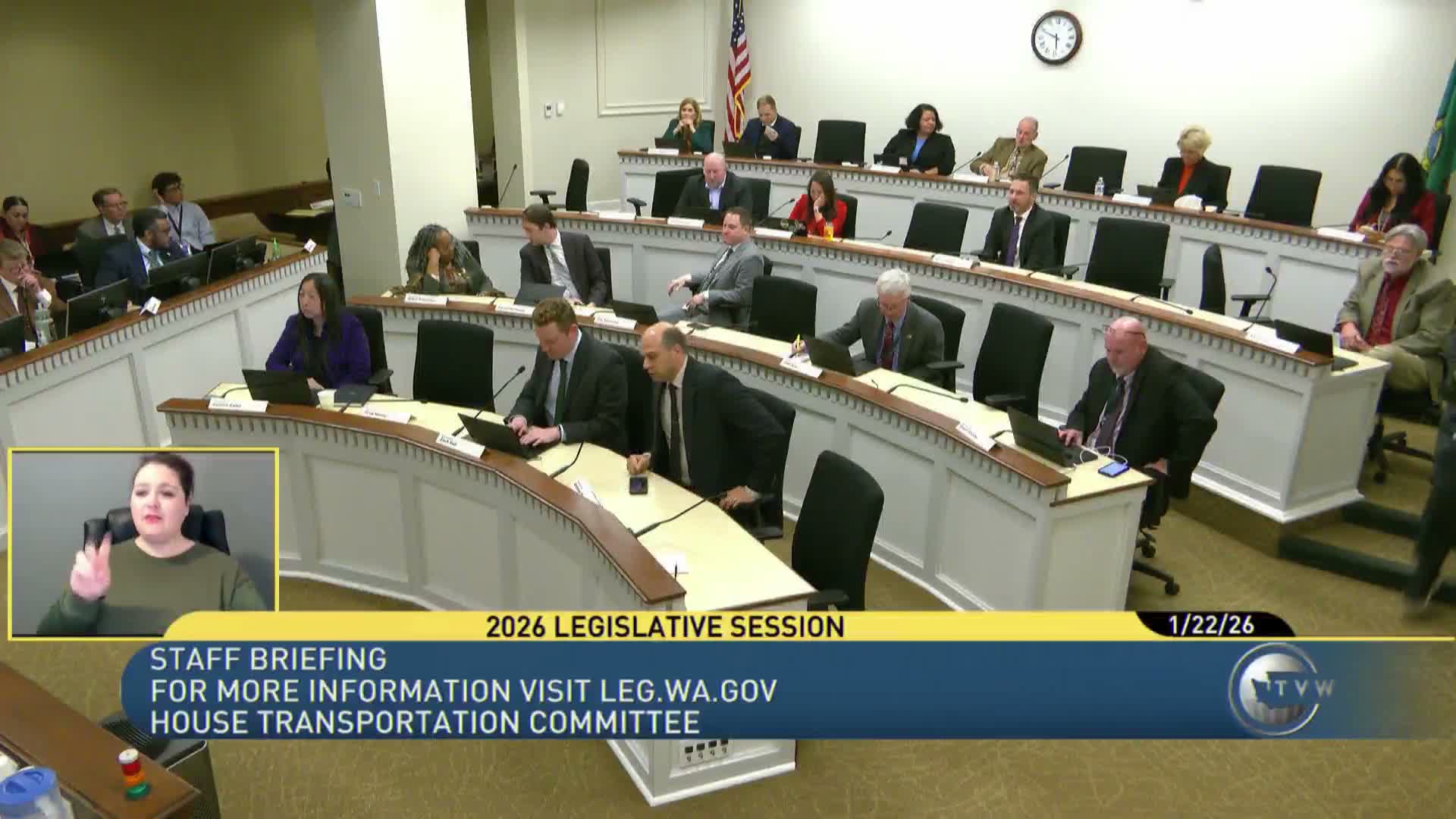
Jennifer Harris and agency proponents presented House Bill 2192 to expand the Washington Traffic Safety Commission’s ability to convene fatality review committees and to designate the commission a public-health authority for limited research and prevention purposes. The proposal would allow the commission to collect certain medical and crash records for statistical and epidemiological analyses and to convene confidential fatality review committees whose materials would be inadmissible in civil or administrative proceedings except when independently obtained.
Commission staff and victim advocates urged passage, saying reviews have produced policy recommendations that reduce future fatalities. Mark McKechnie (External Relations Director) said the public-health designation aligns with how NHTSA is treated federally and would streamline data-sharing agreements and reduce redundant redaction work by providers for a narrowly defined set of fatal-crash reviews.
Attorney Andrew Ulmer said he supported the bill’s goals but cautioned that the proposed inadmissibility language could unintentionally create discovery barriers for victims in civil cases; he asked the commission to amend the language so trial courts retain appropriate oversight of admissibility. David Jones, a family member and Cooper Jones Committee participant, and commission director Shelley Baldwin stressed the value of confidential reviews in identifying systemic causes and prevention strategies.
Committee members questioned whether the public-health designation is necessary and how HIPAA protections would apply; staff responded that the designation is intended to facilitate efficient record-sharing for narrowly defined public-health research and prevention functions and that published reports would avoid identifying individuals. The committee closed the public hearing without a vote.
Commission staff and victim advocates urged passage, saying reviews have produced policy recommendations that reduce future fatalities. Mark McKechnie (External Relations Director) said the public-health designation aligns with how NHTSA is treated federally and would streamline data-sharing agreements and reduce redundant redaction work by providers for a narrowly defined set of fatal-crash reviews.
Attorney Andrew Ulmer said he supported the bill’s goals but cautioned that the proposed inadmissibility language could unintentionally create discovery barriers for victims in civil cases; he asked the commission to amend the language so trial courts retain appropriate oversight of admissibility. David Jones, a family member and Cooper Jones Committee participant, and commission director Shelley Baldwin stressed the value of confidential reviews in identifying systemic causes and prevention strategies.
Committee members questioned whether the public-health designation is necessary and how HIPAA protections would apply; staff responded that the designation is intended to facilitate efficient record-sharing for narrowly defined public-health research and prevention functions and that published reports would avoid identifying individuals. The committee closed the public hearing without a vote.
View the Full Meeting & All Its Details
This article offers just a summary. Unlock complete video, transcripts, and insights as a Founder Member.
✓
Watch full, unedited meeting videos
✓
Search every word spoken in unlimited transcripts
✓
AI summaries & real-time alerts (all government levels)
✓
Permanent access to expanding government content
30-day money-back guarantee
