Bill would let crews cover tracked equipment instead of cleaning debris when towed, sponsor says
January 22, 2026 | Legislative Sessions, Washington
This article was created by AI summarizing key points discussed. AI makes mistakes, so for full details and context, please refer to the video of the full meeting. Please report any errors so we can fix them. Report an error »
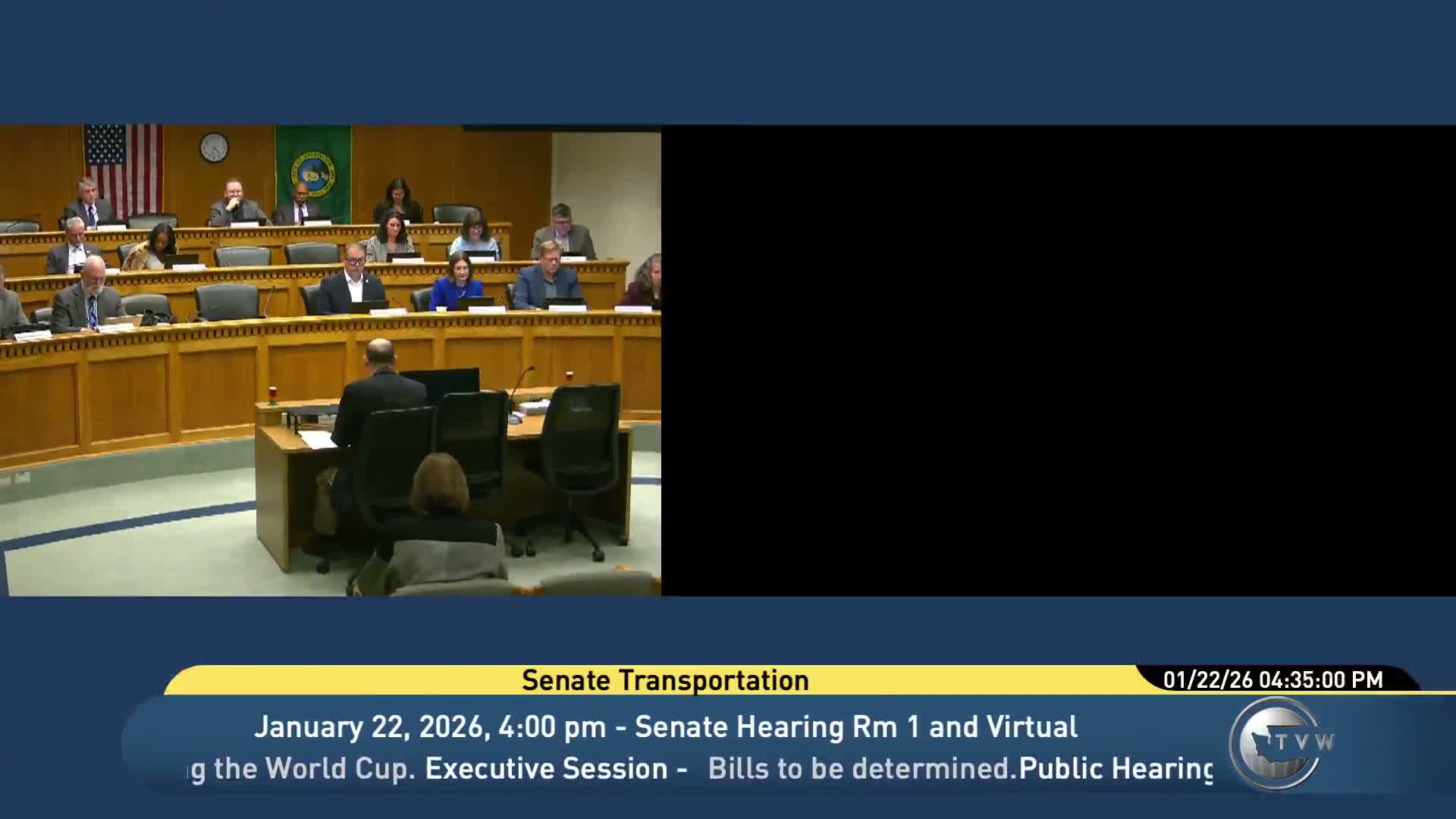
A proposed substitute to Senate Bill 6032 would expand Washington’s ‘‘secure your load’’ requirements to allow an alternative to cleaning: covering vehicles with mud, rocks or other debris before towing on paved public highways.
Kelly Simpson, committee staff, told the Senate Transportation Committee the substitute clarifies that vehicles with exterior mud, rocks or debris when being towed must either be cleaned or fully covered before travel. ‘‘This bill 6,032 expands on that particular provision by essentially requiring that vehicles with mud, rocks, or debris on the outside of the vehicle while being towed must either be cleaned off before being towed or alternatively be fully covered,’’ Simpson said.
Senator Judy Warnecke, prime sponsor, said the change grew out of a constituent’s experience hauling construction equipment. ‘‘This is the word ‘or’ — and he brought it to me because he…thought if we could drive it up onto the trailer, wrap it, then he wouldn't have to clean it off every time between jobs,’’ she said.
Inventor Mark Cooper and attorney Mike Ennis described a track-cover prototype intended to contain debris that would otherwise shed from excavator undercarriages during transport. Cooper testified the covers can be installed in minutes and could save ‘‘30, 40 minutes’’ of cleaning per piece of equipment; he said designs could be disposable for rental or durable for repeated use. Senators requested photos and technical details before advancing the bill.
Why it matters: The substitute aims to reduce roadway debris and give operators an option that may save time and water, while keeping legal obligations to prevent material from escaping a vehicle. Committee members pressed for clarity about exactly which vehicle parts would be covered and asked for demonstrations or photographs.
What’s next: The committee closed that hearing segment after receiving testimony and photo requests; staff recorded 137 pro and 2 con sign-ins for the bill.
Kelly Simpson, committee staff, told the Senate Transportation Committee the substitute clarifies that vehicles with exterior mud, rocks or debris when being towed must either be cleaned or fully covered before travel. ‘‘This bill 6,032 expands on that particular provision by essentially requiring that vehicles with mud, rocks, or debris on the outside of the vehicle while being towed must either be cleaned off before being towed or alternatively be fully covered,’’ Simpson said.
Senator Judy Warnecke, prime sponsor, said the change grew out of a constituent’s experience hauling construction equipment. ‘‘This is the word ‘or’ — and he brought it to me because he…thought if we could drive it up onto the trailer, wrap it, then he wouldn't have to clean it off every time between jobs,’’ she said.
Inventor Mark Cooper and attorney Mike Ennis described a track-cover prototype intended to contain debris that would otherwise shed from excavator undercarriages during transport. Cooper testified the covers can be installed in minutes and could save ‘‘30, 40 minutes’’ of cleaning per piece of equipment; he said designs could be disposable for rental or durable for repeated use. Senators requested photos and technical details before advancing the bill.
Why it matters: The substitute aims to reduce roadway debris and give operators an option that may save time and water, while keeping legal obligations to prevent material from escaping a vehicle. Committee members pressed for clarity about exactly which vehicle parts would be covered and asked for demonstrations or photographs.
What’s next: The committee closed that hearing segment after receiving testimony and photo requests; staff recorded 137 pro and 2 con sign-ins for the bill.
View the Full Meeting & All Its Details
This article offers just a summary. Unlock complete video, transcripts, and insights as a Founder Member.
✓
Watch full, unedited meeting videos
✓
Search every word spoken in unlimited transcripts
✓
AI summaries & real-time alerts (all government levels)
✓
Permanent access to expanding government content
30-day money-back guarantee
