Committee hears evidence and industry concerns on bill to phase out DEHP in IV bags and tubing
January 23, 2026 | Legislative Sessions, Washington
This article was created by AI summarizing key points discussed. AI makes mistakes, so for full details and context, please refer to the video of the full meeting. Please report any errors so we can fix them. Report an error »
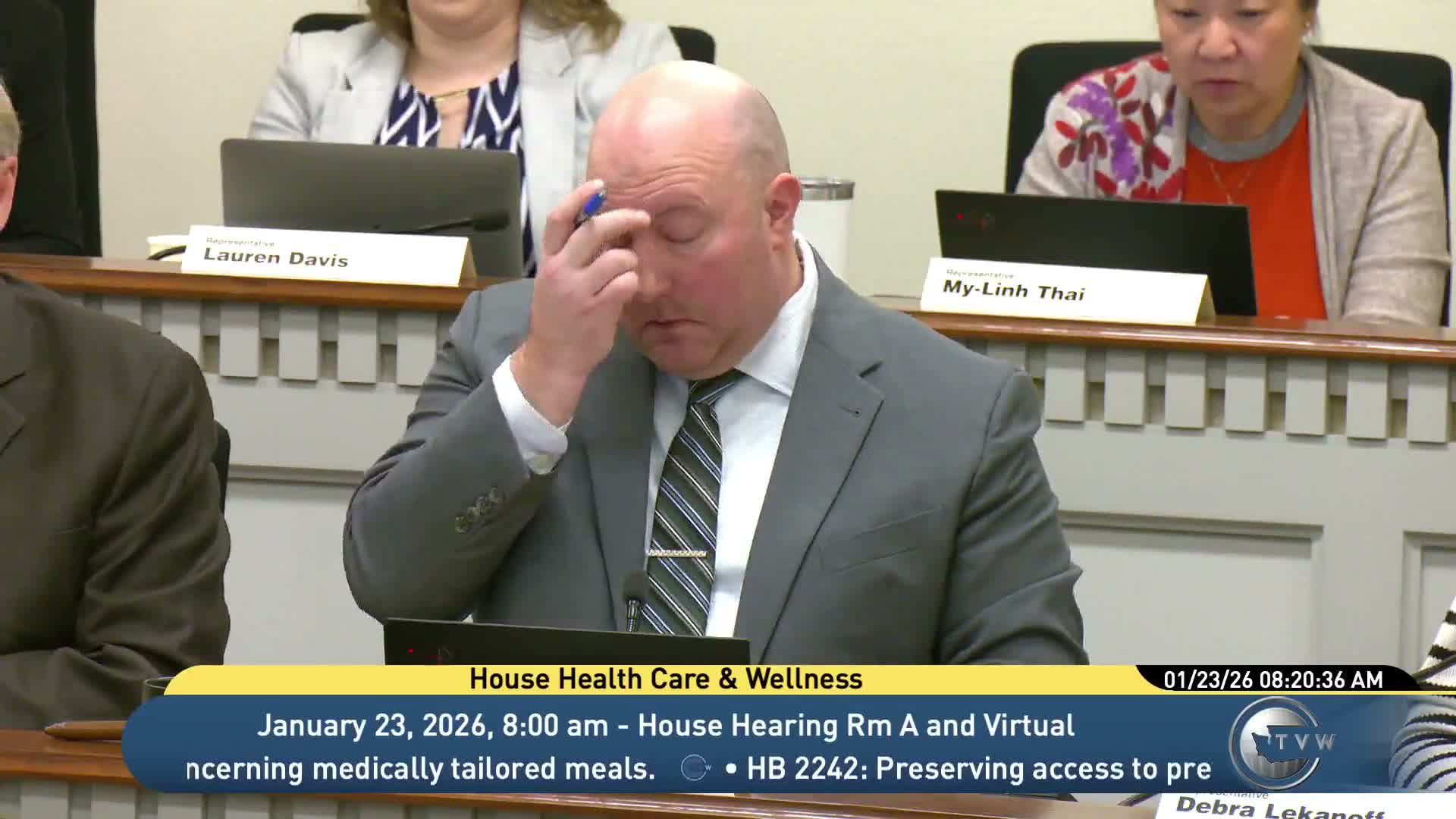
Committee staff summarized House Bill 2,402 for the Jan. 23 hearing, explaining the bill would ban IV solution containers with intentionally added DEHP or with unintended DEHP at or above 0.1% weight‑by‑weight beginning Jan. 1, 2028, and extend the prohibition to IV tubing beginning Jan. 1, 2035. Exemptions would include certain human blood collection and cell‑therapy kits and related products.
Environmental and public‑health witnesses urged lawmakers to adopt the bill. Heather Trim of Zero Waste Washington said phthalates are persistent in landfill leachate and can harm wildlife and reproductive health; she noted California enacted a similar law in 2024 and North Carolina followed. Laura Gillen of Breast Cancer Prevention Partners, a former toxicologist, cited laboratory links between DEHP and several cancers and developmental harms and said safer FDA‑approved alternatives are available. "With about 90% of hospitalized patients receiving an IV, this is a serious public health concern," Gillen told the committee.
Manufacturers and providers described operational concerns and asked for changes to the implementation timeline. Alicia Kury Mica of Bebron Medical and Pete Allen of Fresenius Kabi said alternatives exist and some manufacturers already produce DEHP‑free products; Allen testified that competitive pricing means no incremental cost to hospitals for available products. By contrast, Julia Torgrosso of AdvaMed (medical device trade association) warned switching materials can be technically complex, subject to FDA validation and post‑market surveillance, and recommended longer phase‑in dates (AdvaMed suggested 2032 for solution containers). Katie Cohen of the Washington State Hospital Association urged pushing the compliance date to 2030, adding requests to align with other states’ timelines, include delayed compliance for products with pending FDA approvals, and add a waiver for supply‑chain shortages or public health emergencies.
Department of Ecology staff supported the bill’s goal and recommended that the committee require outreach and technical assistance for businesses to implement product restrictions successfully. Committee members acknowledged both the public‑health rationale for reducing exposure and the implementation challenges raised by hospitals and industry.
Next steps: Committee closed public testimony for HB 2,402 on Jan. 23. Sponsors and staff indicated they expect amendment language addressing implementation timing and exemptions to be circulated for committee consideration.
Environmental and public‑health witnesses urged lawmakers to adopt the bill. Heather Trim of Zero Waste Washington said phthalates are persistent in landfill leachate and can harm wildlife and reproductive health; she noted California enacted a similar law in 2024 and North Carolina followed. Laura Gillen of Breast Cancer Prevention Partners, a former toxicologist, cited laboratory links between DEHP and several cancers and developmental harms and said safer FDA‑approved alternatives are available. "With about 90% of hospitalized patients receiving an IV, this is a serious public health concern," Gillen told the committee.
Manufacturers and providers described operational concerns and asked for changes to the implementation timeline. Alicia Kury Mica of Bebron Medical and Pete Allen of Fresenius Kabi said alternatives exist and some manufacturers already produce DEHP‑free products; Allen testified that competitive pricing means no incremental cost to hospitals for available products. By contrast, Julia Torgrosso of AdvaMed (medical device trade association) warned switching materials can be technically complex, subject to FDA validation and post‑market surveillance, and recommended longer phase‑in dates (AdvaMed suggested 2032 for solution containers). Katie Cohen of the Washington State Hospital Association urged pushing the compliance date to 2030, adding requests to align with other states’ timelines, include delayed compliance for products with pending FDA approvals, and add a waiver for supply‑chain shortages or public health emergencies.
Department of Ecology staff supported the bill’s goal and recommended that the committee require outreach and technical assistance for businesses to implement product restrictions successfully. Committee members acknowledged both the public‑health rationale for reducing exposure and the implementation challenges raised by hospitals and industry.
Next steps: Committee closed public testimony for HB 2,402 on Jan. 23. Sponsors and staff indicated they expect amendment language addressing implementation timing and exemptions to be circulated for committee consideration.
View the Full Meeting & All Its Details
This article offers just a summary. Unlock complete video, transcripts, and insights as a Founder Member.
✓
Watch full, unedited meeting videos
✓
Search every word spoken in unlimited transcripts
✓
AI summaries & real-time alerts (all government levels)
✓
Permanent access to expanding government content
30-day money-back guarantee
